Short answer: yes, with one compromise. Both crops like the same warmth, roughly 18 to 25 degrees, but cucumbers want humid air while tomatoes do better with the vents open and the air moving. Ventilate the greenhouse for the tomatoes, then give the cucumbers their moisture at the roots, at their own end of the house.
Below, we cover layout, spacing, watering, feeding, pollination and the few neighbours to keep out, with every figure taken from an agricultural or horticultural authority rather than from gardening folklore.
Why do tomatoes and cucumbers want different air?
Temperature is where the two crops agree. Horticulturists at the Queensland Department of Agriculture and Fisheries put the optimum temperature for tomato fruit set at 18 to 24 degrees, with fruit setting reduced once the air rises above 27 degrees. Britain's Royal Horticultural Society gives 18 to 25 degrees as ideal for greenhouse cucumbers, so one thermometer setting suits both.
Humidity is where they part company. The RHS advises raising the humidity for cucumbers in hot weather by damping down, which means pouring water over the floor or central path so it evaporates; that helps even fruit development and deters red spider mite and powdery mildew. The same moist, crowded conditions suit grey mould: the RHS describes grey mould as a problem for plants grown under glass where conditions are humid and overcrowded, with both tomatoes and cucumbers on its list of common hosts.
NSW DPIRD adds that poor air circulation reduces plant activity and can lead to problems with humidity and disease, recommending air movement of 0.2 to 0.7 metres per second through a greenhouse. Ventilating for the tomatoes protects both crops from mould; the cucumbers simply get their moisture a different way.
| What each crop needs |
Tomatoes |
Cucumbers |
| Temperature |
18 to 24°C for fruit set; reduced above 27°C |
18 to 25°C |
| Air |
Vents open for airflow and pollinating insects |
Humid; damp the floor down in hot weather |
| Spacing |
45 to 60 cm, depending on the variety |
30 cm, grown up supports |
| Pollination |
Tap or shake open flowers |
Most greenhouse varieties are all-female: remove male flowers |
| Feeding in pots |
High-potassium liquid feed every 10 to 14 days once fruit swells |
High-potash feed such as tomato feed once flowering starts |
How should you lay out a greenhouse for both crops?
Put your tomatoes where the air moves most and the cucumbers where it is stillest. The same DPIRD guidance notes that roof vents are up to five times more effective than side wall vents for air exchange, so the tomatoes belong under the roof vents and near the door. The cucumbers go at the far end, out of the draught, where damping down keeps the air moist.
Train both crops upwards on strings or a trellis. The RHS recommends growing cucumbers up supports to make the best use of valuable ground space; vertical plants also leave gaps for air to move between them instead of forming a solid wall of leaves. A side louvre such as the Winter Gardenz Louvre Vent Kit adds another opening at the tomato end on still days.
How far apart should the plants be?
Further apart than most people plant them. The RHS spaces tomato plants 45 to 60 cm apart depending on their eventual size; cucumbers go 30 cm apart when they are grown up supports in the ground. Crowded plants shade each other and trap damp air, which is the grey mould problem again.
A practical test works well once the plants mature: if a hand cannot pass easily between two of them, they are too close. Leave a clear path down the middle as well, because you will be in there most days tying up, picking and checking leaves.
How do you water and feed both crops?
Water at the roots, never over the leaves. The RHS explains that potato and tomato blight needs prolonged surface wetness, lasting several hours, before it can infect; foliage left wet overnight is the thing to avoid. A drip line or soaker hose along each row keeps your leaves dry; hand watering works too if the hose stays at soil level.
Damp down the cucumber end only, in the morning, so the house has dried out again by evening. Feeding is where the two crops agree once more. The RHS recommends a high-potassium liquid feed for tomatoes in containers every 10 to 14 days once the first fruits start to swell; for cucumbers in containers, it suggests switching to a high-potash feed such as tomato feed once flowering begins. One bottle serves both crops.
Do cucumbers need pollinating in a greenhouse?
Usually not; pollinating them can spoil the crop. According to the RHS, most greenhouse cucumber varieties are all-female, producing almost exclusively female flowers with a tiny fruit behind them. Those flowers must not be pollinated, otherwise the fruit may be bitter, so the occasional male flower (the one without a tiny fruit behind it) should be removed. Outdoor varieties are different: they need their female flowers pollinated, so check the seed packet before you plant.
Tomatoes need a little help in the other direction. The RHS advises opening the vents regularly so pollinating insects can reach the flowers, then lightly tapping or shaking the open flowers to move the pollen; misting the flowers with water can also help.
Planning a first tomato and cucumber season and unsure what size greenhouse the layout needs? Ring Hayden on 1300 515 620; we will work through the numbers with you before you order, including when a smaller house is enough.
What should not share the greenhouse?
Potatoes are the one to keep well away, although the reason is soil more than air. The RHS notes that tomatoes are closely related to potatoes and share the same blight, Phytophthora infestans; it is serious outdoors in warm, wet weather but rarely a problem in a greenhouse. The RHS still recommends a rotation of at least four years after blighted potatoes, avoiding tomatoes in that soil for the same period. Grow the potatoes outside and never swap soil between the two crops.
Mint is the other common mistake. The RHS advises planting mint in a container to stop its underground stems spreading through the surrounding soil, which in a greenhouse bed means straight into the cucumbers. For the full list of crops that do better outside, see what plants should not go in a greenhouse; the everyday errors, from overwatering to shutting the vents, are covered in common greenhouse mistakes.
What gear makes two growing zones easier?
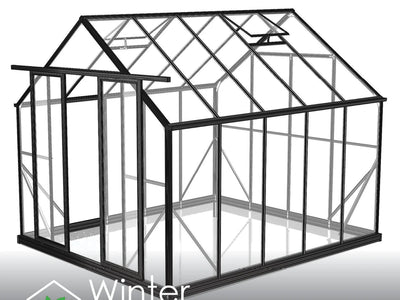
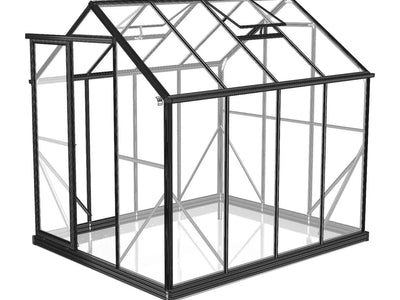
Vents first, then height. A house with roof vents that open fully and enough headroom to train both crops upwards will carry the two zones far more easily than a low structure; the Winter Gardenz 10ft Wide Polycarbonate Greenhouse is a good starting point for a mixed crop. If you are still choosing a structure, our polycarbonate greenhouse buying guide covers what to look for.
Every greenhouse we range comes with our price-beat promise and owner's after-care: a fit check before it ships, a shepherded delivery and a check-in within a week. We also handle any warranty claim for you. Browse the full range of greenhouses and greenhouse accessories, or ring Hayden on 1300 515 620.
You May Also Like:
About the author:
“I have a real passion for helping transform outdoor spaces so people can relax, connect and entertain with confidence and pride. With My Acre, I love guiding homeowners to create beautiful and functional outdoor living areas."