Are greenhouses too hot in summer? Left shut up, yes, an Australian greenhouse can cook its plants by mid-morning. Managed properly, no. Well-vented greenhouses stay workable through a hot December. Here's how to get the airflow, shade and watering right.
The reality of summer temperatures in enclosed spaces
A greenhouse works by trapping solar energy. Light passes through the glazing, warms the soil, benches and pots inside, and that heat has nowhere easy to go. On a still summer day the air inside climbs well above the temperature outside.
That's exactly what you want in July. In January it's a problem, with thresholds lower than most people assume. The Queensland Department of Agriculture and Fisheries puts the optimum temperature for tomato fruit set at 18 to 24 degrees, with fruit setting reduced once the air rises above 27 degrees. Lettuce gives up earlier still: Applied Horticultural Research puts its suitable range at 12 to 21 degrees, and notes that a few days at 32 degrees can cause enough damage to lose the crop.
So the number that matters is not 40 degrees. It is 27, and a shut greenhouse clears that on an ordinary Australian spring morning.
Glazing choice makes a difference too. Twin-wall polycarbonate scatters the light rather than focusing it, so you get fewer scorched leaves than you would under clear glass. If you're still choosing a structure, our polycarbonate greenhouse buying guide covers what to look for.

Recognising heat stress in your crops
Plants tell you they're too hot before they die. The trick is reading the signs early, while opening a vent still fixes it. Check the greenhouse late morning on a hot day, not at dusk when everything has recovered.
Identifying leaf wilt and sun scorch
Wilting is the obvious one, but it gets misread constantly. Poke a finger into the potting mix first. If the soil is damp and the plant is still drooping, that's heat, not thirst, and more water won't help.
Sun scorch looks different. You'll see pale bleached patches or crisp brown edges on the leaves closest to the glazing. Leaves that curl upwards along the midrib are another early warning.
Fruiting crops show it in the harvest. Tomatoes set badly when it stays hot, because high temperatures hit pollen release and viability rather than the plant itself; lettuce bolts to seed almost overnight.
Relocating unsuitable plants outdoors
Some things simply don't belong in a greenhouse over an Australian summer. Lettuce, spinach, coriander, rocket and most brassica seedlings are cool-season crops. They'll do better in a shaded spot outside than in the hottest room on the property.
Move them out and give the space to plants that want the heat. Tomatoes, chillies, capsicums, eggplant, basil and cucumbers all handle it far better, especially with decent airflow.
Proven methods to cool down your growing environment
There's a sensible order to this. Get the air moving first, block the sun second, then use water to fine-tune what's left. Skipping straight to misting a sealed greenhouse just gives you a hot, humid box.
Maximising natural and forced ventilation
Hot air rises and pools under the roof. To shift it you need an exit up high and an inlet down low, so cooler air can be drawn in as the hot air escapes. One vent on its own does very little.
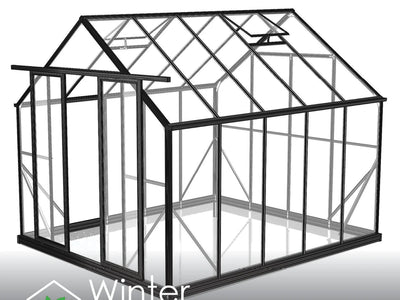
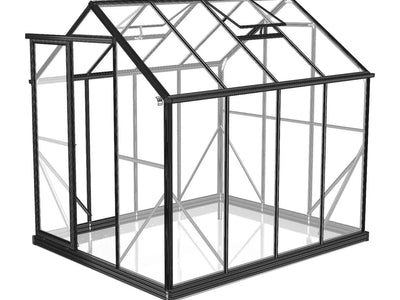
There is a real number for this. NSW Department of Primary Industries and Regional Development says a greenhouse in all but the coolest parts of Australia should have a venting capacity of at least 25 per cent of floor area, with as much as 40 per cent desirable. That is 2.5 to 4 square metres of open vent for a modest 10 square metre greenhouse. Plenty of budget kits ship with a fraction of it, which is why the door usually has to stay open on hot days.
Operating roof vents and louvres
Roof vents do the heavy lifting. They sit where the hottest air collects and dump it straight out, and DPIRD rates roof vents as up to five times more effective than side wall vents. Louvre vents low in the side wall are the other half of the job, feeding cooler air in at bench level.
Open them early. If you wait until the greenhouse feels hot, you're already behind; it takes far longer to pull the temperature back down than to stop it climbing.
Automatic openers are worth having, though they react slowly to a sudden hot morning. On a forecast scorcher, open everything by hand and prop the door as well.
Running extraction and circulation fans
On a still day, natural ventilation stalls. An extraction fan mounted high at one end pulls hot air out and forces fresh air in through the low vents, which keeps things moving when the weather won't.
Circulation fans do a different job. They stir the air inside so you don't get hot pockets in the corners, and they dry leaf surfaces, which cuts down on mildew and fungal trouble.
Neither has to be big. A small fan on a timer, running through the middle of the day, makes a noticeable difference in a domestic greenhouse.
Shielding the structure from intense rays
Stopping heat before it gets in beats trying to remove it afterwards. DPIRD is direct about it: shade cloth used for cooling is most effective when the material sits outside the greenhouse; pale colours are the pick because they reflect solar radiation rather than absorbing it. Shade hung inside has already let the energy through the glazing, so it works far less well.

Applying shade cloth and reflective paint
Shading products run from 30 per cent up to almost total blackout, so the choice is yours to make badly. Around 30 per cent suits milder southern conditions, while denser cloth is the safer pick for harsh inland or northern sun.
Fit it over the outside and leave a small air gap between the cloth and the glazing if you can. That gap lets heat drift away instead of sitting against the panels.
Greenhouse shading paint is the other option. You brush or spray it onto the outside of the glazing in spring and wash it off in autumn. DPIRD's caution is worth repeating: whitewash goes on seasonally, so it cannot be adjusted day to day; it keeps cutting light on cool overcast days when you would rather have it.
Don't overdo either one. Too much shade and your plants go leggy and crop poorly, so start light and add more only if the heat demands it.
Evaluating sun and shade positioning
Watch where the sun actually tracks across your block before you commit to anything. Afternoon western sun is the harshest, and it arrives when the greenhouse is already at its hottest.
A deciduous tree or a shade sail to the west earns its keep. It blocks the summer sun and then lets the winter light back through once the leaves drop.
Inside, work with the shade you have. Put heat-lovers on the sunny side, keep anything tender near the vents or in the shadier corner, and leave space between pots so air can move.
Lowering temperatures with water
Water cools by evaporating, and it also soaks up heat and gives it back slowly. Both effects are useful in a greenhouse.
Drums or jerry cans of water along a wall act as thermal mass. They absorb heat through the day and release it overnight, which flattens out the swing between a scorching afternoon and a cold morning.
Water the plants themselves in the morning. Evening watering leaves foliage damp overnight, and that's how fungal problems get started.
Dampening down hard surfaces
Damping down is the oldest trick in the book and it still works. Hose the concrete, pavers or gravel floor mid-morning and let it evaporate through the day.
On a really hot day, do it again early afternoon. Just don't leave it until evening, because the moisture hangs around all night and invites disease.
Setting up automated misting systems
A misting line on a timer takes the guesswork out of it, and fine droplets cool the air as they evaporate. It suits dry inland gardens best.
Be careful in humid coastal areas. Adding moisture to already-damp air does very little for temperature and raises the risk of mould and mildew.
Ventilation is the better tool for humidity control. Run misting alongside good airflow, never as a substitute for it.

Upgrading your setup with climate control accessories
Most overheating problems come down to a greenhouse that was never set up for an Australian summer. Extra roof vents, a louvre, a circulation fan and a proper external shade cloth will change how the whole structure behaves in January.
Browse the My Acre range of greenhouses if you're still choosing a structure, or have a look through the greenhouse accessories if you're upgrading what you've already got.
You May Also Like:
About the author:
“I have a real passion for helping transform outdoor spaces so people can relax, connect and entertain with confidence and pride. With My Acre, I love guiding homeowners to create beautiful and functional outdoor living areas."