Short answer: cost beyond the kit, summer heat, daily attention and pests that thrive once they get inside. Each one costs time or money; for some households that is a good reason not to buy a greenhouse at all. For everyone else, most of the downsides can be planned for before the base goes down.
This guide takes each downside in turn, with the figures that decide how much it will cost you, then gives an honest verdict on who should and should not own one.
What does a greenhouse cost beyond the kit?
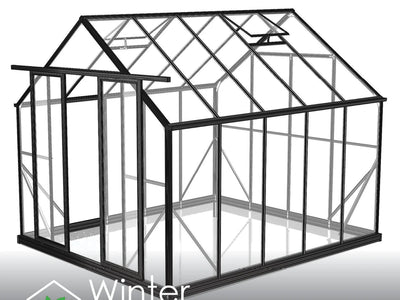
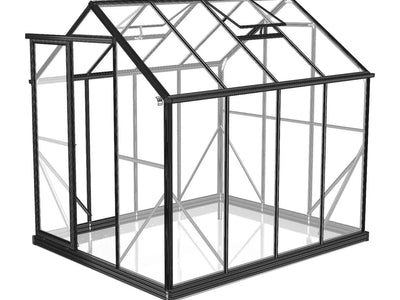
More than the kit price, because the kit is rarely the whole structure. Winter Gardenz's own listing for its Elite 8x8 glasshouse states that it requires a level brick or concrete base, which is not supplied. The same page says an 8x8ft greenhouse takes two people about a day to build. Budget for your base first, then for shade, vents and shelving, before the first seedling goes in; the base options are compared in what is the best base to put a greenhouse on.
Approval can add a step too. In NSW, a greenhouse needs no planning or building approval if it meets every exempt development standard in clauses 2.17 and 2.18 of the Codes SEPP. On bushfire-prone land it must be built of non-combustible materials; it can never be used as living space either. Other states set their own rules, so check with your council before ordering.
How hot does a greenhouse get in summer?
Hot enough to be the downside that needs the most planning in your first summer. NSW DPIRD puts it plainly: cooling is critical in the Australian environment. The full picture, including vent sizing and the temperatures at which crops stop setting fruit, is in our guide on whether greenhouses are too hot in summer.
One detail matters for backyard owners in particular. DPIRD notes that the natural chimney effect behind passive ventilation only becomes fully effective above approximately 3.5 metres, so a low-profile greenhouse needs forced cooling to match a tall one. Winter Gardenz lists its Elite 8x8 glasshouse at 2,915 mm to the ridge, well below that line; a backyard greenhouse depends on open vents and, on the hottest days, a fan.
Automatic vent openers take the timing out of it. Winter Gardenz's AV01 automatic vent opener uses a temperature-sensitive wax cylinder, needs no electricity and opens once the air reaches an adjustable setting between 17 and 24 degrees. A shade cover over the roof, such as the Winter Gardenz Greenhouse Shade Cover Kit, handles the rest of summer.
How much ongoing work does a greenhouse need?
More than an open garden bed. The glazing needs regular cleaning, because NSW DPIRD's guidance on greenhouse covering materials says less light enters as coverings become dirty and older. Condensation matters too: water droplets on the inside of a covering have been shown to reduce light transmission by 8%.
Covers also wear out on a schedule set by the material. DPIRD advises that plastic coverings need replacing routinely, before they visibly start to break down, with discolouration an early sign of wear; glass needs keeping clean and any broken panes replaced. Winter Gardenz backs its twin-wall polycarbonate panels with a 10-year warranty and lists a 25-year glass warranty on its Elite glasshouses, which is a fair guide to where each material sits.
| Covering |
What NSW DPIRD says |
Maker warranty (Winter Gardenz) |
| Plastic film |
The most common and lowest-cost covering; needs replacing routinely, before it visibly breaks down |
No figure published for film |
| Twin-wall polycarbonate |
Plastic sheeting is more durable than film, with fairly good heat retention |
10 years on the panels |
| Glass |
Durable, with good heat retention at night and low maintenance costs; keep it clean and replace broken panes |
25 years on Elite glasshouses |
Heating is the running cost that grows with ambition. Anyone planning to fruit tomatoes through a southern winter pays for it every cold night; DPIRD notes that thermal screens can reduce heating costs possibly by up to half in commercial houses. Growing to the season, greens in winter and fruit in summer, avoids that bill altogether.
Why are pests and diseases worse under cover?
Because the same shelter that protects the plants protects the pests. The RHS says two-spotted spider mite thrives in warm, dry conditions, with plants grown at high temperatures in dry, overcrowded glasshouses more liable to damage; keeping the humidity high reduces the risk. The predatory mite Phytoseiulus persimilis is the most commonly used biological control.
Humidity cuts the other way for disease. The RHS describes grey mould as a problem for plants grown under glass where conditions are humid and overcrowded, adding that hygiene is especially important in greenhouses because the disease can spread rapidly there. That tension, humid enough to discourage the mites yet airy enough to discourage the mould, is the daily balancing act of greenhouse growing.
Insect mesh on vents and doors keeps flying pests out of your greenhouse, but it has a cost. DPIRD's guidance on screens says insect screens restrict airflow, with a significant impact on a structure's venting capacity; the finer the mesh, the less air gets through. The other everyday errors, from overwatering to crowding the bench, are covered in common greenhouse mistakes.
Do plants get pollinated inside a greenhouse?
Not as reliably as outdoors, although the fix depends on the crop. For tomatoes, the RHS advises opening the vents regularly so pollinating insects can reach the flowers, then lightly tapping or shaking the open flowers; misting them can also help.
Cucumbers are the exception that catches people out. According to the RHS, most greenhouse cucumber varieties are all-female. Their flowers must not be pollinated, otherwise the fruit may be bitter, so any male flowers that appear should be removed. Outdoor varieties are different: they need their female flowers pollinated, so check the seed packet before you reach for a paintbrush.
Is a greenhouse still worth owning?
If you can look in most days through summer, yes: the payoff is an earlier start in spring, a longer finish in autumn and a sheltered bench for seedlings all winter. For a household that travels for weeks at a time in January with nobody to water, no. We would rather say so now than sell you one that fails in its first summer.
If the numbers still stack up, the Winter Gardenz Elite 8ft Wide Greenhouse and the Winter Gardenz Louvre Vent Kit are good places to start. Every greenhouse we range comes with our price-beat promise and owner's after-care: a fit check before it ships, a shepherded delivery and a check-in within a week. We also handle any warranty claim for you. Ring Hayden on 1300 515 620 to talk it through, or browse the full range of greenhouses and greenhouse accessories.
You May Also Like:
About the author:
“I have a real passion for helping transform outdoor spaces so people can relax, connect and entertain with confidence and pride. With My Acre, I love guiding homeowners to create beautiful and functional outdoor living areas."