

Lisa B
★★★★★
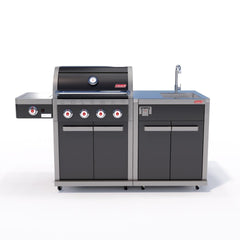
10 Nov 2026Great customer service - they rang me to tell me exactly when my bbq was coming, they also sent over the instructions and price honoured me. 10/10.
Price beat promise

Most chosen
Not sure which one?
Hayden, co-owner
Tell me about your space and I will point you to the right fire. I reply the same business day.
Call 03 7073 2116Most chosen
Not sure which one?
Hayden, co-owner
Tell me what you love to cook and I will point you to the right setup. I reply the same business day.
Call 03 7073 2116Most chosen
Not sure which one?
Hayden, co-owner
Tell me the area you want to shade and I will point you to the right size. I reply the same business day.
Call 03 7073 2116Ponds and fountains
FountainsPondless waterfallsPond kitsDam aerators and fountainsPond filters and equipmentPool care
Robotic pool cleanersBrands
AquascapeAtlas FiltriBBA BiosolutionBeatbotBiancoClayTechDAB PumpsElevateKellockOaseOtterbinePietro StonewareRobo-TekWater MasterNot sure which one?
Hayden, co-owner
Tell me what you need the water to do and I will point you to the right pump, filter or water feature. I reply the same business day.
Call 03 7073 2116Where to start
Not sure which one?
Hayden, co-owner
Tell me what you are planning and I will point you to the right fit. I reply the same business day.
Call 03 7073 2116Spas
Spas and hot tubsComingSwim spasComingNot sure which one?
Hayden, co-owner
Tell me how you want to relax and I will point you to the right spa or sauna. I reply the same business day.
Call 03 7073 2116Not sure which one?
Hayden, co-owner
Tell me what you are planning and I will point you to the maker that suits it. I reply the same business day.
Call 03 7073 2116
Fire
Most chosen
Outdoor Kitchens
Most chosen
Shade
Most chosen
Water
Ponds and fountains
FountainsPondless waterfallsPond kitsDam aerators and fountainsPond filters and equipmentPool care
Robotic pool cleanersGarden
Where to start
Spas & Saunas
Spas
Spas and hot tubsComingSwim spasComingBrands
About
Who we are
Who is My Acre?Why My Acre?Meet Hayden and TimOur installersContact usWhat we promise
Price beat promiseShipping and deliveryWarranty and claimsReturns and exchangeGuides and resources
Customer resourcesCustomer reviewsBlogs


Short answer: Switch the power off and flush the foam with the filter's own cleaning handle; rinse it in pond water only if flushing is not enough. Clean when the indicator or the flow says so rather than on a fixed date, because Oase's manuals range from "only when required" to "e.g. every four weeks".
If the filter has a clear indicator and the water stays clear, you can leave it alone and stop here. If it clogs, the sections below give the maker's steps for each Oase family we list, which are the flow-through BioSmart and BioTec ScreenMatic², the pressure BioPress and FiltoClear and the Filtral UVC. The rest of the range sits in the pond equipment collection; any other brand needs its own manual.
It varies by model, because Oase's manuals do not agree on a single interval. The table sets out what each one says, taken from the BioSmart 18000 and 36000, BioPress, FiltoClear, BioTec ScreenMatic² and Filtral UVC manuals.
| Oase filter | Clean when | Foam or media rinse |
|---|---|---|
| BioSmart 18000, 36000 | Only when required; at once when the float shows in the indicator | Pond water in a bucket, for a thorough clean |
| BioPress 4000 to 10000 | E.g. every four weeks, at the latest when dirty water returns to the pond | Running water |
| FiltoClear 5000 to 31000 | No interval given; new foams at the start of each season | Running water |
| BioTec ScreenMatic² | Foams once the water passes the 100% mark | Compressed in the container, then clear water |
| Filtral UVC | As required, at least twice a year | Clean tap water |
A blocked filter is a risk as well as a nuisance: the BioPress manual warns that it could lead to leakages, while the BioSmart manual says to make sure the filter cannot overflow because of the danger of emptying the pond. Owners on one UK forum describe cleaning weekly in summer and fortnightly in winter, with one calling a fortnight to a month the longest they would leave it. Those are one forum's habits from 2013, mostly with box filters; they are not maker advice. If you are unsure which row describes your filter, ring me on 03 7073 2116 with the model number.
Start by switching the pump off and disconnecting the power, because Oase's manuals say to isolate every unit before reaching into the water. For the BioSmart 18000 and 36000, which have a handle-and-drain design, the maker's steps are these.
The BioTec ScreenMatic² works differently, since its manual says to clean the foams as soon as the water passes the 100% mark. You plug the outlet, run the pump until the foams are covered and compress them several times with the foam cleaning device. Then drain the dirty water through the slide valve, repeat as required and rinse the container with clear water. The debris tray and the rotating screen need their own attention, with a brush if the screen clogs.
Pressure filters flush while the pump runs, which is the opposite of the box filters. With the BioPress, the manual's quick clean fits a dirt drain hose, switches the pump on and has you pull the cleaning handle repeatedly until the draining water is clear. The FiltoClear's Easy Clean works the same way: turn the valve to the dirt water outlet and pull the handle, then return the valve to "Filtering" once the water runs clear.
If a quick clean is not enough, both manuals describe a full clean, in which you open the clamps, lift off the cover with the foam package and wash each foam by compressing it. The BioPress manual says to try the quick clean first.
Oase's manuals contradict each other here, so the honest answer is that the maker has not settled it. The BioSmart manual says to use pond water, while the BioPress and FiltoClear manuals say to compress the foams under running water. The Filtral UVC manual says to use clean tap water, but Aquascape Australia's maintenance page says never to use tap water on the bioballs in its canister filter because the chlorine will kill the beneficial bacteria.
Independent sources point the same way as Aquascape. Kansas State University's water gardening guide MF2911 says city water contains chemicals that are toxic to fish and aquatic microorganisms. Sydney Water says it adds chlorine and ammonia to its supply, though other suppliers differ. Owners are consistent too: in three Pond Life threads and a YouTube comment they rinse foam in a bucket of pond water; two of the threads add that it should never be washed squeaky clean.
Our advice is a bucket of pond water for the foam and the media, with tap water kept off them. That is not Oase's instruction for the pressure filters, so ring Oase's Australian distributor if you want the manual's wording confirmed for your model.
No; the manuals are firm about it. The BioPress manual says never to use chemical cleaning agents. The BioSmart manual explains why: cleaning agents kill the bacteria in the foam filters. The BioTec ScreenMatic² manual says the same, though for stubborn limescale deposits it names Oase's PumpClean or a vinegar- and chlorine-free household cleaner, followed by a thorough rinse of every part in clean water.
That rule protects a colony that took weeks to build. If something must be scrubbed, scrub the lid and the hoses rather than the foam.
Before you open the UV unit, disconnect it from the power, because Oase's manuals warn that the UVC lamp can damage eyes and skin and must never run outside its housing. The Filtral UVC manual asks for cleaning at least twice a year. It says to replace the lamp after about 8000 operating hours, which is roughly eleven months of continuous running. Our guide to what size UV clarifier a pond needs covers lamp life and sizing.
Check the cause before cleaning again. The cause is often that the pond is shedding something, whether dying algae, a new UV unit clearing green water or a pump too big for the filter. Owners on Pond Life described daily cleaning in 2011 after a UV unit went in; one read it as a sign the filter was working. A 2011 thread also blames pushing a pump's full flow through a small filter. The BioSmart manual's remedy for cloudy water is to remove algae and leaves and carry out a partial water change.
Oase's FiltoClear manual also recommends starter bacteria after a manual clean or a foam change. We do not list that product, so ask Oase's Australian distributor where to buy it.
Ring me on 03 7073 2116 with the model and what the foam looks like. I will find the right page of the manual for you. If the filter is oversized or undersized for the pond, I will say so. Find the same Oase filter for less elsewhere and we will beat it. Delivery is charged on Oase items and shows at checkout before payment.

 Water Features
 Water Features
 Water Features

Want a written quote?
Tell me what you are after. I send it the same business day.
Great customer service - they rang me to tell me exactly when my bbq was coming, they also sent over the instructions and price honoured me. 10/10.
Great table delivered quickly! Very happy
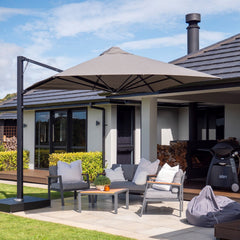
We recently had a Serenity Cantilever umbrella installed and the My Acre team were fabulous. From initially advising us what would suit our tricky terrace best, to keeping us informed on delivery and installation and ...
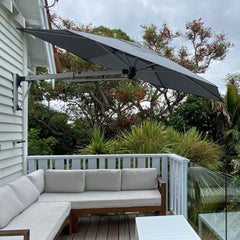
Really happy with my Shadowspec Retreat wall-mounted umbrella. Hayden at My Acre has been great — always quick to respond and very helpful. I recently needed to make a small warranty claim, and Hayden organised everyt...
Thanks to the My Acre team delighted with the end product of the Umbrella cantilever shade. In all respects Hayden was fantastic details, invoicing, adjusting delivery to suit us and supporting the installation with a...
Australian owned · every order personally followed up