
Lisa B
★★★★★
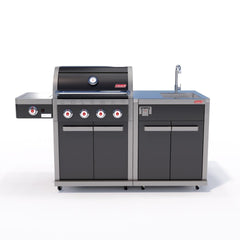
10 Nov 2026Great customer service - they rang me to tell me exactly when my bbq was coming, they also sent over the instructions and price honoured me. 10/10.
Price beat promise

Most chosen
Not sure which one?
Hayden, co-owner
Tell me about your space and I will point you to the right fire. I reply the same business day.
Call 03 7073 2116Most chosen
Not sure which one?
Hayden, co-owner
Tell me what you love to cook and I will point you to the right setup. I reply the same business day.
Call 03 7073 2116Most chosen
Not sure which one?
Hayden, co-owner
Tell me the area you want to shade and I will point you to the right size. I reply the same business day.
Call 03 7073 2116Ponds and fountains
FountainsPondless waterfallsPond kitsDam aerators and fountainsPond filters and equipmentPool care
Robotic pool cleanersBrands
AquascapeAtlas FiltriBBA BiosolutionBeatbotBiancoClayTechDAB PumpsElevateKellockOaseOtterbinePietro StonewareRobo-TekWater MasterNot sure which one?
Hayden, co-owner
Tell me what you need the water to do and I will point you to the right pump, filter or water feature. I reply the same business day.
Call 03 7073 2116Where to start
Not sure which one?
Hayden, co-owner
Tell me what you are planning and I will point you to the right fit. I reply the same business day.
Call 03 7073 2116Spas
Spas and hot tubsComingSwim spasComingNot sure which one?
Hayden, co-owner
Tell me how you want to relax and I will point you to the right spa or sauna. I reply the same business day.
Call 03 7073 2116Not sure which one?
Hayden, co-owner
Tell me what you are planning and I will point you to the maker that suits it. I reply the same business day.
Call 03 7073 2116
Fire
Most chosen
Outdoor Kitchens
Most chosen
Shade
Most chosen
Water
Ponds and fountains
FountainsPondless waterfallsPond kitsDam aerators and fountainsPond filters and equipmentPool care
Robotic pool cleanersGarden
Where to start
Spas & Saunas
Spas
Spas and hot tubsComingSwim spasComingBrands
About
Who we are
Who is My Acre?Why My Acre?Meet Hayden and TimOur installersContact usWhat we promise
Price beat promiseShipping and deliveryWarranty and claimsReturns and exchangeGuides and resources
Customer resourcesCustomer reviewsBlogs


Short answer: A pond losing water is usually losing it to evaporation, a low edge or a leaking waterfall, rarely to a hole in the liner. Aquascape puts normal evaporation at 25 to 38 mm a week in mild, humid weather and 76 mm or more in hot, dry weather. A drop of 150 mm overnight is a leak. Switch the pump off for 24 hours to find out where.
If your pond drops a few millimetres a day in a hot spell and recovers after rain, that is evaporation and you can stop here. If the level falls faster than that, or keeps falling with the pump off, the sections below explain how to tell evaporation from a leak, where leaks usually start and when a liner needs patching or replacing.
Considerably more than most owners anticipate, particularly with a waterfall. Aquascape's guide to fixing pond leaks says ponds in regions with moderate temperatures and high humidity can expect 1 to 1½ inches (25 to 38 mm) of loss a week during spring and summer. In hot regions with low humidity, the figure can reach 3 inches (76 mm) or more a week.
Moving water multiplies those figures substantially. Aquascape estimates that a pond of about 1.2 × 1.8 m with a 6.1 m stream and 1.5 m of cascading waterfalls may lose 2 inches (51 mm) or more every day, because splashing water has far more exposure to the air. The same features on a pond of about 4.9 × 6.4 m would barely register, since the larger surface hides the loss.
Vegetation consumes water as well. A Garden Pond Forum thread on a two-pond system put its steady drop down to waterlilies covering roughly a third of the surface. Penn State Extension similarly observes that the roots of water-loving trees can remove several inches from a pond each month.
Switch off the pump and monitor the level. Aquascape's procedure is to fill the pond to its normal level, unplug the pump and leave it for 24 hours. If the level drops, the leak is in the pond itself; if it holds, the problem lies in the stream, waterfall, plumbing or pump connections. Aquascape draws one firm line: filling a pond in the evening and finding it six inches (152 mm) lower the next morning is a leak, never evaporation.
A bucket test improves the accuracy of the reading during hot weather. Fill a bucket with pond water, stand it on a submerged shelf so it shares the pond's sun and wind, then mark both levels. If the pond falls noticeably further than the bucket after a day or two, the difference is leaking somewhere. Irregular drops are a clue in themselves: in one forum thread, members point out that inconsistent losses suggest something other than a steady leak, such as plant growth backing up a waterfall until it overflows.
Usually at the edges and the waterfall, rarely in the middle of the liner. Aquascape names settling at the pond's edge as the most common cause of a leak, especially in a new pond. Low spots usually appear around the stream and waterfall, where excavated soil was built up during construction and settles after the first few rains. Wet mulch, damp gravel or muddy ground around the perimeter gives the leak away.
Experienced owners report the same order of probability. A long-standing Garden Pond Forum member says most water loss comes from plumbing leaks or low edges, with a liner hole the rare case. In the same thread, another owner traced a loss of 1 to 2 inches a day to a loose-stacked flagstone waterfall. On Whirlpool, an Australian poster advises taking the liner above the water level rather than trusting any sealant, which the poster expects to fail eventually.
Picture a new pond finished in October, its waterfall built up from the soil dug out of the hole. By January, after several summer storms, the backfill beneath one side of the stream has settled slightly. Every afternoon the pump pushes water over that low lip into the garden bed, while the owner tops up the pond repeatedly and blames the heat. Aquascape's 24-hour pump-off test would show the level holding with the pump stopped, pointing straight at the stream. Lifting the liner at the wet spot and packing soil beneath it, as Aquascape describes, resolves the problem in an afternoon; the pond then holds its level through the rest of summer.
Splashing is the next most likely explanation. Aquascape suggests adjusting rocks around the waterfall to contain or redirect the splash, along with trimming plants or string algae that divert the stream over the liner's edge; the guide to removing string algae covers the latter. A skimmer faceplate that has not sealed is the other common culprit; the guide to how a pond skimmer works explains where it sits.
Allow the falling water to identify its location. Aquascape advises allowing the level to keep dropping after the pump-off test, because the level where the water stops falling is the level of the leak. Remove the rocks around the perimeter at that height and inspect the liner for a puncture. Penn State Extension describes the same signature on earth ponds: rapid loss to a certain point, then little or none.
Small holes are reliably repairable. Elevate's PondGard design and installation guide says a hole smaller than 6.35 mm can be covered with a 152.4 mm QuickSeam cover patch. A larger tear takes a patch cut from PondGard extending at least 101.6 mm beyond the damage in every direction. Use the repair system that matches your liner material, since the guide states that non-Elevate products cannot be approved for its seams.
Not a lined pond. Penn State Extension's guide to fixing a leaking pond covers ways of sealing earth-bottomed farm ponds, from compaction to added clay and swelling bentonite. Those methods work on soil; none of them closes a hole in a rubber or plastic sheet. The same guide notes that even a well-built earth pond may lose about one inch (25 mm) a month to seepage.
A forum member in the Garden Pond Forum thread above reports that two rigid preformed ponds developed cracks with slow leaks; both were eventually replaced with a liner. A slow leak that seems to pause usually means the water has fallen below the damage, not that the damage has closed.
When patches accumulate or the material itself has deteriorated. Elevate recommends an annual inspection that includes measuring leak flow and monitoring the water level, which catches small problems while they are still patchable. A liner that has gone hard and brittle in the sun, a common fate of older PVC, will keep cracking around each repair; the comparison of EPDM vs PVC pond liners explains why.
Replacement is a substantial undertaking, so certainty matters before committing to it. Run the pump-off test and inspect the edges and the waterfall before lifting a single rock. If the liner does need replacing, the Elevate EPDM liners are cut to size; the guides to what size pond liner you need and common pond problems cover the rest of the rebuild.
Ring me on 03 7073 2116 with how fast the level falls and what the pump-off test showed; I will help you work out whether it is evaporation, an edge or the liner before you spend anything. Find the same Elevate liner for less elsewhere and we will beat that price. Delivery is charged on liners and appears at checkout before payment.

 Water Features
 Water Features
 Water Features

Want a written quote?
Tell me what you are after. I send it the same business day.
Great customer service - they rang me to tell me exactly when my bbq was coming, they also sent over the instructions and price honoured me. 10/10.
Great table delivered quickly! Very happy
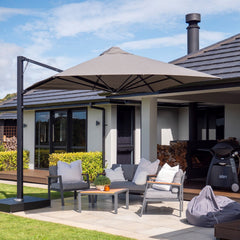
We recently had a Serenity Cantilever umbrella installed and the My Acre team were fabulous. From initially advising us what would suit our tricky terrace best, to keeping us informed on delivery and installation and ...
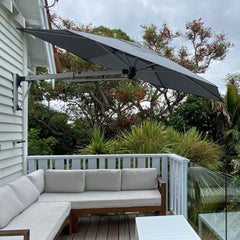
Really happy with my Shadowspec Retreat wall-mounted umbrella. Hayden at My Acre has been great — always quick to respond and very helpful. I recently needed to make a small warranty claim, and Hayden organised everyt...
Thanks to the My Acre team delighted with the end product of the Umbrella cantilever shade. In all respects Hayden was fantastic details, invoicing, adjusting delivery to suit us and supporting the installation with a...
Australian owned · every order personally followed up