
Lisa B
★★★★★
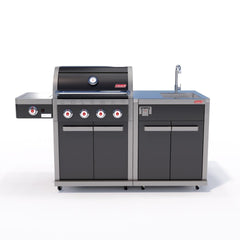
10 Nov 2026Great customer service - they rang me to tell me exactly when my bbq was coming, they also sent over the instructions and price honoured me. 10/10.
Price beat promise

Most chosen
Not sure which one?
Hayden, co-owner
Tell me about your space and I will point you to the right fire. I reply the same business day.
Call 03 7073 2116Most chosen
Not sure which one?
Hayden, co-owner
Tell me what you love to cook and I will point you to the right setup. I reply the same business day.
Call 03 7073 2116Most chosen
Not sure which one?
Hayden, co-owner
Tell me the area you want to shade and I will point you to the right size. I reply the same business day.
Call 03 7073 2116Ponds and fountains
FountainsPondless waterfallsPond kitsDam aerators and fountainsPond filters and equipmentPool care
Robotic pool cleanersBrands
AquascapeAtlas FiltriBBA BiosolutionBeatbotBiancoClayTechDAB PumpsElevateKellockOaseOtterbinePietro StonewareRobo-TekWater MasterNot sure which one?
Hayden, co-owner
Tell me what you need the water to do and I will point you to the right pump, filter or water feature. I reply the same business day.
Call 03 7073 2116Where to start
Not sure which one?
Hayden, co-owner
Tell me what you are planning and I will point you to the right fit. I reply the same business day.
Call 03 7073 2116Spas
Spas and hot tubsComingSwim spasComingNot sure which one?
Hayden, co-owner
Tell me how you want to relax and I will point you to the right spa or sauna. I reply the same business day.
Call 03 7073 2116Not sure which one?
Hayden, co-owner
Tell me what you are planning and I will point you to the maker that suits it. I reply the same business day.
Call 03 7073 2116
Fire
Most chosen
Outdoor Kitchens
Most chosen
Shade
Most chosen
Water
Ponds and fountains
FountainsPondless waterfallsPond kitsDam aerators and fountainsPond filters and equipmentPool care
Robotic pool cleanersGarden
Where to start
Spas & Saunas
Spas
Spas and hot tubsComingSwim spasComingBrands
About
Who we are
Who is My Acre?Why My Acre?Meet Hayden and TimOur installersContact usWhat we promise
Price beat promiseShipping and deliveryWarranty and claimsReturns and exchangeGuides and resources
Customer resourcesCustomer reviewsBlogs


Short answer: A pond skimmer draws the top layer of pond water through a basket and a filter mat, catching leaves, pollen and insects before they sink and rot, then passes the cleaner water to the pump. You need one if leaves, blossom or seed regularly fall in; a small, sheltered pond can manage with a net.
If no tree overhangs your pond, the net is the sensible answer and you can stop here. If one does, the sections below explain the working parts, the main types and the risk to small fish that forum owners keep reporting. They then point to the Oase AquaSkim and SwimSkim listing and the wider pond equipment collection.
A box skimmer sits at the water line and lets surface water flow in, where a basket catches the large debris before the water passes through a filter mat. Aquascape Australia describes exactly that sequence, with the cleaned water then sent through the plumbing to the biological filter; it adds that the skimmer houses the pump and plumbing out of sight. The Signature Series 400 adds a lockable weir at the water line plus a faux-rock lid that hides the unit.
A floating skimmer works from the surface instead. Oase's own 2008 video describes the SwimSkim 25 as a floating unit held up by three floats, with a suction pump moving 2,500 L of water an hour into a removable debris basket. A fine sponge below the basket traps slightly smaller particles; Oase rates the unit for ponds at least 40 cm deep with a surface area up to 25 square metres.
A skimmer is the mechanical first stage rather than a complete filter. It removes floating debris, whereas the biological filter downstream handles dissolved waste such as ammonia, which New Mexico State University's extension service calls the first form of nitrogen released when organic matter decays. Aquascape Australia makes the same split, saying that pairing a strong biological filter with a reliable mechanical one can remove the need for clarifiers entirely.
The skimmer therefore reduces what your filter must break down, which matters in summer because the same extension guide W-104 lists leaves among the landscape debris that feed a pond's nutrients. It adds that bacteria consume oxygen as they decompose organic matter; it also names a lack of dissolved oxygen as the leading cause of fish kills. The guide is written for recreational fish ponds, but the mechanism is the same in a backyard pond.
Only if debris reaches the pond in quantity. Owners in three Garden Pond Forum threads tie the need to the leaf and blossom seasons; several manage with a net where few trees overhang the water. One owner with no trees nearby never needed a skimmer, while another says theirs pulls debris out in spring but little in summer, when lily pads cover the surface.
Take a pond beside a Colorbond fence with a gum hanging over it in autumn. The leaves land on the surface, sink and rot into the sludge your filter must then digest, which is the cycle a skimmer exists to break. A floating unit such as the SwimSkim 25, moving 2,500 L an hour, draws those leaves into its basket while they still float, so the water you look at from the deck stays clear.
The case is strongest for a pond with fish, a waterfall and an overhanging tree, because decaying leaves use oxygen and release ammonia. Owners in two threads also value the pond skimmer as a protected home for the pump, which then draws cleaner water. One poster claims that makes a skimmer pay for itself within two years, which is anecdotal and unproven. A pool-style net does the job for a small, sheltered pond and costs less than any pond skimmer, so if that describes your pond, spend the difference on the pump or the filter.
Three designs turn up in practice, differing in plumbing more than in size.
| Type | How it runs | What makers and owners say |
|---|---|---|
| Box skimmer | Built into the pond edge, holding weir, basket, filter mat and the pump | Aquascape Australia calls it the more popular type because it is easier to maintain |
| Floating skimmer | Floats on the surface with its own pump, like the Oase SwimSkim 25 | One owner rates surface skimmers best for smaller ponds built without a skimmer |
| Intake bay | A walled shallow zone that draws surface water over a lower edge | Owners in two threads recommend it above a floating skimmer; it is built, not bought |
Fish and frogs get caught, which is the most repeated complaint in the threads read. In one thread an owner lost a goldfish and rescued another. In another a skimmer ate many 2 to 3 inch goldfish even at low flow, while on Pond Life (2011) smaller koi jumped in after food drawn into the basket. A wildlife-pond owner on the same forum found a dead newt and tadpoles in a new skimmer's basket in 2024 but could not tell whether the skimmer or a recent move was to blame. Posters suggest a mesh wide enough to pass leaves but not fish, kept just below the surface, or a valve to lower the draw.
Floating units have a second fault: owners on two forums report them riding up out of the water, leaving the pump running dry, which one warns can burn the pump out if it goes unnoticed. Upkeep is modest but real. Aquascape Australia's maintenance page says to inspect the basket regularly until you learn how quickly it fills and to check the filter mat. Its FAQ adds that skimmer filter pads ideally last two to three years.
The Oase listing covers the AquaSkim 40, the AquaSkim Gravity and the SwimSkim 25. Only the SwimSkim figures above come from an Oase document read for this guide, so it quotes no pond-size rating for the AquaSkim models. Ask us to confirm one with Oase's Australian distributor before you rely on a figure. Aquascape's DIY Backyard Pond Kit includes a skimmer and BioFalls filter, according to Aquascape Australia. The Oase pond skimmer listing starts at $327.80 at our prices on 9 October 2026.
Ring me on 03 7073 2116 and tell me what overhangs the pond, how it is plumbed and whether it holds fish. I will say whether a skimmer is worth buying; if a net will do, I will say that too. Find the same pond skimmer for less elsewhere and we will beat it. Delivery is charged on Oase and Aquascape items and shows at checkout before payment.

 Water Features
 Water Features
 Water Features

Want a written quote?
Tell me what you are after. I send it the same business day.
Great customer service - they rang me to tell me exactly when my bbq was coming, they also sent over the instructions and price honoured me. 10/10.
Great table delivered quickly! Very happy
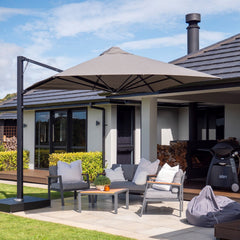
We recently had a Serenity Cantilever umbrella installed and the My Acre team were fabulous. From initially advising us what would suit our tricky terrace best, to keeping us informed on delivery and installation and ...
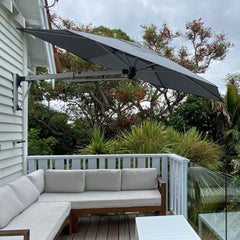
Really happy with my Shadowspec Retreat wall-mounted umbrella. Hayden at My Acre has been great — always quick to respond and very helpful. I recently needed to make a small warranty claim, and Hayden organised everyt...
Thanks to the My Acre team delighted with the end product of the Umbrella cantilever shade. In all respects Hayden was fantastic details, invoicing, adjusting delivery to suit us and supporting the installation with a...
Australian owned · every order personally followed up