

Lisa B
★★★★★
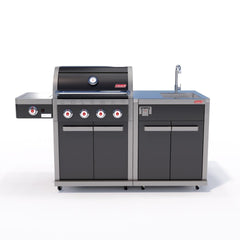
10 Nov 2026Great customer service - they rang me to tell me exactly when my bbq was coming, they also sent over the instructions and price honoured me. 10/10.
Price beat promise

Most chosen
Not sure which one?
Hayden, co-owner
Tell me about your space and I will point you to the right fire. I reply the same business day.
Call 03 7073 2116Most chosen
Not sure which one?
Hayden, co-owner
Tell me what you love to cook and I will point you to the right setup. I reply the same business day.
Call 03 7073 2116Most chosen
Not sure which one?
Hayden, co-owner
Tell me the area you want to shade and I will point you to the right size. I reply the same business day.
Call 03 7073 2116Ponds and fountains
FountainsPondless waterfallsPond kitsDam aerators and fountainsPond filters and equipmentPool care
Robotic pool cleanersBrands
AquascapeAtlas FiltriBBA BiosolutionBeatbotBiancoClayTechDAB PumpsElevateKellockOaseOtterbinePietro StonewareRobo-TekWater MasterNot sure which one?
Hayden, co-owner
Tell me what you need the water to do and I will point you to the right pump, filter or water feature. I reply the same business day.
Call 03 7073 2116Where to start
Not sure which one?
Hayden, co-owner
Tell me what you are planning and I will point you to the right fit. I reply the same business day.
Call 03 7073 2116Spas
Spas and hot tubsComingSwim spasComingNot sure which one?
Hayden, co-owner
Tell me how you want to relax and I will point you to the right spa or sauna. I reply the same business day.
Call 03 7073 2116Not sure which one?
Hayden, co-owner
Tell me what you are planning and I will point you to the maker that suits it. I reply the same business day.
Call 03 7073 2116
Fire
Most chosen
Outdoor Kitchens
Most chosen
Shade
Most chosen
Water
Ponds and fountains
FountainsPondless waterfallsPond kitsDam aerators and fountainsPond filters and equipmentPool care
Robotic pool cleanersGarden
Where to start
Spas & Saunas
Spas
Spas and hot tubsComingSwim spasComingBrands
About
Who we are
Who is My Acre?Why My Acre?Meet Hayden and TimOur installersContact usWhat we promise
Price beat promiseShipping and deliveryWarranty and claimsReturns and exchangeGuides and resources
Customer resourcesCustomer reviewsBlogs


Short answer: To get rid of string algae in a pond, pull it out by hand or twirl it onto a stick, then remove what feeds it: excess nutrients from fish food, soil and decaying leaves. New Mexico State University's extension service says raking gives only short-term control. It also warns that treating a whole pond above about 21 °C, with algae covering more than a third of it, risks a fish kill.
If you only need to clear this week's growth from your pond, the removal section is enough. If the algae returns every spring, the later sections explain why the common household remedies fail, what barley straw and copper ionisers actually do and how to stop the regrowth.
String algae is a filamentous alga that forms long green threads on rocks, waterfalls and plant stems. New Mexico State University's guide to managing filamentous algae in ponds distinguishes it from the free-floating planktonic algae that turn water pea-soup green. The guide attributes both to an overabundance of nutrients, particularly phosphorus and nitrogen. Filamentous algae, the guide notes, first establish where sunlight reaches the pond bottom.
Green water is a separate problem with a separate fix, covered in the guide to keeping pond water clear. The Royal Horticultural Society's advice on pond algae and blanket weed adds that string algae is particularly common in sunny ponds with little planting to shade the surface.
Owners reach the same diagnosis from experience. In a Garden Pond Forum thread about a koi pond choked by string algae, an experienced member calls the algae a symptom of excess nutrients and insufficient filtration rather than of sunlight alone. In another thread, a member traces a sudden outbreak to organic debris accumulating on the bottom.
By hand, repeatedly. The RHS recommends scooping blanket weed out with a net or rake, or twirling it around a cane. NMSU agrees that physical removal works but describes it as short-term control that must be repeated through the peak growing season; the removed algae can be composted or used as garden mulch.
Owners add a practical refinement. A commenter on a YouTube string algae explainer pulls it out with bare hands specifically to feel for tadpoles or insects caught in the threads and return them. A viewer of an Ozponds video on string algae clears a bog-fed stream by hand and composts the algae.
Picture a sunny backyard pond in late spring, its waterfall rocks draped in green threads a fortnight before guests arrive. The instinct is to drain it, scrub everything and refill from the tap. The RHS warns that changing the water may solve the immediate problem but only makes things worse in the long run, partly because tap water carries nutrients. A cane and a bucket each weekend remove the algae along with its stored nutrients, without disturbing your fish or the filter; a chemical treatment at that time of year meets NMSU's 21 °C warning head on. By the time guests arrive, the rocks are clear and the water still holds the bacteria that took months to establish.
Neither belongs in a pond containing fish. Washington State's Department of Ecology explains that detergents destroy the external mucus layer that protects fish from bacteria and parasites. Detergents can also cause severe damage to fish gills and leave fish starved of air. Dish soap is a detergent, so it endangers the fish long before it clears the algae.
Vinegar has no better standing. No pond authority or treatment manufacturer consulted for this guide lists household vinegar as an algae treatment. NMSU's guide stresses reading and following the label of any registered algaecide; household vinegar carries no such label for ponds. Removing the algae by hand remains the safer course.
Slowly and less reliably than its reputation suggests. The RHS recommends floating a mesh bag of barley straw on the pond in spring and removing it once it turns black, usually about six months later; it says this should discourage all types of pond algae.
Owners report more modest results. A Garden Pond Forum member found barley straw extract not strong enough to eradicate an established outbreak. A YouTube viewer using the extract says it helps only a little. Another experienced member of a long Garden Pond Forum thread dismisses the popular explanation of how barley works as a myth. Treat barley as slow prevention, started in spring, rather than a cure for a mat that already exists.
Only with regular testing. Aquascape's support page on whether the IonGen System is safe for fish says it is, when operated to its guidelines: copper below 0.25 ppm, total alkalinity between 100 and 250 ppm and the lowest effective setting. Aquascape states that the IonGen must not run in a pond containing fish if total alkalinity falls below 100 ppm.
Independent evidence urges more caution. A 2020 case report in Veterinary Record Open investigated a koi die-off in a North Carolina pond after an IonGen was added. Follow-up tank tests found copper levels exceeding those associated with toxicity in both hard and soft water. The authors concluded that ion generators might not be safe for fish; copper, they wrote, should be used as an algicide only when concentrations are closely monitored.
NMSU separately notes that ornamental goldfish are particularly sensitive to copper sulfate. Copper's toxicity, the guide adds, depends heavily on water alkalinity. We sell the Aquascape IonGen System (G2) at $549 on 9 November 2026. If you will not test copper and alkalinity regularly, do not buy one; hand removal and nutrient control are safer for the fish.
Starve it of nutrients and light in your pond. The RHS recommends keeping soil out of the pond, using low-nutrient aquatic compost, stopping fertiliser reaching it from nearby lawns and netting the surface when leaves fall. It also advises topping up with rainwater rather than tap water. For a new pond, it suggests a site in partial shade, a depth of at least 60 to 75 cm and roughly half the surface covered by aquatic plants.
Patience is part of the method. NMSU notes that nutrients recycle within a pond, so full recovery can take several years. Garden Pond Forum members describe string algae surging first each spring before established plants outcompete it, with one estimating two or three years for a new pond to reach balance. Several YouTube commenters report that goldfish graze the threads once owners stop overfeeding them.
Removing debris before it rots matters as much as removing the algae; the guides to how a pond skimmer works and whether a pond needs a filter cover that equipment. Aquascape's beneficial bacteria and maintenance treatments are in the pond water treatments collection; follow each product's current label for dosing.
Ring me on 03 7073 2116 with the pond's size, stocking and how much sun it receives; I will tell you whether your pond needs a product or simply more plants. Find the same treatment for less elsewhere and we will beat that price. Delivery is charged on pond treatments and appears at checkout before payment.

 Water Features
 Water Features
 Water Features

Want a written quote?
Tell me what you are after. I send it the same business day.
Great customer service - they rang me to tell me exactly when my bbq was coming, they also sent over the instructions and price honoured me. 10/10.
Great table delivered quickly! Very happy
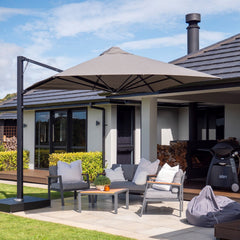
We recently had a Serenity Cantilever umbrella installed and the My Acre team were fabulous. From initially advising us what would suit our tricky terrace best, to keeping us informed on delivery and installation and ...
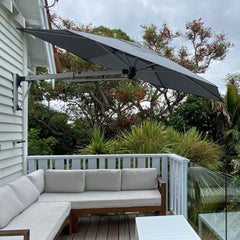
Really happy with my Shadowspec Retreat wall-mounted umbrella. Hayden at My Acre has been great — always quick to respond and very helpful. I recently needed to make a small warranty claim, and Hayden organised everyt...
Thanks to the My Acre team delighted with the end product of the Umbrella cantilever shade. In all respects Hayden was fantastic details, invoicing, adjusting delivery to suit us and supporting the installation with a...
Australian owned · every order personally followed up