Lisa B
★★★★★
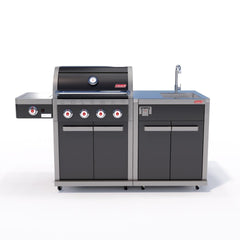
10 Nov 2026Great customer service - they rang me to tell me exactly when my bbq was coming, they also sent over the instructions and price honoured me. 10/10.
Price beat promise

Most chosen
Not sure which one?
Hayden, co-owner
Tell me about your space and I will point you to the right fire. I reply the same business day.
Call 03 7073 2116Most chosen
Not sure which one?
Hayden, co-owner
Tell me what you love to cook and I will point you to the right setup. I reply the same business day.
Call 03 7073 2116Most chosen
Not sure which one?
Hayden, co-owner
Tell me the area you want to shade and I will point you to the right size. I reply the same business day.
Call 03 7073 2116Ponds and fountains
FountainsPondless waterfallsPond kitsDam aerators and fountainsPond filters and equipmentPool care
Robotic pool cleanersBrands
AquascapeAtlas FiltriBBA BiosolutionBeatbotBiancoClayTechDAB PumpsElevateKellockOaseOtterbinePietro StonewareRobo-TekWater MasterNot sure which one?
Hayden, co-owner
Tell me what you need the water to do and I will point you to the right pump, filter or water feature. I reply the same business day.
Call 03 7073 2116Where to start
Not sure which one?
Hayden, co-owner
Tell me what you are planning and I will point you to the right fit. I reply the same business day.
Call 03 7073 2116Spas
Spas and hot tubsComingSwim spasComingNot sure which one?
Hayden, co-owner
Tell me how you want to relax and I will point you to the right spa or sauna. I reply the same business day.
Call 03 7073 2116Not sure which one?
Hayden, co-owner
Tell me what you are planning and I will point you to the maker that suits it. I reply the same business day.
Call 03 7073 2116
Fire
Most chosen
Outdoor Kitchens
Most chosen
Shade
Most chosen
Water
Ponds and fountains
FountainsPondless waterfallsPond kitsDam aerators and fountainsPond filters and equipmentPool care
Robotic pool cleanersGarden
Where to start
Spas & Saunas
Spas
Spas and hot tubsComingSwim spasComingBrands
About
Who we are
Who is My Acre?Why My Acre?Meet Hayden and TimOur installersContact usWhat we promise
Price beat promiseShipping and deliveryWarranty and claimsReturns and exchangeGuides and resources
Customer resourcesCustomer reviewsBlogs


Short answer: Not always. A pond with few or no fish and plenty of plants can run without a filter, as the Royal Horticultural Society says, but a pond with a large fish population needs one to cope with their waste. Stocking decides it, because more fish means more ammonia; a filter is where the bacteria that process that ammonia live.
If the pond is planted and will hold a few goldfish at most, you can stop here and keep your money. If the plan is koi or a crowd of goldfish, the sections below explain why a filter matters, how it works and which of the Oase filters we list suit the job. The wider pond equipment collection holds the pumps, skimmers and clarifiers that go with them.
It depends on the fish. The RHS says filters are useful in ponds with a large population of fish because they remove fish waste and plant debris. It adds that ponds with few or no fish shouldn't require one, whereas Aquascape, which builds ecosystem ponds, says a low-maintenance pond with plants, fish and aeration also requires adequate filtration.
The two statements are consistent once the stocking is taken into account. A pond with a crowd of fish needs a filter; a planted pond with almost none does not.
It strains out debris and provides a habitat for the bacteria. New Mexico State University's extension guide W-104 says ammonia is the main nitrogenous waste excreted by most fish. Nitrosomonas bacteria convert it to nitrite, which the guide also calls highly toxic to fish, so Nitrobacter bacteria must then convert that nitrite to nitrate.
A filter combines mechanical filtration, which removes debris, with biological filtration, which depends on a bacterial colony growing on foam or media with a large surface area while a pump pushes pond water through. The RHS says the bacterial population takes six weeks to build up; Oase's BioSmart manual agrees that the unit needs several weeks after installation to reach its full biological effect, which it can retain only by running continuously.
A filter is therefore a continuing commitment as well as a purchase. Once it runs without a break, it turns fish waste into something the plants can use; the water stays clear enough to see the fish.
Yes, if the fish load is light and the plants do the work. Kansas State University's water gardening guide MF2911 calls plants nature's number one filtering system, aims for 50 to 75 percent surface coverage and says to keep less than 1 inch of fish per square foot of pond surface. It treats a filter as an addition that will improve water quality.
Owners describe the same arrangement in practice: in a 2024 forum thread a member says a pond with plants, a low fish load and some water movement can get by without one if it stays in balance. Another owner reports 12 years with four goldfish and no electricity or mechanical filtering. A 2017 reply says it works only under stringent stocking levels, while viewers under a pond video describe heavily planted ponds with no filter at all. That is four independent accounts, though none we found is Australian.
If you are unsure which side of the line your pond sits on, ring me on 03 7073 2116 and describe it. I will tell you whether a filter is worth buying.
Usually when the fish grow larger or the plants can no longer absorb the waste they produce. A would-be koi owner was told in 2022 that unless the pond held goldfish at a light load, or the koi went unfed, filtering would suit better. In a 2021 thread, an owner ran a small tub with only a fountain pump and one small fish at a time. The water was turning to pea soup within a couple of weeks.
A long-time member of a UK forum put it more bluntly in 2010, saying they would never suggest keeping fish, especially koi, in an unfiltered pond because the waste grows as the fish do. The unfiltered ponds they knew all had fresh water running in to dilute it; forum replies are anecdotal, but the pattern across them matches the one the RHS gives.
No source consulted for this guide gives a number, because the answer depends on how many fish share how much water. What the sources do give is the bacteria's clock: the RHS says the bacterial population can die if the filter is switched off for 24 hours or more. Aquascape says the pump should run 24 hours a day, 7 days a week, because nitrifying bacteria need oxygen to live.
After a power cut or a blocked pump, restart the filter first and test the water before the next feed. A colony that has stalled for a day may no longer be keeping pace with the fish.
Two published rules disagree, but both are stricter than most owners expect. Kansas State's rule is less than 1 inch of fish per square foot of surface. Oase's manuals for the BioSmart, BioPress and BioTec ScreenMatic² give a guide value of about 60 cm of fish length per cubic metre of pond water, in the faults table for a unit that is not performing.
Take a pond 4 m by 2.5 m and 0.7 m deep on average, which holds 7,000 litres with 10 square metres of surface. Kansas State's rule caps the fish at about 273 cm of total length, whereas Oase's guide gives 420 cm, which is 1.5 times as much, or about fourteen fish of 30 cm against nine. The rules measure different things, volume against surface, so they produce considerably different totals for the same pond.
The one that fits the pond's layout and its fish load. Oase offers three types of filter in the range we stock, with prices as ours on 10 October 2026.
| Type | Oase range we list | Price range |
|---|---|---|
| Flow-through box | BioSmart and BioTec ScreenMatic² | $596.20 to $6,671.50 |
| Pressure | BioPress and FiltoClear | $546.70 to $1,460.80 |
| Drum | ProfiClear Premium | $9,894.50 to $17,374.50 |
The flow-through and pressure listings each hold several sizes. This guide quotes no pond-size rating for any model. Ask us to read out the maker's rating for your fish load and check it against your pond before you order.
One concession: the ProfiClear Premium drum filter is a koi-pond purchase; for a small goldfish pond it is far more than you need. Oase's BioPress manual also says electrical installation may only be carried out by a qualified electrician, with a 30 mA fault current protection device and the unit at least 2 m from the water. Have a licensed electrician do any mains work.
Ring me on 03 7073 2116 with the pond's volume, its fish and any trees overhead. If a planted pond with a few goldfish will do without a filter, I will say so. Find the same Oase filter for less elsewhere and we will beat it. Delivery is charged on Oase items and shows at checkout before payment.

 Water Features
 Water Features
 Water Features

Want a written quote?
Tell me what you are after. I send it the same business day.
Great customer service - they rang me to tell me exactly when my bbq was coming, they also sent over the instructions and price honoured me. 10/10.
Great table delivered quickly! Very happy
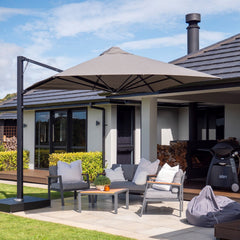
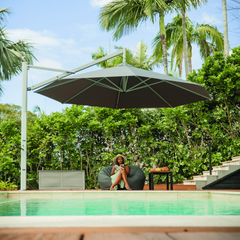
We recently had a Serenity Cantilever umbrella installed and the My Acre team were fabulous. From initially advising us what would suit our tricky terrace best, to keeping us informed on delivery and installation and ...
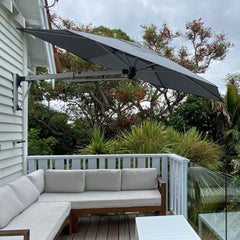
Really happy with my Shadowspec Retreat wall-mounted umbrella. Hayden at My Acre has been great — always quick to respond and very helpful. I recently needed to make a small warranty claim, and Hayden organised everyt...
Thanks to the My Acre team delighted with the end product of the Umbrella cantilever shade. In all respects Hayden was fantastic details, invoicing, adjusting delivery to suit us and supporting the installation with a...
Australian owned · every order personally followed up