Lisa B
★★★★★
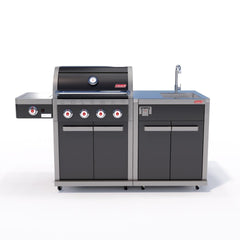
10 Nov 2026Great customer service - they rang me to tell me exactly when my bbq was coming, they also sent over the instructions and price honoured me. 10/10.
Price beat promise

Most chosen
Not sure which one?
Hayden, co-owner
Tell me about your space and I will point you to the right fire. I reply the same business day.
Call 03 7073 2116Most chosen
Not sure which one?
Hayden, co-owner
Tell me what you love to cook and I will point you to the right setup. I reply the same business day.
Call 03 7073 2116Most chosen
Not sure which one?
Hayden, co-owner
Tell me the area you want to shade and I will point you to the right size. I reply the same business day.
Call 03 7073 2116Ponds and fountains
FountainsPondless waterfallsPond kitsDam aerators and fountainsPond filters and equipmentPool care
Robotic pool cleanersBrands
AquascapeAtlas FiltriBBA BiosolutionBeatbotBiancoClayTechDAB PumpsElevateKellockOaseOtterbinePietro StonewareRobo-TekWater MasterNot sure which one?
Hayden, co-owner
Tell me what you need the water to do and I will point you to the right pump, filter or water feature. I reply the same business day.
Call 03 7073 2116Where to start
Not sure which one?
Hayden, co-owner
Tell me what you are planning and I will point you to the right fit. I reply the same business day.
Call 03 7073 2116Spas
Spas and hot tubsComingSwim spasComingNot sure which one?
Hayden, co-owner
Tell me how you want to relax and I will point you to the right spa or sauna. I reply the same business day.
Call 03 7073 2116Not sure which one?
Hayden, co-owner
Tell me what you are planning and I will point you to the maker that suits it. I reply the same business day.
Call 03 7073 2116
Fire
Most chosen
Outdoor Kitchens
Most chosen
Shade
Most chosen
Water
Ponds and fountains
FountainsPondless waterfallsPond kitsDam aerators and fountainsPond filters and equipmentPool care
Robotic pool cleanersGarden
Where to start
Spas & Saunas
Spas
Spas and hot tubsComingSwim spasComingBrands
About
Who we are
Who is My Acre?Why My Acre?Meet Hayden and TimOur installersContact usWhat we promise
Price beat promiseShipping and deliveryWarranty and claimsReturns and exchangeGuides and resources
Customer resourcesCustomer reviewsBlogs


Short answer: a pond pump should move the pond's full volume at least once an hour, or 19,000 litres an hour per metre of waterfall width if that is higher, measured at the real head height. A 3,456 litre pond with a 30 cm waterfall and 1.5 m of head needs about 5,700 L/h delivered at 1.5 m.
Those two numbers are how we match a pump to your pond from our pond equipment range. If that answers the question, stop here; the rest shows the working in metric, why the pond rules quoted online disagree and how far a pump's real flow falls below the number on its label.
Multiply length by width by average depth in metres, multiply the result by 1,000 to convert it to litres, then multiply by 0.8. The 0.8 comes from Aquascape's Pump Selection Guide, which uses it to allow for rocks and curved edges.
A pond measuring 3.0 m long, 2.4 m wide and 0.6 m deep on average is 4,320 L as a box; Aquascape's factor brings that down to a pond volume of 3,456 L of water for the pump to turn over. Measure the average depth rather than the deepest point, because the planting shelves around a natural pond are often considerably shallower than the middle.
Once an hour is the maker's current number. The 2026 Aquascape guide recommends a flow rate that turns the full volume over at least once every hour for proper filtration and to support fish, the same rule Aquascape Australia gives for small to medium ponds.
The looser figure repeated online originates from the same company: an older answer in Aquascape's knowledge base says at least once every one to two hours, which is the range most retail advice reproduces. Treat the two-hour end as a floor, not a target: for the 3,456 L example it separates a pump with a flow rate of 1,728 L/h from one with 3,456 L/h; only the second meets the maker's own guide. On the same once-an-hour rule, a 3,000 L pond needs 3,000 L/h and a 10,000 L pond needs 10,000 L/h, in both cases delivered at the pond's actual operating head.
Aquascape sets the average minimum for a residential waterfall at 19,000 litres per hour for each metre of spillway width. Width means the lip the water leaves from, not the frame rocks either side of the water feature. That is the metric version of Aquascape's 1,500 gallons per hour per foot; converted exactly it is 18,629 L/h, which Aquascape rounds up.
A 30 cm spillway therefore requires a flow rate of 5,700 L/h. Where a pond also has a waterfall, the guide's third step is to work out both numbers and use the higher. In the example, 5,700 L/h for the spillway beats the 3,456 L/h needed for circulation, so the spillway sets the pump size.
Head height is the vertical lift from the pond's water surface to the top of the spillway, plus an allowance for pipe friction. The Aquascape guide sets that allowance at one tenth of the total pipe length. Because the rule is a proportion it works identically in metric units: 0.9 m of lift and 6 m of pipe gives 1.5 m of head.
Where measurement should begin is the question owners ask most frequently. Members of the Koi Forum UK and the Pond Life equipment forum land on the answer that matches Aquascape's own definition: head starts at the water surface, not the pond floor. A pump sitting a metre down does not have to lift that additional metre of water.
Pipe diameter changes the result as well. Aquascape Australia states that larger flow rates need larger pipe, while a Pond Life member recommends 40 mm over 32 mm for its lower resistance. A narrow, kinked or elbow-heavy run makes a correctly sized pump perform like a smaller pump.
The example pond needs 5,700 L/h at 1.5 m of head. The table reads four pond pumps off Aquascape's flow chart, converted to litres and metres in code.
| Aquascape pump (chart name) | Maximum flow | Maximum head | Flow at 1.5 m head | Meets 5,700 L/h? |
|---|---|---|---|---|
| EcoWave 2000 (Australian name: EcoWave 8000) | 7,647 L/h | 4.4 m | 3,314 L/h (43% of maximum) | No |
| AquaSurge 3000 (Australian name: AquaSurge 12000) | 12,098 L/h | 4.6 m | 10,250 L/h (85%) | Yes |
| AquaSurge 2000-4000 adjustable | 14,941 L/h | 5.6 m | 14,207 L/h (95%) | Yes, turned down |
| AquaSurge 5000 (Australian name: AquaSurge 20000) | 20,002 L/h | 7.3 m | 18,944 L/h (95%) | Yes, but oversized |
Aquascape Australia's parts listings pair the AquaSurge 3000 with the AquaSurge 12000 and the 5000 with the 20000, because the Australian names are litre-based. On these calculations the AquaSurge 3000 class is the closest fit, clearing 5,700 L/h with capacity to spare. The EcoWave falls short here through no fault of its own, since Aquascape Australia describes the EcoWave as built for high flow at low head heights.

Because the packaging quotes flow at zero head, while no waterfall installation operates at zero head. Owners report the discrepancy repeatedly in pond pumps of every capacity: a Garden Pond Forums member found that similarly rated pumps delivered very different real water flow. A Bunnings Workshop answer describes a 1,200 L/h pond pump falling to about 600 L/h at 1 m of lift.
A rough rule on the Pond Life forum treats that fall as a straight line from maximum flow to maximum head, a shortcut that misleads in both directions when tested against Aquascape's chart. At 1.5 m it overstates the EcoWave's flow by 52% and understates the AquaSurge 5000's by 16%; at 3 m the errors grow to 54% and 34%. The magnetically driven EcoWave loses flow quickly as head rises, while the asynchronous AquaSurge holds on for longer; only the maker's pump curve, read at your own head height, gives a number worth buying on.
No. A pond pump operates continuously, so every additional watt is paid for 8,760 hours a year. The Oase AquaMax Eco Expert 21000 draws between 40 and 350 W depending on its setting, which works out at between 350 and 3,066 kWh a year left at one setting. The Garden Pond Forums owner above went looking for a replacement because two large pumps used a lot of electricity for a pond with no koi left.
The better purchase is often the smaller correct pump, or an adjustable model turned down once the waterfall looks right. We would rather sell you the smaller pump than the wrong one.

A complete kit settles the pump size question, because Aquascape Australia recommends its complete pond, pondless and decorative kits to take out the guesswork. The Aquascape Small Pondless Waterfall Kit, for example, arrives with its pump chosen. The arithmetic above matters mainly when you build from separate parts, replace a tired pump or add a waterfall to an existing pond.
For larger ponds, filter systems and high waterfalls, Oase builds the Oase AquaMax Eco Expert from the 21000 up to the 44000, plus 12 V versions, with the 21000 alone lifting water to 8.0 m.
Ring before you choose. I will run the numbers for your pond or water feature on 03 7073 2116, head height and pipe run included, then tell you when a smaller pump is sufficient. Every one of our pond pumps and kits carries our price-beat promise. Our after-care adds a check-in within a week of delivery, with any warranty claim handled with the maker on your behalf.

 Water Features
 Water Features
 Water Features

Want a written quote?
Tell me what you are after. I send it the same business day.
Great customer service - they rang me to tell me exactly when my bbq was coming, they also sent over the instructions and price honoured me. 10/10.
Great table delivered quickly! Very happy
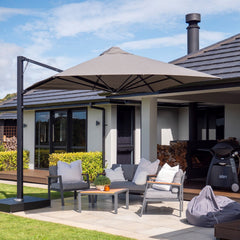
We recently had a Serenity Cantilever umbrella installed and the My Acre team were fabulous. From initially advising us what would suit our tricky terrace best, to keeping us informed on delivery and installation and ...
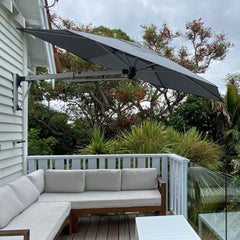
Really happy with my Shadowspec Retreat wall-mounted umbrella. Hayden at My Acre has been great — always quick to respond and very helpful. I recently needed to make a small warranty claim, and Hayden organised everyt...
Thanks to the My Acre team delighted with the end product of the Umbrella cantilever shade. In all respects Hayden was fantastic details, invoicing, adjusting delivery to suit us and supporting the installation with a...
Australian owned · every order personally followed up