
Lisa B
★★★★★
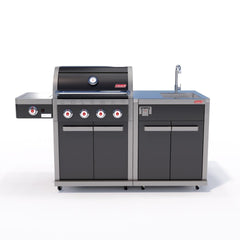
10 Nov 2026Great customer service - they rang me to tell me exactly when my bbq was coming, they also sent over the instructions and price honoured me. 10/10.
Price beat promise

Most chosen
Not sure which one?
Hayden, co-owner
Tell me about your space and I will point you to the right fire. I reply the same business day.
Call 03 7073 2116Most chosen
Not sure which one?
Hayden, co-owner
Tell me what you love to cook and I will point you to the right setup. I reply the same business day.
Call 03 7073 2116Most chosen
Not sure which one?
Hayden, co-owner
Tell me the area you want to shade and I will point you to the right size. I reply the same business day.
Call 03 7073 2116Ponds and fountains
FountainsPondless waterfallsPond kitsDam aerators and fountainsPond filters and equipmentPool care
Robotic pool cleanersBrands
AquascapeAtlas FiltriBBA BiosolutionBeatbotBiancoClayTechDAB PumpsElevateKellockOaseOtterbinePietro StonewareRobo-TekWater MasterNot sure which one?
Hayden, co-owner
Tell me what you need the water to do and I will point you to the right pump, filter or water feature. I reply the same business day.
Call 03 7073 2116Where to start
Not sure which one?
Hayden, co-owner
Tell me what you are planning and I will point you to the right fit. I reply the same business day.
Call 03 7073 2116Spas
Spas and hot tubsComingSwim spasComingNot sure which one?
Hayden, co-owner
Tell me how you want to relax and I will point you to the right spa or sauna. I reply the same business day.
Call 03 7073 2116Not sure which one?
Hayden, co-owner
Tell me what you are planning and I will point you to the maker that suits it. I reply the same business day.
Call 03 7073 2116
Fire
Most chosen
Outdoor Kitchens
Most chosen
Shade
Most chosen
Water
Ponds and fountains
FountainsPondless waterfallsPond kitsDam aerators and fountainsPond filters and equipmentPool care
Robotic pool cleanersGarden
Where to start
Spas & Saunas
Spas
Spas and hot tubsComingSwim spasComingBrands
About
Who we are
Who is My Acre?Why My Acre?Meet Hayden and TimOur installersContact usWhat we promise
Price beat promiseShipping and deliveryWarranty and claimsReturns and exchangeGuides and resources
Customer resourcesCustomer reviewsBlogs


Short answer: most outdoor water fountain problems come down to five causes: a clogged pump; water dropping below the pump; splash and evaporation; algae fed by sun and nutrients; white mineral scale. Regular maintenance fixes most of these common issues for nothing: clean the fountain pump, top up with rainwater and check the safety switch.
The checks below follow Aquascape's own pump manual, which covers the Ultra pumps used in most of the kits in our fountain range. If your fountain has simply stopped, start with the first section on pump issues. The table gives the short version for each symptom; the sections after it explain the cause, the fix and when a problem is worth a phone call.
| Symptom | Most likely cause | First fix |
|---|---|---|
| Weak or uneven flow | Clogged screen, sponge or impeller | Unplug, then clean the screen, sponge and impeller |
| Pump hums, no water | Blockage at the impeller or low voltage | Clear the impeller; check the power supply |
| Pump silent | Tripped safety switch (RCD) | Reset it; call an electrician if it trips again |
| Water level drops fast | Evaporation, splash or a leak | Turn the fountain off and watch the level |
| Green water | Sun and nutrients feeding algae | Top up with rainwater; add a fountain clarifier |
| White crust | Minerals left behind by evaporation | Descale the pump with white vinegar; treat the water |
Usually because it is clogged. The troubleshooting page of Aquascape's Australian Ultra pump manual gives the same first step for reduced flow and for a pump that hums without pushing water: clean the filter screen, the sponge and the impeller. A silent pump points somewhere else, since the manual's first check there is a tripped safety switch.
Owners of outdoor fountains confirm how often a clean is the whole fix. Viewers of a YouTube pump-cleaning demonstration report fountains spraying normally again once the clogged pump was cleared, while a Garden Pond Forums owner describes a kit pump whose intake kept clogging until it was replaced with a stronger one. A Bunnings Workshop answer on solar water features makes the same point from the other side: in that experience, solar units break down because they miss regular maintenance or are run out of water.

Summer evaporation is the usual answer; in much of Australia it is larger than people expect. Aquascape Australia's guide to leak detection says a pond in Far North Queensland can lose three to five inches a week in summer, which is 7.6 to 12.7 cm, against one to two inches, or 2.5 to 5.1 cm, near the Great Ocean Road.
Splash is the second leak that is not a leak. A Bunnings Workshop member fought a fountain soaking a timber deck until the top outlet was disconnected. A viewer who built a fountain from a YouTube tutorial reports the same struggle with water lost to overspray. To separate evaporation and splash from genuine leaks, such as cracks in a bowl or a gap at the liner edge, Aquascape's guide suggests turning the waterfall off and watching where the level settles; the leak sits at or just above that line.
Yes, provided the pump stays fully submerged. Water fountains and pond pumps are built for constant use; Oase writes that a pond pump needs to run 24 hours a day, 7 days a week. The real risk is the water level. Aquascape's Ultra manual says the pump must always operate fully submerged, because running dry overheats it, causes failure and voids the warranty.
Your running cost depends on pump size. At full output the Ultra 2100 in a small fountain kit draws 25 W, about 219 kWh a year if left on around the clock, while the Ultra 8000 in larger kits draws 200 W, about 1,752 kWh a year. Still water is the other reason to keep outdoor fountains moving: NSW Health advises flushing and wiping out bird baths and water features once a week to stop mosquitoes breeding.
Sunlight and nutrients. The Royal Horticultural Society says algae is particularly common in ponds in a sunny position with little shade. It recommends topping up with rainwater rather than tap water, because nutrients in tap water encourage algae. A water feature that loses 10 cm a week in a hot summer is fed a fresh dose of tap water every time it is topped up from the hose.
Moving water helps less than the ranking advice suggests. The RHS notes that adding a fountain or cascade can help prevent blue-green algae but is unlikely to affect other types, which explains why owners of water fountains still scrub. One Garden Pond Forums owner emptied a fountain every four to seven days at the height of summer, with a full scrub once a month. Aquascape Clean for Fountains uses a flocculant to clump suspended debris plus a phosphate binder aimed at the nutrients the RHS warns about. Aquascape states it is safe for fish, plants, pets and wildlife.

Mineral scale. Western Australia's Water Corporation explains that hard water leaves spots behind because the minerals remain after the water has evaporated; hard water is most common where supply comes from groundwater. A fountain that evaporates all summer and is topped up again and again builds that deposit with every refill.
Two fixes apply to two different places. Inside the fountain pump, the Ultra manual recommends a mild acid such as white vinegar, or a non-abrasive calcium and lime remover, on the impeller and pump body. In the water and on the stone, Aquascape Prevent for Fountains & Waterfalls is formulated to clear and prevent white-scale build-up. Aquascape states it is safe for birds or animals that drink from the fountain but not for fountains holding fish.
Vinegar belongs on the pump, not in the water; bleach belongs in neither. Owners online swap household remedies freely: commenters on a fountain-cleaning video recommend vinegar, hydrogen peroxide and copper pipe, while others worry the vinegar will kill the plants around the bowl. A Garden Pond Forums member who once dosed a concrete fountain with pool and spa chemicals found the water no good for visiting thirsty birds.
The maker's warranty points the other way. Aquascape's Ultra manual states the pump should only run in fresh water, completely submerged, without corrosive chemicals such as chlorine or bromine. A fountain that birds drink from is a second reason to use a product labelled for the job rather than whatever is under the laundry sink.
The impeller does. Aquascape gives the Ultra a three-year warranty against manufacturing defects but excludes parts subject to normal wear, naming impellers. The impeller assembly is the only moving part; replacement impeller kits are available for it. If your pump still hums weakly after a thorough clean, it usually needs an impeller rather than a replacement pump.
The Garden Pond Forums owner above replaced the supplied kit pump every spring for two years before upgrading. That pattern is a fair test of any fountain: a pump that needs replacing every season was probably too small for the fountain from the start.
Only with supervision and a safety switch. Royal Life Saving Society Australia lists water fountains and features, fishponds and even pet bowls among the hazards that pose a significant drowning risk to younger children. Outdoor fountains on a sub-surface reservoir, as most Aquascape kits are, keep the stored water below ground, but supervision still matters.
On power, Queensland's Electrical Safety Office says to use electrical equipment near a pond or water feature only through a safety switch. The same page says submersible pumps must be either the earthed type or 12 volts. Aquascape's Australian manual asks for an RCD rated at no more than 30 mA and says not to use extension cords. If your outdoor power point is not already protected, that is a job for a licensed electrician.

When maintenance, topping up and a reset have not fixed it, or when the safety switch trips a second time. Most of the problems above cost nothing but half an hour. A bottle of treatment is not always the answer; rainwater and a clean pump screen fix more fountains than any product we sell.
If your pump has failed, ring me on 03 7073 2116 before buying a replacement. I will tell you whether an impeller kit will do or, if it will not, which pump suits your fountain; our pond pump sizing guide explains the numbers behind that choice. Everything we sell carries our price-beat promise. Our after-care includes a check-in within a week of delivery, with any warranty claim handled with the maker on your behalf.

 Water Features
 Water Features
 Water Features

Want a written quote?
Tell me what you are after. I send it the same business day.
Great customer service - they rang me to tell me exactly when my bbq was coming, they also sent over the instructions and price honoured me. 10/10.
Great table delivered quickly! Very happy
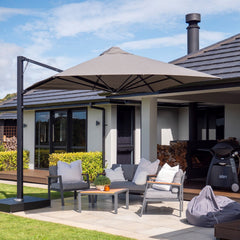
We recently had a Serenity Cantilever umbrella installed and the My Acre team were fabulous. From initially advising us what would suit our tricky terrace best, to keeping us informed on delivery and installation and ...
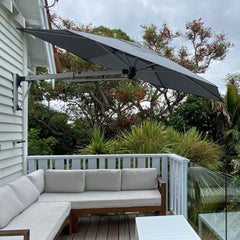
Really happy with my Shadowspec Retreat wall-mounted umbrella. Hayden at My Acre has been great — always quick to respond and very helpful. I recently needed to make a small warranty claim, and Hayden organised everyt...
Thanks to the My Acre team delighted with the end product of the Umbrella cantilever shade. In all respects Hayden was fantastic details, invoicing, adjusting delivery to suit us and supporting the installation with a...
Australian owned · every order personally followed up