
Lisa B
★★★★★
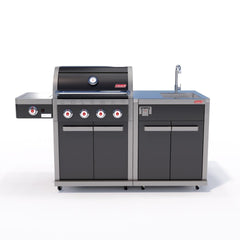
10 Nov 2026Great customer service - they rang me to tell me exactly when my bbq was coming, they also sent over the instructions and price honoured me. 10/10.
Price beat promise

Most chosen
Not sure which one?
Hayden, co-owner
Tell me about your space and I will point you to the right fire. I reply the same business day.
Call 03 7073 2116Most chosen
Not sure which one?
Hayden, co-owner
Tell me what you love to cook and I will point you to the right setup. I reply the same business day.
Call 03 7073 2116Most chosen
Not sure which one?
Hayden, co-owner
Tell me the area you want to shade and I will point you to the right size. I reply the same business day.
Call 03 7073 2116Ponds and fountains
FountainsPondless waterfallsPond kitsDam aerators and fountainsPond filters and equipmentPool care
Robotic pool cleanersBrands
AquascapeAtlas FiltriBBA BiosolutionBeatbotBiancoClayTechDAB PumpsElevateKellockOaseOtterbinePietro StonewareRobo-TekWater MasterNot sure which one?
Hayden, co-owner
Tell me what you need the water to do and I will point you to the right pump, filter or water feature. I reply the same business day.
Call 03 7073 2116Where to start
Not sure which one?
Hayden, co-owner
Tell me what you are planning and I will point you to the right fit. I reply the same business day.
Call 03 7073 2116Spas
Spas and hot tubsComingSwim spasComingNot sure which one?
Hayden, co-owner
Tell me how you want to relax and I will point you to the right spa or sauna. I reply the same business day.
Call 03 7073 2116Not sure which one?
Hayden, co-owner
Tell me what you are planning and I will point you to the maker that suits it. I reply the same business day.
Call 03 7073 2116
Fire
Most chosen
Outdoor Kitchens
Most chosen
Shade
Most chosen
Water
Ponds and fountains
FountainsPondless waterfallsPond kitsDam aerators and fountainsPond filters and equipmentPool care
Robotic pool cleanersGarden
Where to start
Spas & Saunas
Spas
Spas and hot tubsComingSwim spasComingBrands
About
Who we are
Who is My Acre?Why My Acre?Meet Hayden and TimOur installersContact usWhat we promise
Price beat promiseShipping and deliveryWarranty and claimsReturns and exchangeGuides and resources
Customer resourcesCustomer reviewsBlogs


Short answer: Pond water turns green or cloudy when algae gets more light and nutrients than your fish, plants and filter can use up. Keep it clear by removing debris before it rots, growing enough plants to compete with algae for nutrients, running a biological filter and dosing beneficial bacteria weekly through the warmer months.
Most ponds that lose their clarity are not missing one clever product. They are missing a routine: a few weeks where nobody skimmed the leaves, a bacteria dose that lapsed over winter, or a filter sized for a smaller pond than the one it is now running. Work through the causes below in order before reaching for a quick fix. That is what keeps pond water clear for a season rather than for a weekend.
Algae is a normal part of a pond. The problem is the two kinds that make the water look unhealthy. The Royal Horticultural Society describes a "pea soup" colour from fine, single-celled algae suspended through the water. A separate, stringy or floating type forms mats and scum on the surface instead. Both feed on the same things: sunlight and dissolved nutrients from fish waste, uneaten food and rotting leaves. A pond with more of either than its plants and bacteria can absorb will turn one colour or the other, often within days of a warm, sunny stretch.
A net over the pond in autumn stops falling leaves ever reaching the water, which the RHS points to as one of the simplest ways to cut the nutrient load feeding algae. Aquascape's own description of Clean for Ponds names exactly what still gets through a net over a season: uneaten food, fish waste and the sludge that settles on the floor and between rocks. None of that is anything a filter reaches on its own. Skim the surface and dose bacteria onto that layer; that is what keeps a filter from fighting a losing battle.

The RHS recommend covering roughly half your pond's surface with aquatic plants, plus enough submerged oxygenating plants underneath. That gives algae fewer free nutrients and less direct sun to work with. One pond owner's video on keeping water crystal clear, watched more than 330,000 times, describes running filtration alongside about two-thirds surface coverage from floating plants, bulrush and snowflake. The filter is called "paramount" in that video, but the planting is treated as just as deliberate a part of the setup. The two figures are not identical advice. They point the same way: a thinly planted pond works against itself, however good your filter is.
Clear water through a whole season comes from treating the dose as a weekly job, not a reaction to green water once it has already turned. Aquascape's Beneficial Bacteria carries eight live strains that work on fish waste and sludge once the water sits above 10°C. Their Pond Detoxifier strips the chlorine and chloramine that every hose top-up adds; left untreated, that chlorine kills off the bacteria doing the real work. For anyone who would rather manage one bottle than three, Maintain for Ponds combines bacteria, a phosphate binder and a detoxifier in one weekly dose. It is rated for water down to 0°C, so it will not lapse over a cool snap the way a 10°C-rated bottle would.
Sometimes the routine has already slipped and the water is cloudy before a weekend you had planned around it. Rapid Clear Flocculant clumps the suspended debris into particles the filter can actually catch, with Aquascape rating results within 24 hours once the pond has been aerated. Clear for Ponds works differently: a clarifier paired with a phosphate binder, dosed every four to five days while algae is visible. Neither is a substitute for the weekly routine above; they are what buys the water back while that routine catches up.
| Product | Best for | How it works |
|---|---|---|
| Clear for Ponds | Hazy or discoloured water, algae already visible | Water clarifier plus a phosphate binder, dosed every 4 to 5 days |
| Rapid Clear Flocculant | Cloudy water before an event, needs a fast result | Clumps suspended debris so the filter can trap it, results in 24 hours |
| IonGen System (G2) | String algae on rockwork, waterfalls and streams | Releases copper ions from a probe, carried through the pond by its own flow |
The two are often asked for in the same breath, so it is worth being direct about what each does. This store stocks the Oase Pond UV Clarifier and the Aquascape IonGen System (G2), which is an ionisation unit. The two solve different problems.
Tetra, who manufacture UV clarifiers, explain that the unit pumps pond water past a UV lamp. That lamp damages the DNA of free-floating, single-celled algae so it stops reproducing and clumps for the filter to remove. Tetra are also direct that UV light has no effect on string algae. Ionisation works on the opposite case. Aquascape's own description of the IonGen says it releases copper ions from a probe that your pond's own flow carries through the water, aimed specifically at string algae on rockwork and waterfalls. Aquascape's IonGen instructions say it is very effective at controlling filamentous string algae. They add that some types of algae are less affected by copper ions than others. Aquascape Australia list Clear for Ponds and a UV clarifier as products used to control suspended algae, the type that turns water green. For string algae they advise shade, fewer nutrients and removal by hand.
In practice: if the problem is green, "pea soup" water, Oase say a UV clarifier is the answer, alongside the weekly bacteria routine above. Clear for Ponds or Rapid Clear Flocculant give a fast fix for cloudy water. The IonGen is not the tool for green water. If the problem is string algae clinging to rocks or a waterfall, the IonGen is built for exactly that. Aquascape back it with a 3-year warranty against manufacturing defects on the controller, the probe excluded.

Every product above is rated by Aquascape as safe for fish, plants, pets and wildlife at the label dose. The IonGen is the one exception that needs checking: keep copper under 0.25 ppm and alkalinity between 100 and 250 ppm to run it safely. Overdosing will not clear the water any faster. Aquascape are specific that a heavier-than-labelled dose of Rapid Clear Flocculant stops it flocculating properly. A heavy bacteria dose in a poorly aerated pond can use up oxygen rather than add anything useful. If the pond is new or newly stocked with fish, go slower and smaller than the label allows, not the other way round.
None of this replaces checking the pond is sized and pumped correctly in the first place. A pond that holds its own water clear needs the pump and filter matched to its volume, not just a good dosing routine layered on top of an undersized setup. Our pump sizing guide covers that from scratch.
Ring 03 7073 2116 and tell us what your water looks like and roughly how many litres your pond holds. We will point you to the right Aquascape treatment before you buy rather than after. Find the same product cheaper elsewhere and we will beat it. Shop the full pond equipment range or the complete Aquascape range for everything in this guide.

 Water Features
 Water Features
 Water Features

Want a written quote?
Tell me what you are after. I send it the same business day.
Great customer service - they rang me to tell me exactly when my bbq was coming, they also sent over the instructions and price honoured me. 10/10.
Great table delivered quickly! Very happy
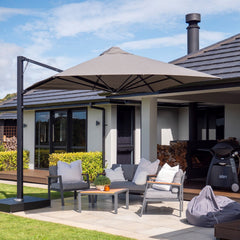
We recently had a Serenity Cantilever umbrella installed and the My Acre team were fabulous. From initially advising us what would suit our tricky terrace best, to keeping us informed on delivery and installation and ...
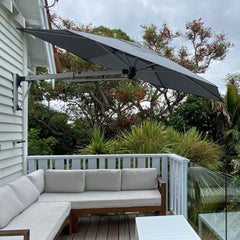
Really happy with my Shadowspec Retreat wall-mounted umbrella. Hayden at My Acre has been great — always quick to respond and very helpful. I recently needed to make a small warranty claim, and Hayden organised everyt...
Thanks to the My Acre team delighted with the end product of the Umbrella cantilever shade. In all respects Hayden was fantastic details, invoicing, adjusting delivery to suit us and supporting the installation with a...
Australian owned · every order personally followed up