

Lisa B
★★★★★
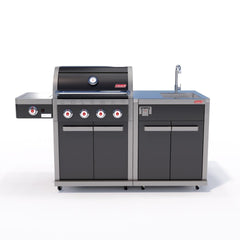
10 Nov 2026Great customer service - they rang me to tell me exactly when my bbq was coming, they also sent over the instructions and price honoured me. 10/10.
Price beat promise

Most chosen
Not sure which one?
Hayden, co-owner
Tell me about your space and I will point you to the right fire. I reply the same business day.
Call 03 7073 2116Most chosen
Not sure which one?
Hayden, co-owner
Tell me what you love to cook and I will point you to the right setup. I reply the same business day.
Call 03 7073 2116Most chosen
Not sure which one?
Hayden, co-owner
Tell me the area you want to shade and I will point you to the right size. I reply the same business day.
Call 03 7073 2116Ponds and fountains
FountainsPondless waterfallsPond kitsDam aerators and fountainsPond filters and equipmentPool care
Robotic pool cleanersBrands
AquascapeAtlas FiltriBBA BiosolutionBeatbotBiancoClayTechDAB PumpsElevateKellockOaseOtterbinePietro StonewareRobo-TekWater MasterNot sure which one?
Hayden, co-owner
Tell me what you need the water to do and I will point you to the right pump, filter or water feature. I reply the same business day.
Call 03 7073 2116Where to start
Not sure which one?
Hayden, co-owner
Tell me what you are planning and I will point you to the right fit. I reply the same business day.
Call 03 7073 2116Spas
Spas and hot tubsComingSwim spasComingNot sure which one?
Hayden, co-owner
Tell me how you want to relax and I will point you to the right spa or sauna. I reply the same business day.
Call 03 7073 2116Not sure which one?
Hayden, co-owner
Tell me what you are planning and I will point you to the maker that suits it. I reply the same business day.
Call 03 7073 2116
Fire
Most chosen
Outdoor Kitchens
Most chosen
Shade
Most chosen
Water
Ponds and fountains
FountainsPondless waterfallsPond kitsDam aerators and fountainsPond filters and equipmentPool care
Robotic pool cleanersGarden
Where to start
Spas & Saunas
Spas
Spas and hot tubsComingSwim spasComingBrands
About
Who we are
Who is My Acre?Why My Acre?Meet Hayden and TimOur installersContact usWhat we promise
Price beat promiseShipping and deliveryWarranty and claimsReturns and exchangeGuides and resources
Customer resourcesCustomer reviewsBlogs


Short answer: Yes. A pond liner needs underlay on every build. A 270gsm non-woven geotextile sits between the excavated ground and the liner, taking the punctures that sharp stones, roots and settling ground would otherwise put through the rubber. Skipping it risks a slow leak you will not see until the water level drops.
Most people asking this question already have a roll of EPDM liner in the shed and a half-dug hole. The real question underneath it is whether underlay is worth the extra cost. It is: pond wholesalers, installers and the forums where people admit what actually failed agree on this one, even where they disagree on almost everything else about building a pond.
EPDM and PVC pond liners are puncture resistant, not puncture proof. Underlay is a thick, non-woven geotextile fabric laid over the soil before the liner goes down. It has one job: taking the hit from whatever is still in the ground once you think you have cleared it, a root, a sliver of broken paver, a stone the rake missed.
A rubber liner is also under constant pressure once the pond is full. One liner supplier explains that the material stretches to fit the hole; that stretching concentrates force on any weak point until it eventually wears through. Underlay stops that stretching reaching the soil directly, so the same small stone that would eventually break through bare liner just sits against the geotextile instead.
Most of the EPDM liners sold in Australia, including Elevate's PondEasy liner, carry this exact warning in their own installation notes, a line we repeat to every pond customer: lay underlay first, every time, including on a base that looks clean.
Skip the underlay and the pond usually looks fine for the first few months. The failure shows up later: a water level dropping a centimetre or two a week with no obvious cause, because a pinhole puncture rarely floods a pond. It weeps instead.
By the time it is obvious, fixing it means draining the pond, lifting the liner off whatever plants and fish have since moved in, finding the hole and patching it, or replacing the liner outright. Elevate's 270gsm pond liner underlay is the cheapest single item in a pond build; it is also the one that decides whether the expensive part survives.
Sometimes, with real caveats: pond-building forums are full of people who have done exactly this. On one long-running UK pond forum thread, builders describe using old carpet, carpet padding or sand under their liners, with one caution repeated by more than one poster: strip every tack out of the carpet first, because a forgotten tack does exactly the damage underlay is meant to prevent.
Editorial opinion is more cautious than the forums. Carpet and newspaper eventually rot; sand shifts with the ground instead of staying put. Neither is what you want under a structure holding more than a tonne of water per cubic metre. A 270gsm geotextile does not rot, does not wash out from under a slope and carries no hidden hardware.
If you already have clean carpet offcuts and a small, low-stakes build, carpet underlay will probably get you through a season; it is not something we would talk you out of for a small decorative pond. For anything meant to still be full of fish in five years, the cost difference barely matters: the smallest cut-to-size underlay roll starts at $79.90, which is less than most people spend on soil amendments for the same job.
The same footprint as your liner, plus overlap.
Measure the pond across its longest and widest points and add roughly 300 to 500 mm of overhang on every side, the same allowance used for the liner itself. That overhang is what stops the underlay shifting apart and leaving a strip of bare earth once the liner's weight settles into the hole. Take the underlay up the walls as well as across the base: roots and sharp edges turn up on the sides of a dug hole just as easily as the bottom.
For an odd-shaped or small pond, a fixed 2m or 6m roll usually means buying far more than you need. Elevate's cut-to-size underlay sells by the metre from $79.90 in 2m and 6m widths, so a 4m by 3m pond can be covered without paying for a 150m roll that will mostly sit in the shed. A quick call to 03 7073 2116 before ordering sorts the right width out, rather than guessing.
No. It is a heavier product built for a different job.
A 500gsm rock pad is a thicker, extra-tough non-woven fabric used to protect pond liner from sharp rock edges during and after installation, distinct from the standard 270gsm underlay used across the rest of the base. The 270gsm underlay is the general-purpose layer that goes under the whole liner. Rock pad is for the spots taking a beating: a boulder set directly on the liner on a shelf, the base of a waterfall, anywhere a feature rock sits against the rubber rather than soil.
Buying rock pad to cover an entire pond base would cost more than it needs to. Buying only 270gsm underlay and then setting large feature rocks straight onto it is one of the more common ways a new liner gets punctured in its first year.

For a full build, the 270gsm underlay comes as a fixed roll: 2m by 150m for $999, or 6m by 30m for $769, both sized to cover a wide base in as few passes as possible. For anything smaller or an odd shape, the cut-to-size range starts at $79.90 and runs up by width and length, including the 500gsm rock pad for the spots that need it.
Ring 03 7073 2116 before ordering and tell us the pond's dimensions. We will work out the underlay and liner together so both arrive matched to the hole that has actually been dug. Find the same Elevate underlay cheaper elsewhere and we will beat it. That promise sits alongside the rest of the water features range, underlay included.

 Water Features
 Water Features
 Water Features

Want a written quote?
Tell me what you are after. I send it the same business day.
Great customer service - they rang me to tell me exactly when my bbq was coming, they also sent over the instructions and price honoured me. 10/10.
Great table delivered quickly! Very happy
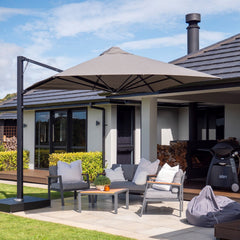
We recently had a Serenity Cantilever umbrella installed and the My Acre team were fabulous. From initially advising us what would suit our tricky terrace best, to keeping us informed on delivery and installation and ...
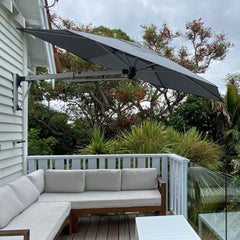
Really happy with my Shadowspec Retreat wall-mounted umbrella. Hayden at My Acre has been great — always quick to respond and very helpful. I recently needed to make a small warranty claim, and Hayden organised everyt...
Thanks to the My Acre team delighted with the end product of the Umbrella cantilever shade. In all respects Hayden was fantastic details, invoicing, adjusting delivery to suit us and supporting the installation with a...
Australian owned · every order personally followed up