Lisa B
★★★★★
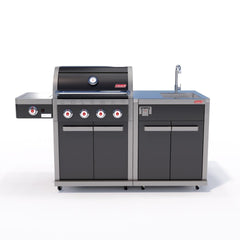
10 Nov 2026Great customer service - they rang me to tell me exactly when my bbq was coming, they also sent over the instructions and price honoured me. 10/10.
Price beat promise

Most chosen
Not sure which one?
Hayden, co-owner
Tell me about your space and I will point you to the right fire. I reply the same business day.
Call 03 7073 2116Most chosen
Not sure which one?
Hayden, co-owner
Tell me what you love to cook and I will point you to the right setup. I reply the same business day.
Call 03 7073 2116Most chosen
Not sure which one?
Hayden, co-owner
Tell me the area you want to shade and I will point you to the right size. I reply the same business day.
Call 03 7073 2116Ponds and fountains
FountainsPondless waterfallsPond kitsDam aerators and fountainsPond filters and equipmentPool care
Robotic pool cleanersBrands
AquascapeAtlas FiltriBBA BiosolutionBeatbotBiancoClayTechDAB PumpsElevateKellockOaseOtterbinePietro StonewareRobo-TekWater MasterNot sure which one?
Hayden, co-owner
Tell me what you need the water to do and I will point you to the right pump, filter or water feature. I reply the same business day.
Call 03 7073 2116Where to start
Not sure which one?
Hayden, co-owner
Tell me what you are planning and I will point you to the right fit. I reply the same business day.
Call 03 7073 2116Spas
Spas and hot tubsComingSwim spasComingNot sure which one?
Hayden, co-owner
Tell me how you want to relax and I will point you to the right spa or sauna. I reply the same business day.
Call 03 7073 2116Not sure which one?
Hayden, co-owner
Tell me what you are planning and I will point you to the maker that suits it. I reply the same business day.
Call 03 7073 2116
Fire
Most chosen
Outdoor Kitchens
Most chosen
Shade
Most chosen
Water
Ponds and fountains
FountainsPondless waterfallsPond kitsDam aerators and fountainsPond filters and equipmentPool care
Robotic pool cleanersGarden
Where to start
Spas & Saunas
Spas
Spas and hot tubsComingSwim spasComingBrands
About
Who we are
Who is My Acre?Why My Acre?Meet Hayden and TimOur installersContact usWhat we promise
Price beat promiseShipping and deliveryWarranty and claimsReturns and exchangeGuides and resources
Customer resourcesCustomer reviewsBlogs


Short answer: A goldfish pond needs a minimum depth of 45 cm; a koi pond needs at least 90 cm, with 120 cm or more the safer target once the koi are staying for years. At least 40% of the pond's surface area should sit at that maximum depth, not just one deep pocket in a corner. Go shallower and the damage comes from temperature swings, low oxygen and predators, not from the fish themselves.
The hole is marked out with a hose and the digger is booked for Saturday; the one number still undecided is how deep to go. Guess shallow and the water heats up fast every February, with the fish gasping near the surface by evening and the goldfish gone by March. Guess too deep without a reason and several extra cubic metres of clay get moved for nothing, with a pool safety barrier requirement thrown in that nobody budgeted for.
Pond depth is not a style choice. It sets the water temperature, the dissolved oxygen and whether a heron can stand in the shallows and pick off the fish one at a time. Get the depth right and the rest of the build, including which pond kit suits the space, gets a lot simpler.
Depth needs change sharply by species. The gap between a goldfish pond and a koi pond is bigger than most first-time builders expect.
| Fish kept | Minimum depth | Ideal depth |
|---|---|---|
| Goldfish, shubunkin | 45 cm | 60 cm |
| Koi | 90 cm | 120 to 150 cm |
| Wildlife pond, no fish stocked deliberately | 25 to 30 cm | 30 to 45 cm |
Goldfish survive in less water than koi do, but survive and thrive are different numbers. Swell UK, a UK water garden retailer, sets the minimum at 45 cm (18 inches) and recommends 60 cm where achievable, because the extra 15 cm buys real protection through a hard winter. The Pond Shop, a Perth pond supplier, puts the floor lower again at 30 cm, but its own FAQ adds "the deeper the better" in the same breath.
Koi outgrow goldfish fast; the pond has to outgrow them too. World of Water, a UK water garden specialist, calls 91 to 122 cm "optimum" for a healthy koi pond. Swell UK puts the ideal band at 120 to 150 cm, with some keepers going past 180 cm for large, mature fish. Grass Roots Pond & Garden, a US koi pond builder, lands on the same territory: 120 to 180 cm as the sweet spot, with anything past that reserved for dedicated breeding ponds.
Building for frogs and native species rather than stocking ornamental fish on purpose changes the number. Blagdon Water Gardening recommends around 30 cm for a pure wildlife pond. World of Water agrees, putting the deepest zone at 25 to 30 cm, rarely more.

A single deep pocket in one corner is not the same as a pond built to depth. World of Water and Blagdon Water Gardening land on the same figure independently: at least 40% of the pond's surface area should sit at the maximum depth, with the rest stepped up in shelves for marginal plants. Build to the minimum depth across 10% of the floor and the other 90% is still a shallow pond with a deep end. The fish know the difference.
Most of the depth guidance online is written for the UK or the US, where ponds have to survive a hard freeze. Only Australia's alpine regions get that cold. Melbourne, Sydney, Perth and Brisbane do not need the near-180 cm ice buffer a Michigan pond builder plans for.
Australian conditions push the other way. Summer sun heats a shallow pond fast, so the goldfish and koi minimums above matter here for heat and dissolved oxygen, not ice. In the high country or inland New South Wales, where frosts bite hard, treat the colder-climate figures above (120 cm or more for koi) as the safer target rather than the exception.
Depth also decides how many fish the pond can carry. Two independent rules of thumb land in comparable territory. Aqua Gardening, an Australian retailer, suggests one large fish per 60 cm² of surface area. Poposoapsolar's aquatic-life guide recommends no more than 2.5 cm of mature fish length per 25 litres of water. Run the second rule against a 500 litre pond and it works out to roughly 50 cm of mature fish total: two or three adult goldfish, not a shoal of a dozen. Treat both figures as a starting ceiling, not a target to build straight up to. Unsure what a specific depth and volume can carry: we will run the numbers before anything is ordered.
Ask what kills pond fish fastest and the answer is almost never the cold; it is heat and it is oxygen. A shallow pond warms through the day and holds less dissolved oxygen as it warms, a combination that can tip it into an algae bloom stripping out what oxygen is left overnight. The Pond Shop flags the same pattern in its own FAQ: shallow water heats up quickly, which encourages algae growth and gives predators easier access to the fish at the same time. Depth fixes both problems at once, not two separate ones. Once the pond is dug and running, keeping the water clear is the next decision depth sets you up for, not a separate problem to solve from scratch.
In Victoria, any pool or spa capable of holding more than 300 mm (30 cm) of water needs a compliant safety barrier, council registration and a compliance certificate (Consumer Affairs Victoria). Several pond retailers extend the same caution to garden ponds, because some councils apply the pool rules to any body of water that deep, fish or not. The threshold and the exemptions vary by state and by council, so this is one to confirm locally before you dig, not after. Ring 03 7073 2116 for a second opinion on what a pond this size will trigger locally before the digger turns up; we will say plainly whether a council call is worth making first.
Online, among people who have actually built one, the lesson that comes up again and again is to go deeper than feels necessary the first time. One pond owner, posting under a build video on a pond-building YouTube channel after finishing at 38 inches, said they wished they had kept digging and would be watching closely come winter to see whether the pond needed heating. Another, mid-build on a first koi pond, wrote that their father wanted 14 inches and they wanted 20, calling the disagreement "so frustrating": a reminder that family disagreements over the final number are common, whatever the guides above recommend.
Not every report points the same way. A handful of commenters on the same channel describe very small koi, 2.5 to 7.5 cm long, struggling in a full-depth pond and doing better once moved to around 15 cm of water, closer to a nursery tank than a finished pond. That is a minority view against the weight of the guidance above, worth knowing only if you are starting with young stock rather than adult fish. Give fry a shallow, separate rearing space and move them into the main pond as they grow, rather than dropping them straight into a 120 cm koi pond.
My Acre ranges five Aquascape pond kits. Here is the gap worth knowing before you choose one. Four of them, the DIY Backyard Pond Kit, Small Pond Kit, Medium Pond Kit and Large Pond Kit, publish surface dimensions and price but not a depth figure. The Medium Pond Kit's own copy promises only "enough volume and depth for koi to grow properly rather than being stunted", a fair claim but not a number you can dig to. The one exception is the Recreation Pond Kit at 7 m x 5 m, which states 1.7 m deep on its own product page, though that is a swimmable recreation pond built for people, not a fish depth figure.

If koi are the long-term plan, the DIY Backyard Pond Kit's own description is the clearest signal available on site today: koi grow to 60 cm or more and want depth, so the Medium or Large kit is the better starting point if koi are the goal from day one. Until Aquascape publishes a depth spec for the ecosystem kits, we treat that as a steer toward the Medium or Large kit, not a substitute for confirming the dig depth before ordering.
Depth is the one measurement that cannot easily be fixed once the liner is in the ground, so it is worth getting right before the digger arrives. Ring 03 7073 2116 and we will talk through fish type, pond size and what the local council will ask for, backed by the price-beat promise and owner's after-care on every order. Once the depth is settled, the pond pump sizing guide is the next decision: flow rate and head height both depend on the number landed on here.

 Water Features
 Water Features
 Water Features

Want a written quote?
Tell me what you are after. I send it the same business day.
Great customer service - they rang me to tell me exactly when my bbq was coming, they also sent over the instructions and price honoured me. 10/10.
Great table delivered quickly! Very happy
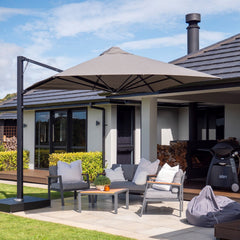
We recently had a Serenity Cantilever umbrella installed and the My Acre team were fabulous. From initially advising us what would suit our tricky terrace best, to keeping us informed on delivery and installation and ...
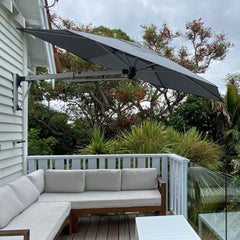
Really happy with my Shadowspec Retreat wall-mounted umbrella. Hayden at My Acre has been great — always quick to respond and very helpful. I recently needed to make a small warranty claim, and Hayden organised everyt...
Thanks to the My Acre team delighted with the end product of the Umbrella cantilever shade. In all respects Hayden was fantastic details, invoicing, adjusting delivery to suit us and supporting the installation with a...
Australian owned · every order personally followed up