Lisa B
★★★★★
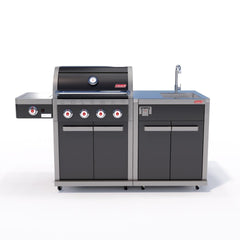
10 Nov 2026Great customer service - they rang me to tell me exactly when my bbq was coming, they also sent over the instructions and price honoured me. 10/10.
Price beat promise

Most chosen
Not sure which one?
Hayden, co-owner
Tell me about your space and I will point you to the right fire. I reply the same business day.
Call 03 7073 2116Most chosen
Not sure which one?
Hayden, co-owner
Tell me what you love to cook and I will point you to the right setup. I reply the same business day.
Call 03 7073 2116Most chosen
Not sure which one?
Hayden, co-owner
Tell me the area you want to shade and I will point you to the right size. I reply the same business day.
Call 03 7073 2116Ponds and fountains
FountainsPondless waterfallsPond kitsDam aerators and fountainsPond filters and equipmentPool care
Robotic pool cleanersBrands
AquascapeAtlas FiltriBBA BiosolutionBeatbotBiancoClayTechDAB PumpsElevateKellockOaseOtterbinePietro StonewareRobo-TekWater MasterNot sure which one?
Hayden, co-owner
Tell me what you need the water to do and I will point you to the right pump, filter or water feature. I reply the same business day.
Call 03 7073 2116Where to start
Not sure which one?
Hayden, co-owner
Tell me what you are planning and I will point you to the right fit. I reply the same business day.
Call 03 7073 2116Spas
Spas and hot tubsComingSwim spasComingNot sure which one?
Hayden, co-owner
Tell me how you want to relax and I will point you to the right spa or sauna. I reply the same business day.
Call 03 7073 2116Not sure which one?
Hayden, co-owner
Tell me what you are planning and I will point you to the maker that suits it. I reply the same business day.
Call 03 7073 2116
Fire
Most chosen
Outdoor Kitchens
Most chosen
Shade
Most chosen
Water
Ponds and fountains
FountainsPondless waterfallsPond kitsDam aerators and fountainsPond filters and equipmentPool care
Robotic pool cleanersGarden
Where to start
Spas & Saunas
Spas
Spas and hot tubsComingSwim spasComingBrands
About
Who we are
Who is My Acre?Why My Acre?Meet Hayden and TimOur installersContact usWhat we promise
Price beat promiseShipping and deliveryWarranty and claimsReturns and exchangeGuides and resources
Customer resourcesCustomer reviewsBlogs


Short answer: the common problems in a backyard pond are oxygen running low in hot, still weather, fish stress or sudden death from that drop or from an ammonia spike, herons and other predators, and a pond that never fully recovers after a season of neglect. Most of it traces back to one thing. A biological filter stopped getting what it needs, whether that is flow, oxygen or a steady weekly dose. This guide covers the fish-health side of pond keeping, not the algae and clarity side; see how to keep pond water clear for that half of the picture.
Aquascape's own pond treatment range exists because most of what follows is preventable with a weekly routine rather than an emergency fix. Our full range sits in the ponds collection.
Fish gulping at the surface, especially in the early morning, is the clearest single sign. It means oxygen, not food. New Mexico State University's extension service, writing on pond fish kills generally, describes gasping at the surface as a sign of oxygen stress. Large fish are affected first, because they carry the greatest oxygen demand. Lethargy, fish gathering near where water enters the pond, and a sudden change in water colour overnight are the other signs worth acting on the same day, not the same week.
Heat, still air and algae, usually all three together. Most of the dissolved oxygen in a pond comes from the plants and algae in it, through photosynthesis, with a smaller amount diffusing in from the air, helped along by wind moving the surface. At night that reverses: plants, animals and decomposing bacteria all consume oxygen rather than producing it. A run of hot, cloudy, windless days is the exact combination that lets consumption outpace production long enough to matter.
The sharpest version of this is a sudden algae crash. A pond thick with algae can "turn" overnight, the water flipping from green to black or clear as the whole bloom dies at once. Decomposing that much algae in one go consumes oxygen fast. NMSU's extension guidance lists it as a genuine summer fish-kill cause in its own right, separate from ordinary hot-weather oxygen decline.
Three causes account for almost every sudden fish loss. None of them look dramatic from above the water. Oxygen depletion, described above, is the most common. An ammonia spike is the second. Fish excrete ammonia continuously. Anything that reduces filtration or circulation, from a tripped pump to simple overstocking, lets it build to dangerous levels faster than most owners expect. The third is predation. Herons, in particular, show up repeatedly in pond owners' own accounts as the real cause behind what first looks like a water-quality problem.
One pond owner, commenting under a YouTube video on common pond problems, named herons and low oxygen as their two biggest headaches. They control the heron with an unobtrusive net set just below the waterline and treat oxygen directly rather than guess at it. A second owner under the same video agreed, calling herons "my fishes worst enemy" and describing their own low-profile netting. When fish vanish rather than turn up, a heron is at least as likely an explanation as anything in the water itself.
Yes, for any pond running a biological filter. The filter depends on a colony of bacteria that needs a constant flow of oxygenated water to survive. Stop the pump for an extended period and that colony starts to die back, which is a second way a pond can lose its filtration without anyone adding anything harmful to it. Aquascape's own guidance on its koi-ready kits is blunt about this: the pump runs continuously. The one thing it must never do is run dry, since that overheats it, causes it to fail and voids the warranty, on top of stopping the filtration altogether.
A pump cycling on and off to save power does the opposite of what people expect. It saves very little, because these pumps draw modest wattage even running flat out. It also puts the biological filter through repeated restarts it was never designed for. Leave it running and treat power as a small, constant cost rather than something to switch off between uses.
Shade and nutrients are the two real levers. Only one of them is in your control once the pond is built. The Royal Horticultural Society notes that algae is particularly common in ponds in a sunny position. It recommends topping up with rainwater rather than tap water, since the nutrients in tap water encourage algae growth. A fountain or cascade can help prevent blue-green algae specifically, the RHS says, but is unlikely to do much against other types, which is why owners who rely on moving water alone are often disappointed.
Aquascape's own pond range treats this as an ongoing routine rather than a one-off fix. Beneficial Bacteria and Clean for Ponds work on the sludge and nutrients algae feeds on, dosed weekly through the warmer months. For string algae specifically, the IonGen System (G2) releases copper ions through the pond's own circulation, with Aquascape rating it for ponds up to 100,000 litres and expecting visible results within two to three weeks. For the fuller picture on clarity and green water, our companion guide on keeping pond water clear goes deeper than this article's scope.
Slowly. Never all at once. The instinct after a season of neglect is to dose everything in one hit. That is close to the exact mistake NMSU's extension guidance warns against: treating an overgrown pond's whole vegetation load in a single pass causes a mass die-off; decomposing it then consumes oxygen fast enough to kill the fish the treatment was meant to help. Aquascape's own restart guidance for a dirty or neglected pond runs the same bacterial treatments at double strength, twice a week for the first fortnight, rather than as a single large dose.
| Step | What it does | Product |
|---|---|---|
| 1. Detoxify any fresh top-up water | Removes chlorine, chloramine and heavy metals before they reach fish or filter bacteria | Pond Detoxifier |
| 2. Dose bacteria at restart strength | Twice weekly for two weeks, rebuilding the biological filter | Beneficial Bacteria or Clean for Ponds |
| 3. Clear residual cloudiness | Settles suspended debris within 24 hours once bacteria are working again | Rapid Clear Flocculant |
Aerate throughout, not just at the end. Several of Aquascape's own treatments call for keeping the pond aerated for at least 24 hours after dosing, which matters even more on a pond that has been neglected, since it is already starting from a lower oxygen baseline than a well kept one.
There is no fixed answer, because a pond is not one object with one expiry date. The ecosystem itself, properly maintained, has no natural end point; what actually wears out is the liner and the mechanical parts. EPDM liner, the material in both our Elevate PondEasy and PondGard liners, stays flexible at temperature extremes that crack PVC and carries no plasticisers to leach into the water over time, which is a large part of why most modern pond failures trace back to a maintenance lapse rather than the liner simply reaching old age. A pond that gets its weekly dose and its pump left running will usually outlast the furniture around it.
If your pond is already in trouble and you are not sure which of the causes above applies, call me on 03 7073 2116 and describe what you are seeing. I will talk you through what it most likely is before you spend anything on a treatment that might not be the right one. Every product we sell carries our price-beat promise plus after-care that includes a check-in within a week of any delivery.

 Water Features
 Water Features
 Water Features

Want a written quote?
Tell me what you are after. I send it the same business day.
Great customer service - they rang me to tell me exactly when my bbq was coming, they also sent over the instructions and price honoured me. 10/10.
Great table delivered quickly! Very happy
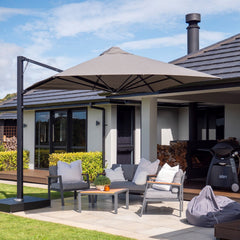
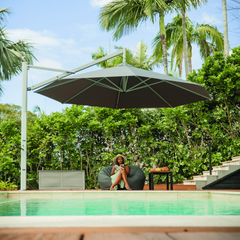
We recently had a Serenity Cantilever umbrella installed and the My Acre team were fabulous. From initially advising us what would suit our tricky terrace best, to keeping us informed on delivery and installation and ...
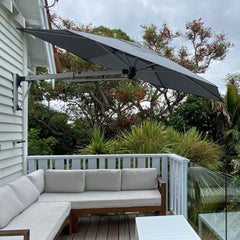
Really happy with my Shadowspec Retreat wall-mounted umbrella. Hayden at My Acre has been great — always quick to respond and very helpful. I recently needed to make a small warranty claim, and Hayden organised everyt...
Thanks to the My Acre team delighted with the end product of the Umbrella cantilever shade. In all respects Hayden was fantastic details, invoicing, adjusting delivery to suit us and supporting the installation with a...
Australian owned · every order personally followed up