Lisa B
★★★★★
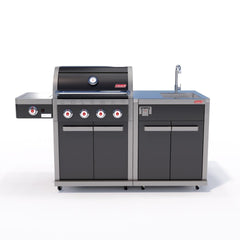
10 Nov 2026Great customer service - they rang me to tell me exactly when my bbq was coming, they also sent over the instructions and price honoured me. 10/10.
Price beat promise

Most chosen
Not sure which one?
Hayden, co-owner
Tell me about your space and I will point you to the right fire. I reply the same business day.
Call 03 7073 2116Most chosen
Not sure which one?
Hayden, co-owner
Tell me what you love to cook and I will point you to the right setup. I reply the same business day.
Call 03 7073 2116Most chosen
Not sure which one?
Hayden, co-owner
Tell me the area you want to shade and I will point you to the right size. I reply the same business day.
Call 03 7073 2116Ponds and fountains
FountainsPondless waterfallsPond kitsDam aerators and fountainsPond filters and equipmentPool care
Robotic pool cleanersBrands
AquascapeAtlas FiltriBBA BiosolutionBeatbotBiancoClayTechDAB PumpsElevateKellockOaseOtterbinePietro StonewareRobo-TekWater MasterNot sure which one?
Hayden, co-owner
Tell me what you need the water to do and I will point you to the right pump, filter or water feature. I reply the same business day.
Call 03 7073 2116Where to start
Not sure which one?
Hayden, co-owner
Tell me what you are planning and I will point you to the right fit. I reply the same business day.
Call 03 7073 2116Spas
Spas and hot tubsComingSwim spasComingNot sure which one?
Hayden, co-owner
Tell me how you want to relax and I will point you to the right spa or sauna. I reply the same business day.
Call 03 7073 2116Not sure which one?
Hayden, co-owner
Tell me what you are planning and I will point you to the maker that suits it. I reply the same business day.
Call 03 7073 2116
Fire
Most chosen
Outdoor Kitchens
Most chosen
Shade
Most chosen
Water
Ponds and fountains
FountainsPondless waterfallsPond kitsDam aerators and fountainsPond filters and equipmentPool care
Robotic pool cleanersGarden
Where to start
Spas & Saunas
Spas
Spas and hot tubsComingSwim spasComingBrands
About
Who we are
Who is My Acre?Why My Acre?Meet Hayden and TimOur installersContact usWhat we promise
Price beat promiseShipping and deliveryWarranty and claimsReturns and exchangeGuides and resources
Customer resourcesCustomer reviewsBlogs


Short answer: Measure your pond's longest length, widest width and deepest point, then add twice the depth to the length and to the width, plus approximately 0.6 m (2 ft) in total for overlap. A pond 4 m long, 3 m wide and 0.6 m deep needs a liner at least 5.8 m by 4.8 m, rounded up to a stocked size.
That is the whole calculation, so if you already hold the three measurements you can stop here and place the order. The remainder of this guide shows where the arithmetic tends to go wrong, because the published formulas disagree; it then maps the answer onto the Elevate PondGard cut-to-size liner stocked by My Acre. The wider water features collection holds the rest of the pond range.
Work from your excavated hole rather than the design drawing, because Elevate's own PondGard brochure begins with the pond's longest, widest and deepest dimensions before it gives two sums. Liner width is the pond's width plus twice its depth plus 2 extra feet; liner length follows the same rule applied to the pond's length.
Depth counts twice because the pond liner runs down one side of the hole and back up the other, which is how Aquascape Australia describes it. Take a pond dug beside a Colorbond fence, 4 m by 3 m and 0.6 m deep: it needs 4 + 1.2 + 0.6 = 5.8 m of length and 3 + 1.2 + 0.6 = 4.8 m of width. Always use the maximum depth, meaning the deepest point, rather than an average depth, so that a deep end or a sump can never leave the liner short.
Published rules for pond liner size differ principally in the edge allowance they build in, which is why a single pond receives three distinct answers from three reputable sources, as the table shows for the length and the width.
| Source | Adds to length and width | For a 0.6 m deep pond |
|---|---|---|
| Aquascape Australia | 2 x depth | 1.2 m |
| Elevate brochure; Maryland DNR | 2 x depth + 2 ft (approximately 0.6 m) | 1.8 m |
| Oregon State Extension; USDA NRCS | 3 x depth | 1.8 m |
At 0.6 m deep the second and third rules land on the same 5.8 m by 4.8 m, whereas Aquascape's bare 2 x depth gives 5.2 m by 4.2 m, a liner that reaches the pond edge and nothing beyond it. The longer rules drift apart as a pond deepens, adding 3.0 m and 3.6 m respectively at 1.2 m. Oregon State's guide dates from 2002 and USDA's tip sheet is written around PVC, so the Elevate rule is the one written specifically for an EPDM liner such as PondGard.
Enough to anchor the edge once the water has pulled the pond liner inward. Elevate's instructions describe that movement as a stretch at first, followed by a drift towards the shape of the sloping sides as the water rises. Elevate then says to trim the surplus, leaving sufficient overlap for anchorage; Oregon State Extension gives the same order of work, advising that the pond stay full for a day before any trimming or edging.
Pond owners describe that pull in specific figures. In one Garden Pond Forum thread a liner sank 6 inches (approximately 150 mm) despite hand-tamped clay, while another owner watched liner sink more than 2 inches (approximately 50 mm) in 24 hours. Overlaps reported there run from 8 inches to 3 feet (200 mm to 900 mm); one poster called 12 inches the least they would accept, while another warned that soft soil needs more.
My Acre advises 0.5 m on every edge that will sit under capping stones, which is a working rule rather than a published standard, so the choice has a price. On the 4 m by 3 m example it lifts the pond liner from 5.8 m by 4.8 m to 6.2 m by 5.2 m. That moves the lowest-priced PondGard piece that covers it from 6.10 m by 6 m ($1,255.50) to 7.62 m by 6 m ($1,452.18), a difference of $196.68 at our prices on 9 October 2026. On firm ground under a heavy coping, Elevate's smaller allowance is defensible; on soft soil, the extra half metre is inexpensive insurance.
No. The formula treats the walls as vertical, which is the most liner-hungry case, so a sloping wall never needs more than the sum already gives. Texas A&M's Earth-Kind guide recommends walls that come in 1 inch for every 3 inches down. By our arithmetic, walls at that slope take approximately 4.9 m of liner across the length of the example pond before any overlap, against the 5.2 m the formula gives. A planting shelf adds nothing either, because its flat run consumes liner and pond width in equal measure.
The slack is not wasted, since Elevate tells you to pleat and tuck the liner into shape as the pond fills; pleats take material. Elevate's method also works from the longest and widest points, so a free-form pond is sized for the rectangle that holds them.
Measure after your digging is finished, shelves included. Forum owners warn against digging a shelf wider than the liner you have left; the owner who started the overlap thread above doubted that the spare liner would stretch to deepening an existing pond. Viewers of a YouTube video on this exact question keep asking the same follow-ups about ledges, a pond deeper at one end and irregular shapes.
PondGard cut-to-size liner comes in widths from 3.05 m to 15.25 m and lengths of 6, 10, 15 or 20 m, cut as a single continuous piece to the size chosen. Width and length can swap roles, so test both orientations before confirming the order: for the 6.2 m by 5.2 m requirement, the 7.62 m by 6 m piece costs $640.32 less than the 6.10 m by 10 m piece that fits the other way round.
Elevate's PondGard data sheet lists the liner at a nominal 0.045 inch (1.14 mm) and describes the EPDM as formulated to be fish and plant friendly. The brochure also says to lay a geotextile underlay before the liner goes in, so the guide to pond liner underlay explains how much, while the cut-to-size underlay is sold by the metre like the liner. The PondEasy cut-to-size liner is the other grade listed.
Dig your hole, then order. That advice costs My Acre an earlier order, but a cut piece is made to your dimensions and cannot be returned, so a drawing is not worth ordering from. Delivery is charged and shows at checkout before payment.
Ring me on 03 7073 2116 with the three measurements and the soil underfoot. I will name the lowest-priced piece that covers them, including the smaller one when the ground supports it. Find the same Elevate liner for less elsewhere and we will beat it. Get the numbers right once and the liner disappears under the capping stones, which is the whole point of it.

 Water Features
 Water Features
 Water Features

Want a written quote?
Tell me what you are after. I send it the same business day.
Great customer service - they rang me to tell me exactly when my bbq was coming, they also sent over the instructions and price honoured me. 10/10.
Great table delivered quickly! Very happy
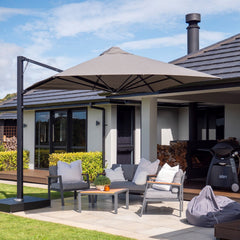
We recently had a Serenity Cantilever umbrella installed and the My Acre team were fabulous. From initially advising us what would suit our tricky terrace best, to keeping us informed on delivery and installation and ...
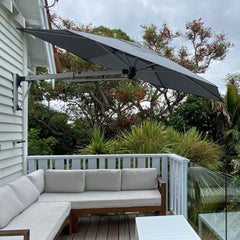
Really happy with my Shadowspec Retreat wall-mounted umbrella. Hayden at My Acre has been great — always quick to respond and very helpful. I recently needed to make a small warranty claim, and Hayden organised everyt...
Thanks to the My Acre team delighted with the end product of the Umbrella cantilever shade. In all respects Hayden was fantastic details, invoicing, adjusting delivery to suit us and supporting the installation with a...
Australian owned · every order personally followed up