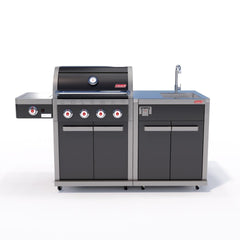
Lisa B
★★★★★
10 Nov 2026Great customer service - they rang me to tell me exactly when my bbq was coming, they also sent over the instructions and price honoured me. 10/10.
Price beat promise

Most chosen
Not sure which one?
Hayden, co-owner
Tell me about your space and I will point you to the right fire. I reply the same business day.
Call 03 7073 2116Most chosen
Not sure which one?
Hayden, co-owner
Tell me what you love to cook and I will point you to the right setup. I reply the same business day.
Call 03 7073 2116Most chosen
Not sure which one?
Hayden, co-owner
Tell me the area you want to shade and I will point you to the right size. I reply the same business day.
Call 03 7073 2116Ponds and fountains
FountainsPondless waterfallsPond kitsDam aerators and fountainsPond filters and equipmentPool care
Robotic pool cleanersBrands
AquascapeAtlas FiltriBBA BiosolutionBeatbotBiancoClayTechDAB PumpsElevateKellockOaseOtterbinePietro StonewareRobo-TekWater MasterNot sure which one?
Hayden, co-owner
Tell me what you need the water to do and I will point you to the right pump, filter or water feature. I reply the same business day.
Call 03 7073 2116Where to start
Not sure which one?
Hayden, co-owner
Tell me what you are planning and I will point you to the right fit. I reply the same business day.
Call 03 7073 2116Spas
Spas and hot tubsComingSwim spasComingNot sure which one?
Hayden, co-owner
Tell me how you want to relax and I will point you to the right spa or sauna. I reply the same business day.
Call 03 7073 2116Not sure which one?
Hayden, co-owner
Tell me what you are planning and I will point you to the maker that suits it. I reply the same business day.
Call 03 7073 2116
Fire
Most chosen
Outdoor Kitchens
Most chosen
Shade
Most chosen
Water
Ponds and fountains
FountainsPondless waterfallsPond kitsDam aerators and fountainsPond filters and equipmentPool care
Robotic pool cleanersGarden
Where to start
Spas & Saunas
Spas
Spas and hot tubsComingSwim spasComingBrands
About
Who we are
Who is My Acre?Why My Acre?Meet Hayden and TimOur installersContact usWhat we promise
Price beat promiseShipping and deliveryWarranty and claimsReturns and exchangeGuides and resources
Customer resourcesCustomer reviewsBlogs


Short answer: An EPDM rubber pond liner lasts considerably longer than PVC in full Australian sun. Aquapro, a manufacturer of PVC liners, estimates PVC at around 10 to 15 years with proper care and gives its own a 10-year UV guarantee. Elevate says PondGard EPDM ponds installed more than 40 years ago are still functional. PVC costs less and suits a small or shaded pond.
If the pond is a small, shaded or temporary feature, PVC will do the job and you can stop reading here. If it is the pond you intend to keep, the sections below explain why the two materials age differently, where owners report PVC deteriorating, how each one is repaired and what EPDM costs per square metre in the Elevate range.
Considerably longer, on every manufacturer figure located for this guide. Elevate describes PondGard EPDM as resisting UV exposure, high temperatures, oxidation and frost. The manufacturer adds that projects installed more than 40 years ago are still functional. Aquapro's guide to choosing a pond liner says PVC typically lasts around 10 to 15 years with proper care; the same page estimates EPDM at more than 20 years if properly maintained.
Owner experience points the same direction, with a wide spread at the PVC end. On Garden Pond Forum, a keeper of more than 30 years says a first PVC liner lasted a couple of years before turning hard and brittle at the edges, while another poster's EPDM, more than 10 years old, remained soft where it had been exposed. One owner in a separate thread reports two EPDM liners still sound after about 10 and 12 years.
Against that, a commenter on a YouTube liner comparison says a PVC liner has lasted 20 years without a problem. Material quality and sun exposure explain most of that variation, which is why the choice matters most on a pond positioned in full sun.
Ultraviolet exposure is the principal reason. Aquapro says PVC can become brittle and degrade faster under prolonged UV exposure, although quality modern liners contain UV inhibitors that slow the process; its own PVC is UV stabilised for the Australian climate. Owners locate the damage wherever sunlight reaches, particularly along the top edge.
The Garden Pond Forum keeper above found the PVC brittle at the edges even beneath rock. A Gardeners Corner poster recommends edging that overhangs the water slightly, so UV cannot deteriorate the exposed top of a liner.
Picture a pond dug against a north-facing Colorbond fence, with the top 50 mm of liner left visible because the edging stones never quite met. That strip absorbs the afternoon sun every day from November to March. On PVC, it is precisely where owners describe the sheet hardening first; a crack there lowers the pond to the level of the crack. Elevate rates PondGard for more than 300% elasticity and flexibility down to minus 45 °C, the properties that allow the same strip to move with the ground instead of splitting. Cover the edge with overhanging stone and either liner lasts longer. Choose EPDM and that edge stops being the part you inspect anxiously every summer.
Each row below comes from the manufacturer's own page: Elevate for EPDM and Aquapro for PVC, with My Acre prices on 9 November 2026.
| Point | EPDM (Elevate PondGard) | PVC (Aquapro's figures) |
|---|---|---|
| Stated life | Installations over 40 years old still functional | About 10 to 15 years with proper care |
| UV guarantee | Not stated on the Elevate page read | 10-year UV guarantee on Aquapro PVC |
| Sun and heat | Resists UV, high temperatures, oxidation and frost | Can turn brittle under prolonged UV; UV stabilised |
| Stretch | Over 300% elasticity, flexible to minus 45 °C | Not stated |
| Fish safety | WRc tests show it is safe for aquatic fauna | Not stated |
| Handling | Heavier than PVC | Lighter, easier for one person |
| Cost | From $27.13 a square metre at My Acre prices | Lower per square metre than EPDM |
For a small pond, a shaded courtyard feature or one you expect to rebuild within a decade, PVC is the sensible purchase, even though it is not something we stock. Aquapro says PVC is generally more affordable, lighter to handle on a solo build and easier to join when a pond requires more than one sheet. Its pre-cut liners range from 3 × 2 m to 5 × 4 m, suiting ponds of 600 to 3,600 litres.
One Whirlpool poster who constructed a small cascade used a 0.35 mm Aquapro PVC liner and described it as extremely strong after five months. That is a short record, though honest evidence that PVC handles a modest feature.
The argument for EPDM on a permanent pond is the rebuild, not the sheet. A long-standing poster in a Garden Pond Forum liner thread observes that few material warranties cover the labour of removing and re-laying a liner, which represents most of the cost. Once rocks, plants and fish are established, the liner is the one component you cannot replace on a Saturday afternoon.
Yes, provided the repair materials match the liner. Elevate's PondGard design and installation guide says a hole smaller than 6.35 mm can be covered with a 152.4 mm QuickSeam cover patch. A larger tear takes a piece of PondGard extending at least 101.6 mm beyond the damage, taped along its edges. The guide warns that non-Elevate seaming products cannot be approved and will void any warranties. It also recommends an annual inspection that includes monitoring the water level.
Mixing systems is where repairs typically fail. A different poster in the first Garden Pond Forum thread, whose original PVC liner split within four months, later joined two PVC sheets using an EPDM seam kit; that seam separated a couple of months later, in winter. In the 2014 thread, another owner says seaming a liner already installed in the pond failed on the slopes and ended in a complete reline. Small holes patch reliably; long seams in a wet pond are a reline job. If the water level is already dropping, the guide to why a pond loses water covers locating the leak first.
Elevate supplies two EPDM grades cut to size: PondEasy (listed at 0.80 mm) and PondGard (listed at 1.14 mm). At My Acre prices on 9 November 2026, PondEasy works out at $27.13 a square metre in every cut size, compared with $31.76 to $34.30 for PondGard. Calculate the sheet dimensions with the guide to what size pond liner you need, then add the protective layer described in does a pond liner need underlay. The common pond problems guide covers what else shortens a pond's working life.
Elevate's warranty term for Australia did not appear on any Elevate page read for this guide, so ask before ordering and we will confirm it with the supplier in writing. Ring me on 03 7073 2116 with the pond's dimensions and how much edge sits in full sun; if PVC suits it better, I will say so. Find the same Elevate liner for less elsewhere and we will beat that price. Delivery is charged on liners and appears at checkout before payment.

 Water Features
 Water Features
 Water Features

Want a written quote?
Tell me what you are after. I send it the same business day.
Great customer service - they rang me to tell me exactly when my bbq was coming, they also sent over the instructions and price honoured me. 10/10.
Great table delivered quickly! Very happy
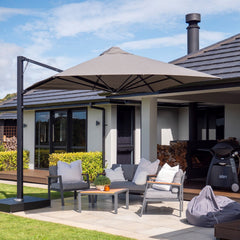
We recently had a Serenity Cantilever umbrella installed and the My Acre team were fabulous. From initially advising us what would suit our tricky terrace best, to keeping us informed on delivery and installation and ...
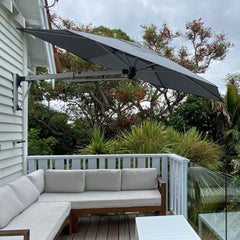
Really happy with my Shadowspec Retreat wall-mounted umbrella. Hayden at My Acre has been great — always quick to respond and very helpful. I recently needed to make a small warranty claim, and Hayden organised everyt...
Thanks to the My Acre team delighted with the end product of the Umbrella cantilever shade. In all respects Hayden was fantastic details, invoicing, adjusting delivery to suit us and supporting the installation with a...
Australian owned · every order personally followed up