Lisa B
★★★★★
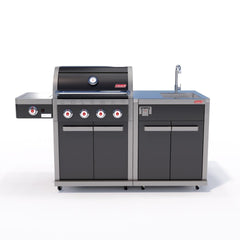
10 Nov 2026Great customer service - they rang me to tell me exactly when my bbq was coming, they also sent over the instructions and price honoured me. 10/10.
Price beat promise

Most chosen
Not sure which one?
Hayden, co-owner
Tell me about your space and I will point you to the right fire. I reply the same business day.
Call 03 7073 2116Most chosen
Not sure which one?
Hayden, co-owner
Tell me what you love to cook and I will point you to the right setup. I reply the same business day.
Call 03 7073 2116Most chosen
Not sure which one?
Hayden, co-owner
Tell me the area you want to shade and I will point you to the right size. I reply the same business day.
Call 03 7073 2116Ponds and fountains
FountainsPondless waterfallsPond kitsDam aerators and fountainsPond filters and equipmentPool care
Robotic pool cleanersBrands
AquascapeAtlas FiltriBBA BiosolutionBeatbotBiancoClayTechDAB PumpsElevateKellockOaseOtterbinePietro StonewareRobo-TekWater MasterNot sure which one?
Hayden, co-owner
Tell me what you need the water to do and I will point you to the right pump, filter or water feature. I reply the same business day.
Call 03 7073 2116Where to start
Not sure which one?
Hayden, co-owner
Tell me what you are planning and I will point you to the right fit. I reply the same business day.
Call 03 7073 2116Spas
Spas and hot tubsComingSwim spasComingNot sure which one?
Hayden, co-owner
Tell me how you want to relax and I will point you to the right spa or sauna. I reply the same business day.
Call 03 7073 2116Not sure which one?
Hayden, co-owner
Tell me what you are planning and I will point you to the maker that suits it. I reply the same business day.
Call 03 7073 2116
Fire
Most chosen
Outdoor Kitchens
Most chosen
Shade
Most chosen
Water
Ponds and fountains
FountainsPondless waterfallsPond kitsDam aerators and fountainsPond filters and equipmentPool care
Robotic pool cleanersGarden
Where to start
Spas & Saunas
Spas
Spas and hot tubsComingSwim spasComingBrands
About
Who we are
Who is My Acre?Why My Acre?Meet Hayden and TimOur installersContact usWhat we promise
Price beat promiseShipping and deliveryWarranty and claimsReturns and exchangeGuides and resources
Customer resourcesCustomer reviewsBlogs


Short answer: Size a UV clarifier by flow, not pond volume alone: choose a unit whose rated maximum flow meets or exceeds what your pump sends through it, because water that passes the lamp too quickly is not treated. Tetra suggests about half the pond's volume per hour; it also says to replace the lamp every two seasons or eleven months.
If you hold the unit's rated flow and the pump's real flow, you can stop here. The rest of this guide explains why watts per litre misleads, what else changes the answer and how the Oase Pond UV Clarifier and Filtral UVC fit in, with the rest of the range in the pond equipment collection. Green water is only one of the reasons a pond turns cloudy. The guide to keeping pond water clear helps you decide whether a clarifier is the right tool.
Pond water is pumped past a UV lamp, which kills suspended algae cells so that they clump into particles large enough for the filter to remove. Tetra describes the lamp as destroying the reproductive ability of single-celled algae; it adds that clarity still depends on adequate filtration to remove the dead cells. Oase's own Bitron C video describes the same sequence, with the lamp causing algae particles to flocculate so that a pond filter can take them out.
It does nothing for string algae. Tetra says UV clarifiers are ineffective against it, since string algae grows in strands on rocks and waterfalls instead of floating free; owners on a pond forum say the same. If your problem is strands on the rockwork rather than pea-soup water, a clarifier is the wrong purchase; we would rather say so before you buy.
The one whose rated maximum flow covers the water the pump sends through it. An engineering reference from Suez gives the principle: the UV dose is the product of intensity and contact time; contact time is the reactor volume divided by the flow rate. Double the flow and the exposure halves, so a bigger lamp does not rescue a unit run past its limit. Oase says the same about its Bitron C: if water passes the lamp too quickly the efficiency is reduced, which is why the unit has bypass regulators with a scale matched to the pump.
Work through five checks in order.
Take that 7,000 litre pond with a pump delivering 6,000 L/h: feeding all of it through a clarifier rated for 3,000 L/h leaves the algae under-exposed and the water green. Sending about 3,500 L/h through a unit rated at or above that figure and the rest to the filter or waterfall gives the lamp the exposure it was built for, so the water you see from the deck clears.
Because wattage describes the lamp's output rather than the exposure; rules of thumb disagree by a factor of several. Asked on 9 October 2026 what size UV clarifier a pond needs, three AI assistants gave rules that put a pond of about 1,000 gallons at 5 W, 9 to 18 W and 10 to 15 W. In one forum thread an owner runs 36 W on a 1,000 gallon pond, while another keeps an 1,800 gallon pond clear with 9 W, roughly seven times less per gallon; that owner explains that dwell time can make up for lower wattage. The difference is flow.
Three things degrade a lamp's real output: the glass sleeve, the lamp's age and the water itself. Suez lists fouling by grease, calcium and metal salts on the quartz sleeve as a factor; owners report limescale on the glass that stops the light. Lamp output also declines with hours run: Oase's video says to replace the Bitron C lamp after 8,000 working hours, about eleven months of continuous use; Tetra says every two seasons or eleven months, whether or not the light still glows.
Safety belongs in the sizing conversation, because UVC harms skin and eyes. The Australian radiation regulator, ARPANSA, says UVC exposure can cause burns, severe eye irritation and a higher risk of skin cancer. Oase's videos say to disconnect the power before any work and to consult a qualified electrician for installation; Tetra says never to look directly at the unshielded bulb.
For the Vitronic and Bitron models on the Oase Pond UV Clarifier listing, this guide quotes no pond-size rating, because none appears in an Oase document read for it. Ask us to confirm each model's maximum flow with Oase's Australian distributor before you rely on a figure. The Filtral UVC is different, because Oase's UK product guide says the number in its name is the largest pond it suits in litres. Capacity halves if the pond has fish, so a 3,000 litre pond with fish calls for the 6000; Oase gives the same advice for a shallow pond in sun for most of the day.
By that rule a 2,500 litre goldfish pond needs 5,000 litres of capacity, which points to the 6000 from the three sizes listed, priced at $728.20 on 9 October 2026. A pond that needs more capacity than that under the rule needs a different unit; we will say which.
Ring me on 03 7073 2116 with the pond's volume, its fish and the pump's real flow. I will check the unit against the maker's documents; if the water is brown rather than green, I will say a better filter comes before a bigger lamp. Find the same Oase unit for less elsewhere and we will beat it. Delivery is charged on Oase items and shows at checkout before payment.

 Water Features
 Water Features
 Water Features

Want a written quote?
Tell me what you are after. I send it the same business day.
Great customer service - they rang me to tell me exactly when my bbq was coming, they also sent over the instructions and price honoured me. 10/10.
Great table delivered quickly! Very happy
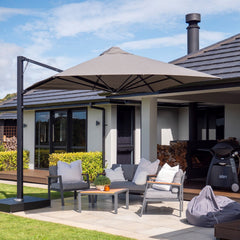
We recently had a Serenity Cantilever umbrella installed and the My Acre team were fabulous. From initially advising us what would suit our tricky terrace best, to keeping us informed on delivery and installation and ...
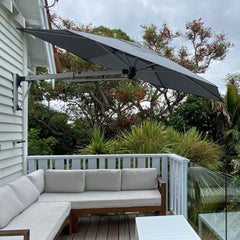
Really happy with my Shadowspec Retreat wall-mounted umbrella. Hayden at My Acre has been great — always quick to respond and very helpful. I recently needed to make a small warranty claim, and Hayden organised everyt...
Thanks to the My Acre team delighted with the end product of the Umbrella cantilever shade. In all respects Hayden was fantastic details, invoicing, adjusting delivery to suit us and supporting the installation with a...
Australian owned · every order personally followed up