Last updated: September 2026
Short answer: usually not. Buying and placing a portable outdoor fireplace or fire pit needs no council approval anywhere in Australia. Building a masonry one usually does. Lighting it is a separate question with its own state rules; that is where most people come unstuck.
Two different questions get tangled together constantly. Approval to build is a planning and building matter decided by your council. Permission to light is a fire and air quality matter decided by your state fire authority and your council's local laws. You can need neither, one, or both.
When Council Approval Is Required and When It Isn't
The dividing line is whether the fireplace is a manufactured appliance you place, or a structure you construct. An appliance that sits on the paving and could be moved by two people is not building work. A rendered masonry fireplace with a chimney, poured footings and a flue against your house wall is.
When You Don't Need Council Approval
No Australian state requires council approval to buy or position a freestanding, manufactured outdoor fire appliance on residential land. It is treated as furniture, not construction. Your obligations shift entirely to how and when you use it.
Portable Fire Pits, Fire Bowls, Chimineas and Braziers
Portable fire pits, fire bowls, chimineas and braziers need no approval to own or place. The NSW EPA states plainly that NSW residents do not need approval for a backyard fire pit or barbeque. South Australia is the exception worth knowing about. The SA Country Fire Service states that above ground fires such as chimineas, fire drums and braziers are only permitted with a permit and compliance with conditions during the Fire Danger Season, which for Adelaide Metropolitan runs 1 December to 30 April. Outside that season the restriction lifts, so the answer in South Australia depends on the date.
Freestanding Gas and Electric Outdoor Fireplaces
Freestanding gas and electric outdoor fireplaces are the least regulated category, because there is no solid fuel and no smoke. A bottled LPG or electric unit that plugs in or sits on a gas cylinder needs no planning approval. The moment gas is plumbed in rather than bottled, licensing rules apply, which is covered below.
When You Do Need Council Approval
Approval becomes likely once you are constructing rather than placing. Councils assess masonry outdoor fireplaces as they would any garden structure, looking at siting, boundary setbacks, structural adequacy, heritage overlays and bushfire attack level. Timeframes and fees vary by council, so ask before you order materials.
Built-In Masonry Fireplaces and Outdoor Fireplace Kits
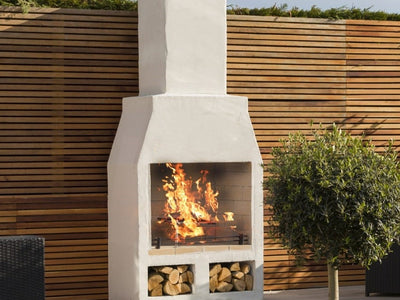
A built-in masonry fireplace or a complete fireplace kit is a structure and will usually need council sign-off. We are direct about this because it affects what we sell: every fireplace in our outdoor fireplace range, including the Ochre Living Perisher Complete Fireplace Kit and the Ochre Living Ossa Complete Fireplace Kit, is a masonry kit. Budget for a council conversation as part of the project.
New South Wales lists barbecues and other outdoor cooking structures among its exempt development categories, which means no development application if the structure meets every standard in the code, including limits on size, height, position relative to the building line and distance from each lot boundary. A fireplace with a chimney is not a barbecue in those codes, so do not assume the exemption carries across. Ask your council to confirm in writing, and ask which clause they are applying.
Anything With a Flue, Chimney or Fixed Gas Line
A flue, a chimney or a fixed gas connection almost always triggers a requirement. NCC 2022 Part 12.4 sets out how masonry fireplaces and chimneys must be built: a hearth of stone, concrete, masonry or similar non-combustible material extending at least 300 mm past the front opening and 150 mm past each side, with the chimney or flue terminating at least 300 mm above the highest part of the building within a horizontal distance of 3.6 metres. Any fixed gas connection must be installed by a licensed gasfitter, a licensing obligation separate from planning approval; NSW requires that licence regardless of what the job costs.
The Rules That Apply Whether You Need Approval or Not
These apply to every outdoor fire in Australia, approved or exempt, masonry or portable. They are also the rules that actually generate complaints and fines, because they govern day to day use rather than a one-off approval.
The Rules Every Council Enforces
Three obligations are effectively universal: keep a safe clearance, burn only approved fuel, and do not create a smoke nuisance for your neighbours. A responsible adult must supervise the fire until it is completely out, and you must have a means of extinguishing it on hand.
Clearances From Fences and Buildings, and Non-Combustible Bases
Required clearances are set by your state fire authority and differ meaningfully. Tasmania requires a cleared area of at least three metres all the way around a fire during a fire permit period, with the fire no larger than one cubic metre. The ACT requires a 3 m area clear of flammable material, a responsible adult in control and a means of extinguishing on hand. The Northern Territory sets four metres from bush or other flammable material for the small comfort or cooking fire that needs no permit. The clearance applies above the fire as well as around it. Stand any fire pit on paving, concrete or a purpose-made protection mat, never directly on timber decking or dry lawn.
Approved Fuels, Smoke Nuisance and Total Fire Bans
Approved fuels are narrower than most people expect. The NSW EPA permits dry seasoned wood, LPG, natural gas or preparatory barbecue fuel, and nothing else that causes excessive smoke. Brisbane City Council asks for clean, dry, seasoned wood or a smokeless fuel such as charcoal, ethanol or gas, and prohibits burning waste including green waste. Treated or painted timber, plastic and rubbish are banned everywhere.
On a total fire ban day the pattern is consistent nationally: no fire for warmth or comfort can be lit in the open, whatever the fuel, so an outdoor fireplace or fire pit stays off whether it burns wood, gas or bioethanol. The exemptions are for cooking. Under the NSW RFS total fire ban rules, a barbecue or pizza oven burning wood, charcoal or heat beads cannot be used outside, while an electric barbecue, or a gas barbecue within 20 metres of a home, can be used for cooking with a responsible adult present and no combustible material within two metres; a gas barbecue also needs an immediate supply of water. Other states set their own conditions.
Outdoor Fireplace and Fire Pit Rules by State
Every state and territory sets its own rules; your local council can add further local laws on top. The table below covers the position for a portable fire pit or outdoor fireplace on residential land outside any declared fire ban. Always confirm against the authority linked in the final column, because seasonal declarations change without notice.
Comparison Table: NSW, VIC, QLD, SA, WA, TAS, ACT and NT
| State or territory |
Permit to light a portable fire? |
Key conditions |
Authority |
| NSW |
No EPA approval needed for a backyard fire pit or barbeque; during the Bush Fire Danger Period (usually 1 October to 31 March) the RFS requires a permit for a fire in the open, except a cooking fire in a permanently constructed fireplace |
Dry seasoned wood, LPG, natural gas or barbecue fuel only. Council can act on excessive smoke. No fire in the open during a total fire ban, except an electric or gas barbecue for cooking |
NSW EPA |
| VIC |
No permit for cooking or warmth, but it must be in a properly constructed fireplace |
Fire pits, chimineas and braziers follow campfire rules during the Fire Danger Period and are banned on total fire ban days. A permit is required for open air burning during the Fire Danger Period |
CFA Victoria |
| QLD |
No permit for an open air fire smaller than two metres in all directions |
Larger fires need a Permit to Light Fire. Do not burn garden vegetation or rubbish. Local laws vary by council: Brisbane allows only above-ground braziers and fire pits, bans burning waste including green waste, and names gas and ethanol as the clean smokeless options |
Queensland Fire Department |
| SA |
Yes during the Fire Danger Season: above ground fires such as chimineas, fire drums and braziers need a permit |
Fires for cooking and personal comfort, gas cooking appliances and wood fired pizza ovens under the code of practice are allowed without a permit, under strict conditions. Fire Danger Season dates vary by district, 1 December to 30 April for Adelaide Metropolitan in 2025/26 |
SA CFS |
| WA |
Depends on your local government and the burning period |
Fire pits follow campfire rules and are banned on total fire ban days. Local governments set their own prohibited burning periods, sizes and hours. Some limit fire pits to 1.5 m by 1.5 m and to evening hours |
DFES |
| TAS |
Registration required during a fire permit period; permits are free |
Three metre clearance around and above, fire no larger than one cubic metre, registered with the Tasmania Fire Service. No fires outside on total fire ban days, except an electric or LPG outdoor cooker or stove used for cooking, with 1 metre cleared around and above it and someone supervising |
Tasmania Fire Service |
| ACT |
No permit for a gas or electric appliance on residential land |
In a built-up area the fire must be in a brazier or constructed fireplace, with three metres cleared. Burning garden or other waste in urban areas is prohibited. Bonfires are restricted to the weekends either side of the June public holiday |
ACT ESA |
| NT |
No permit for a small fire for cooking, boiling water or comfort |
Keep the fire at least 4 m from bush or other flammable material, never leave it unattended while lit, and extinguish it before leaving. Permits are required in emergency response areas, fire protection zones and declared fire danger areas |
NT Government |
How to Check Your Own Council in Five Minutes
Search your council's name plus "fire pit" or "brazier", then your council's name plus "do I need building approval". Those two searches resolve most cases. If you are planning masonry work, telephone the duty planner and describe the height, the boundary distance and whether it will attach to the house. Ask for the answer by email so you have it in writing.
Choosing an Outdoor Fireplace You Won't Need Approval For
If paperwork is the obstacle, the answer is a manufactured appliance rather than a built structure. You give up the permanence and the architectural presence of masonry, and you gain immediate use, portability and the option to take it with you when you move.
Portable Options That Skip the Paperwork
Portable appliances avoid planning approval entirely. If they run on bioethanol, gas or electricity they also avoid the fuel and smoke rules written for wood, though a bioethanol or gas flame is still banned outdoors on a total fire ban day. That combination suits courtyards, balconies and strata properties.
Fire Pits, Chimineas and Freestanding Gas Fireplaces
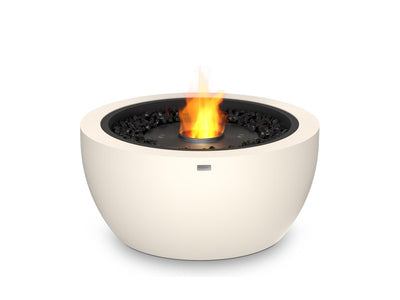
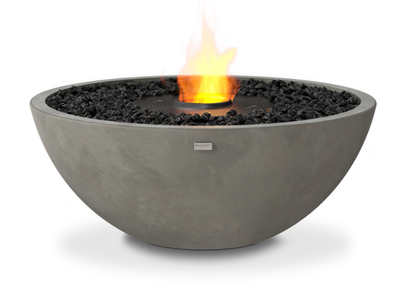
Bioethanol fire pits are the simplest path. They need no flue, no gas plumbing and no approval; they produce no smoke or embers, which removes the smoke nuisance problem that generates most neighbour complaints. The EcoSmart Pod 30 Fire Pit and the larger EcoSmart Pod 40 Fire Pit sit on paving and move with two people. Our full range is in ethanol fire pits and Fire & Warmth.
What to Check Before You Buy
Check four things. Whether the unit is portable in practice or must be fixed down. Whether it needs a flue, because a flue changes the approval question. What the maker specifies for clearance from combustible surfaces, which decides whether it can sit on your deck. And the total fire ban rules for your state, which stop every outdoor fire for warmth, whatever the fuel.
Nothing here is legal advice. Rules change with the season and the council, so confirm your position with your council and your state fire authority before you build or light anything.
Free delivery applies to every EcoSmart fire pit and fire table, our price-beat promise stands on everything we range; every large order gets a fit check, a shepherded delivery and a check-in within a week. We handle any warranty claim for you.
You May Also Like: