
Lisa B
★★★★★
10 Nov 2026Great customer service - they rang me to tell me exactly when my bbq was coming, they also sent over the instructions and price honoured me. 10/10.
Price beat promise

Most chosen
Not sure which one?
Hayden, co-owner
Tell me about your space and I will point you to the right fire. I reply the same business day.
Call 03 7073 2116Most chosen
Not sure which one?
Hayden, co-owner
Tell me what you love to cook and I will point you to the right setup. I reply the same business day.
Call 03 7073 2116Most chosen
Not sure which one?
Hayden, co-owner
Tell me the area you want to shade and I will point you to the right size. I reply the same business day.
Call 03 7073 2116Ponds and fountains
FountainsPondless waterfallsPond kitsDam aerators and fountainsPond filters and equipmentPool care
Robotic pool cleanersBrands
AquascapeAtlas FiltriBBA BiosolutionBeatbotBiancoClayTechDAB PumpsElevateKellockOaseOtterbinePietro StonewareRobo-TekWater MasterNot sure which one?
Hayden, co-owner
Tell me what you need the water to do and I will point you to the right pump, filter or water feature. I reply the same business day.
Call 03 7073 2116Where to start
Not sure which one?
Hayden, co-owner
Tell me what you are planning and I will point you to the right fit. I reply the same business day.
Call 03 7073 2116Spas
Spas and hot tubsComingSwim spasComingNot sure which one?
Hayden, co-owner
Tell me how you want to relax and I will point you to the right spa or sauna. I reply the same business day.
Call 03 7073 2116Not sure which one?
Hayden, co-owner
Tell me what you are planning and I will point you to the maker that suits it. I reply the same business day.
Call 03 7073 2116
Fire
Most chosen
Outdoor Kitchens
Most chosen
Shade
Most chosen
Water
Ponds and fountains
FountainsPondless waterfallsPond kitsDam aerators and fountainsPond filters and equipmentPool care
Robotic pool cleanersGarden
Where to start
Spas & Saunas
Spas
Spas and hot tubsComingSwim spasComingBrands
About
Who we are
Who is My Acre?Why My Acre?Meet Hayden and TimOur installersContact usWhat we promise
Price beat promiseShipping and deliveryWarranty and claimsReturns and exchangeGuides and resources
Customer resourcesCustomer reviewsBlogs


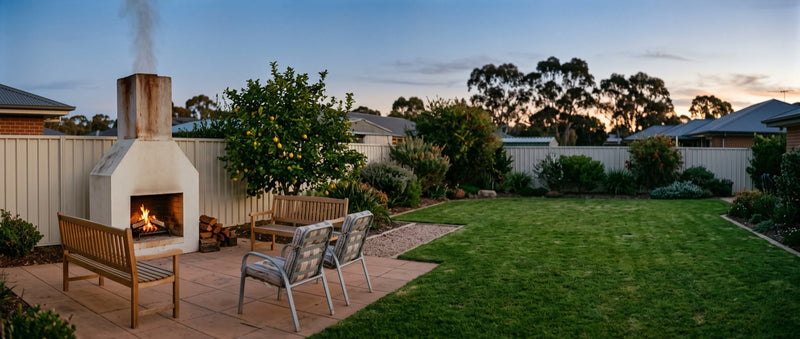
Short answer: Wait at least 72 hours after the build and render are finished before lighting an Ochre Living fireplace, then start with a small fire. Buschbeck's instructions give its adhesive about 24 hours to set and ask for small flames at first. The 28 days quoted online is a concrete-testing rule, not a maker's figure for these kits.
Owners of either kit can stop here, because the table below names the document behind each figure. Anyone building in brick or pouring a hearth from scratch should follow the builder; the rest of this guide explains why the numbers online disagree so widely.
The wait is usually called curing, although the makers write of drying and setting. It differs by maker, so the instructions that arrived on your pallet outrank anything written here. The table shows what each maker had published when we read their documents on 9 October 2026.
| Fireplace | What the maker says | Source |
|---|---|---|
| Ochre Living Ossa, Hotham and Perisher | Do not use for at least 72 hours after the build and external rendering are complete | Hotham installation instructions and Ossa spec sheet |
| Buschbeck Rondo and St Moritz | The adhesive takes around 24 hours to set completely; heat up carefully with small flames | Buschbeck assembly instructions |
Buschbeck publishes no separate "do not use before" period in the documents we read, which leaves the 24 hours for the adhesive as the only figure to work from. Ochre times its wait from the finished render, which suggests the delay is for the adhesive, firebrick mortar and render to dry out rather than for the blocks themselves.
A freshly poured base is a separate question that neither maker answers in the documents we read, so the concreter is the person to ask how long a new slab needs before it can carry 460 kg (the Ochre Ossa) to 1,100 kg (the Perisher).
Both makers want the fireplace brought up to temperature gently, though they put it in slightly different words, so the first week is a matter of several small fires rather than one big one. Keep each one modest.
Because 28 days is the age at which concrete strength is conventionally tested, which is a different job from heating an adhesive-bonded kit. A precast concrete industry article describes it as an arbitrary specimen age chosen for consistency and estimates that concrete reaches 75% of its 28-day strength within seven days.
When we put the same question to three AI assistants on 9 October 2026 (ChatGPT, Claude and Perplexity), all three answered 28 days or more for a new masonry fireplace. Forum owners offer a much wider spread: a Hearth.com thread suggests three to seven days for a concrete stove pad, a coal-heating forum suggests 7 to 10 days for a block chimney and a DoItYourself thread repeats a bricklayer's advice of four weeks. None of the three concerns an Ochre or Buschbeck kit.
A spread of three days to four weeks is not a consensus, which is why the maker's figure should win. Following it also protects the warranty. Ochre's guarantee asks for proof that its terms of use were followed. The Ochre and Buschbeck warranties both exclude damage caused by excessive heat.
Hairline ones only. Ochre says pumice expands and contracts less than other chimney systems but that small hairline cracks may still appear; its warranty calls them normal and non-structural. Buschbeck says the same and adds that the cracks widen while the fireplace is hot and close as it cools, while its instructions state that the chimney parts are steel reinforced.
Owners report a wider range than the makers do. On ProductReview.com.au, one Rondo owner described a full-height chimney crack after ten months and about a dozen uses, which they accepted as non-structural. Another saw large cracks while burning in wet weather; a third reported none after about a year and 20 uses with hot Australian hardwood fires.
Three owners with three different outcomes show that a crack alone does not reveal its cause, so the sensible response is to photograph it and contact the maker. The pallet deserves the same attention on delivery day, because Ochre replaces cracked or damaged blocks and firebricks free of charge when the damage is reported within 14 days of delivery.
Say you finish the render on an Ochre kit at 4 pm on Saturday 14 November. Ochre's FAQ puts one customer's build at 1.5 hours for the main body, 1 to 2 hours for the firebricks and 2 hours for the render, so roughly 4.5 to 5.5 hours of work. The earliest first fire is then 4 pm on Tuesday 17 November, a small one on dry wood.
A Buschbeck starts sooner: its Rondo page lists about 60 minutes for two or three people, so a Saturday 4 pm finish allows a Sunday 4 pm first fire. One Google reviewer who bought the Ochre Living Hotham Complete Fireplace Kit from us wrote that they "thought it might be a bit too hard to put together" before finding it easy.
Both sets of instructions carry old file dates (2022 for the Ochre PDFs and 2017 for Buschbeck's), so the copy packed with your kit should be treated as the final word if it differs from this page.
Ring me on 03 7073 2116 before you order: I will tell you which kit and base suit your site, even when that means spending less. Every kit in the Outdoor Fireplaces collection carries our price-beat promise and a check-in within a week of delivery. We also handle any warranty claim with the maker for you. Extra jointing adhesive is sold separately, at $85 for the Ochre Living Jointing Adhesive.

 Outdoor Fireplaces
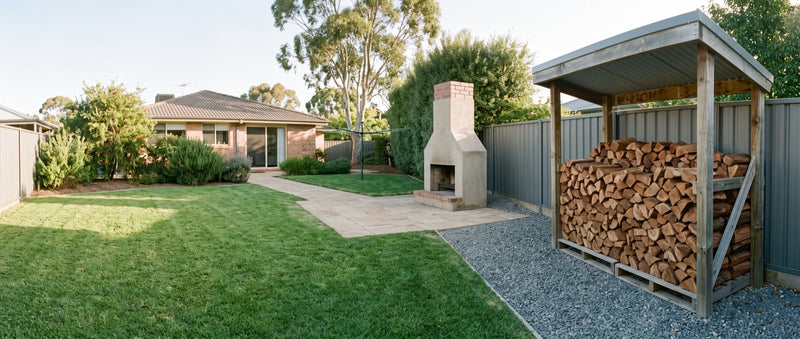 Outdoor Fireplaces
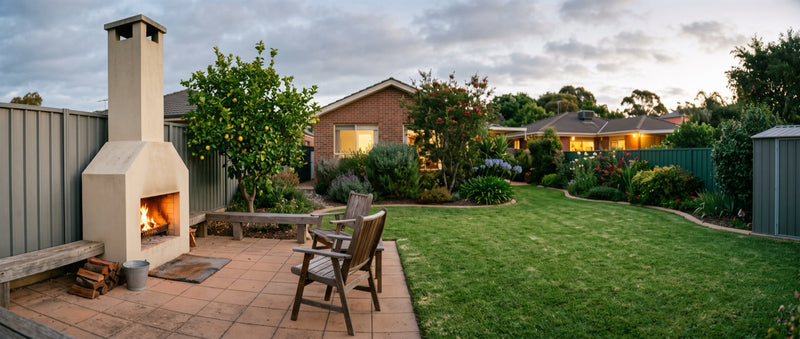 Outdoor Fireplaces

Want a written quote?
Tell me what you are after. I send it the same business day.
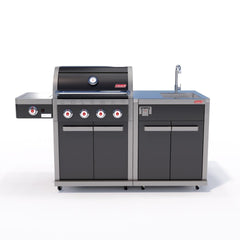
Great customer service - they rang me to tell me exactly when my bbq was coming, they also sent over the instructions and price honoured me. 10/10.
Great table delivered quickly! Very happy
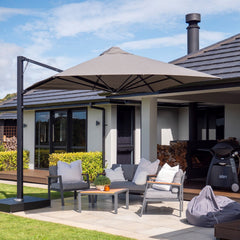
We recently had a Serenity Cantilever umbrella installed and the My Acre team were fabulous. From initially advising us what would suit our tricky terrace best, to keeping us informed on delivery and installation and ...
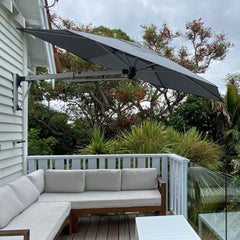
Really happy with my Shadowspec Retreat wall-mounted umbrella. Hayden at My Acre has been great — always quick to respond and very helpful. I recently needed to make a small warranty claim, and Hayden organised everyt...
Thanks to the My Acre team delighted with the end product of the Umbrella cantilever shade. In all respects Hayden was fantastic details, invoicing, adjusting delivery to suit us and supporting the installation with a...
Australian owned · every order personally followed up