
Lisa B
★★★★★
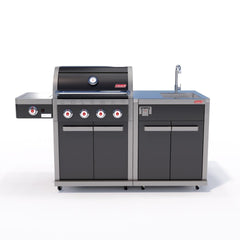
10 Nov 2026Great customer service - they rang me to tell me exactly when my bbq was coming, they also sent over the instructions and price honoured me. 10/10.
Price beat promise

Most chosen
Not sure which one?
Hayden, co-owner
Tell me about your space and I will point you to the right fire. I reply the same business day.
Call 03 7073 2116Most chosen
Not sure which one?
Hayden, co-owner
Tell me what you love to cook and I will point you to the right setup. I reply the same business day.
Call 03 7073 2116Most chosen
Not sure which one?
Hayden, co-owner
Tell me the area you want to shade and I will point you to the right size. I reply the same business day.
Call 03 7073 2116Ponds and fountains
FountainsPondless waterfallsPond kitsDam aerators and fountainsPond filters and equipmentPool care
Robotic pool cleanersBrands
AquascapeAtlas FiltriBBA BiosolutionBeatbotBiancoClayTechDAB PumpsElevateKellockOaseOtterbinePietro StonewareRobo-TekWater MasterNot sure which one?
Hayden, co-owner
Tell me what you need the water to do and I will point you to the right pump, filter or water feature. I reply the same business day.
Call 03 7073 2116Where to start
Not sure which one?
Hayden, co-owner
Tell me what you are planning and I will point you to the right fit. I reply the same business day.
Call 03 7073 2116Spas
Spas and hot tubsComingSwim spasComingNot sure which one?
Hayden, co-owner
Tell me how you want to relax and I will point you to the right spa or sauna. I reply the same business day.
Call 03 7073 2116Not sure which one?
Hayden, co-owner
Tell me what you are planning and I will point you to the maker that suits it. I reply the same business day.
Call 03 7073 2116
Fire
Most chosen
Outdoor Kitchens
Most chosen
Shade
Most chosen
Water
Ponds and fountains
FountainsPondless waterfallsPond kitsDam aerators and fountainsPond filters and equipmentPool care
Robotic pool cleanersGarden
Where to start
Spas & Saunas
Spas
Spas and hot tubsComingSwim spasComingBrands
About
Who we are
Who is My Acre?Why My Acre?Meet Hayden and TimOur installersContact usWhat we promise
Price beat promiseShipping and deliveryWarranty and claimsReturns and exchangeGuides and resources
Customer resourcesCustomer reviewsBlogs


Short answer: An outdoor fireplace usually smokes because the wood is wet, the fire is overloaded or starved of air, the chimney is still cold, or wind and a nearby roofline push the smoke back down. Check them in that order, since the first two cost nothing.
If the smoke clears quickly, you can stop reading. The NSW EPA, writing about domestic wood heaters, says that a fire which smokes for more than 10 minutes after lighting, or for more than a minute after fuel is added, has a problem with the fuel, the operating method or both. Much of what ranks for this question concerns indoor fireplaces, where a closed damper or negative pressure in a sealed house is a common cause, so this guide leaves those out. Ochre Living's FAQ and installation guides and Buschbeck's instructions say nothing about smoke or dampers, so each section below names whose advice it is.
Wet wood is both the most common cause and the least expensive to fix, because the remedy is time rather than money. The NSW EPA says that green or unseasoned wood holds up to 50% water, which makes a fire smoke; freshly cut wood, it adds, needs 8 to 12 months of storage before it is ready. The Ochre Living installation guide instructs owners to burn only dried and seasoned wood. Its guarantee process also asks for proof that no other fuel was used.
You can test a split before lighting it: the EPA recommends knocking two pieces together, because dry wood produces a loud, hollow crack while wet wood gives a dull thud. Our guides to storing firewood outside and the best wood to burn cover seasoning in more detail. Because seasoning takes months, the remedy with the longest lead time is to begin next winter's supply this week.
A fire that is overloaded, tightly stacked or short of air will smoulder. Regency, a wood heater manufacturer, advises on its Australian website that wood already burning should be fully alight before more is added, because fresh wood cools the fire while its moisture boils off. The same page recommends stacking pieces so that air reaches every surface; it also recommends burning only wood with a moisture content below 20%.
Suppose you light the fireplace at 6 pm with four large logs and no kindling. According to Regency's explanation, the logs cool the fire, the flames stall and the smoke escapes through the front of the opening until everyone has relocated their chairs. The EPA's advice runs the other way: begin with small, dry kindling, then add large pieces gradually once the fire is established. Buschbeck's own instructions limit the heating-up load in the Rondo to 5 kg of charcoal or firewood.
A cold chimney draws poorly; a masonry chimney, by one forum reply, is slower to warm than a metal one. Jøtul, a stove manufacturer, describes the chimney as the engine of the fireplace: it works only while the air inside is warmer than the air outdoors; when the temperature inside drops below that, the airflow reverses and causes a downdraught. A reply on a DoItYourself.com forum thread about an outdoor fireplace says a masonry chimney needs time to warm, whereas a metal insert would respond faster.
Owners describe the same sequence from the opposite direction. One Houzz poster said a patio fireplace burned hot, dropped to a low flame and then smoked; only restarting it with fresh kindling stopped the smoke. A reply on Bunnings Workshop about an indoor fireplace explains that the draught stalls when a fire gets low, because the flue cools quickly. The practical answer, which the EPA gives for a cold heater, is to light a small, hot fire with plenty of dry kindling and keep it lively until the flue is warm, rather than letting it fade to embers.
Sometimes the fireplace draws perfectly well, but its position in relation to prevailing wind, nearby walls and overhead roofing is the real difficulty. Jøtul says wind can pull air up a flue or blow down it; a wind cap, it says, can solve the downdraught. A Hearth.com poster with a mountainside fireplace said it never smoked out of the front, yet the evening breeze blew the plume down onto the seating. In hindsight, the owner wrote, the fireplace belonged on the downwind side of the deck.
Commenters on Land8, a landscape professionals' forum, said much the same: trouble starts when wind pushes smoke down after it leaves the stack; a screen or wall to break the wind can solve it. One argued that draught rules for indoor fireplaces barely apply outdoors; in that view, wind interacting with nearby buildings is the main influence.
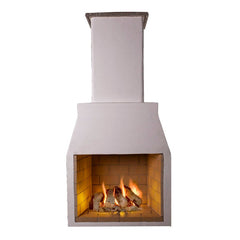
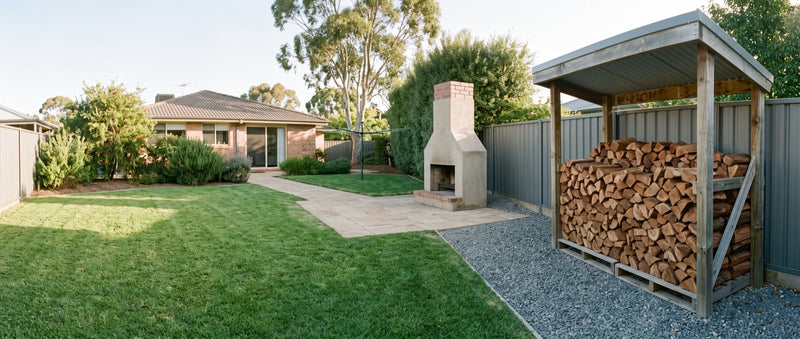
Ochre's FAQ says its fireplaces are regularly installed within outdoor living spaces, using additional chimney blocks to extend the chimney through the roof with appropriate flashing. Stopping below a roofline is therefore not how Ochre describes the installation. Cutting through a roof is work for a builder, so speak to your council first.
It may be, although neither manufacturer states how tall a chimney needs to be. Jøtul says chimney length clearly affects the draught; one that is too short can produce an insufficient or unstable updraught.
Ochre's spec sheets give a height of 2,250 mm for the Hotham and Perisher and 2,155 mm for the Ossa. Each additional block adds 300 mm, so one extra block takes a Hotham to 2,550 mm. Buschbeck lists a 34 cm chimney extension for its fireplaces.
Our Ochre Living additional chimney block costs $395 in the small size and $495 in the large; the Buschbeck chimney extension costs $199. Owner reports are mixed, so it is sensible to test before buying anything. One Hearth.com poster who raised an outdoor stack still saw smoke build up in the firebox and roll out of the front on a calm day. The moderator in the mountainside thread suggested building a test extension before committing money to the real one.
Check the flue before blaming the site. The NSW EPA says to check the flue and chimney regularly for soot or creosote, a tar-like deposit it treats as a sign that the fire is not burning properly. It also says to clean them at the end of every winter.
Jøtul says cracks in a flue or gaps in masonry joints can impair the draught. Ochre's guarantee notes that small hairline cracks may appear in time and are considered normal and non-structural, so a hairline crack alone is not proof of a draw fault; a wide gap is a question for the maker. Our guide to maintaining an outdoor fireplace covers cleaning.
Not on any maker's evidence. Ochre's own listings for its Rain Cap ($450) and Top Cap ($290) say nothing about draw; Buschbeck says only that its spark arrestor restricts the emission of sparks and embers. Neither maker claims that an accessory cures a smoking fireplace, so treat a cap as protection from rain or sparks rather than a remedy. Correct the wood, the fire and the site first.
Work from the free corrections towards the expensive ones. The table matches what you observe to the probable cause and the first correction.
| What you see | Likely cause | First fix |
|---|---|---|
| Smoke all evening, dull thud when two splits knock together | Wet wood | Burn seasoned wood; fresh wood needs 8 to 12 months |
| Smoke while the fire is small or after you add logs | Fire overloaded or starved of air | Kindling first, then add one log at a time |
| Smoke at the start that clears as the chimney warms | Cold chimney | Light a small, hot fire and keep it lively |
| Chimney draws but smoke blows onto the seats | Wind or roofline | Move the seats, add a screen, test a taller chimney |
| Smoke rolls out of the front on a calm day | Chimney too short | Test an extension, then ask the maker |
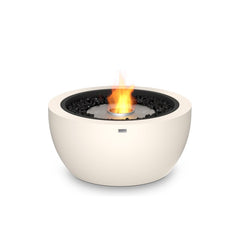
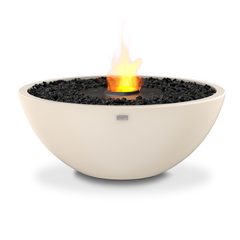
Moving the chairs is the one fix in the table that no one sells; it is often the right one. If the fireplace stands where the wind will always win, a taller chimney may only relocate the problem. EcoSmart says its bioethanol models need no chimney or flue; our guide to how fire tables work explains the burner. The fire tables collection shows the range.
When it will not clear. The EPA describes smoke from wood heaters as harmful pollution, so a fire that still smokes after 10 minutes is the one to put out and rethink. Smoke drifting across a boundary raises rules that differ between states and councils, which a general guide cannot settle; our article on council approval for an outdoor fireplace is the starting point.
If you have worked through the list and the fireplace still smokes, ring me on 03 7073 2116 and describe where it stands, how tall it is and which wood you burn. I will tell you whether a taller chimney is worth buying or whether a screen and a new seating position will do the job, even when that means spending less. Every kit in the Outdoor Fireplaces collection carries our price-beat promise, a check-in within a week of delivery and a warranty claim handled with the maker for you.

 Outdoor Fireplaces
 Outdoor Fireplaces
 Outdoor Fireplaces

Want a written quote?
Tell me what you are after. I send it the same business day.
Great customer service - they rang me to tell me exactly when my bbq was coming, they also sent over the instructions and price honoured me. 10/10.
Great table delivered quickly! Very happy
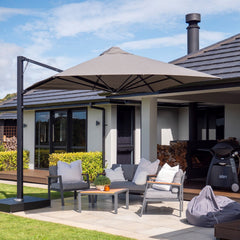
We recently had a Serenity Cantilever umbrella installed and the My Acre team were fabulous. From initially advising us what would suit our tricky terrace best, to keeping us informed on delivery and installation and ...
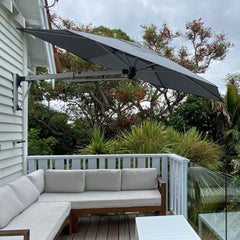
Really happy with my Shadowspec Retreat wall-mounted umbrella. Hayden at My Acre has been great — always quick to respond and very helpful. I recently needed to make a small warranty claim, and Hayden organised everyt...
Thanks to the My Acre team delighted with the end product of the Umbrella cantilever shade. In all respects Hayden was fantastic details, invoicing, adjusting delivery to suit us and supporting the installation with a...
Australian owned · every order personally followed up