Does an outdoor fireplace need a chimney? Not always. Open fire pits, bowls and bioethanol burners work without one, while enclosed wood-burning outdoor fireplaces need a chimney or flue to carry smoke away. Here's how fuel type, draught and council rules decide it.

Ventilation requirements based on fuel source
The fuel you burn decides how much venting you need. Wood makes real smoke. Gas and bioethanol barely make any. That one difference drives the whole chimney question.
Wood burning units
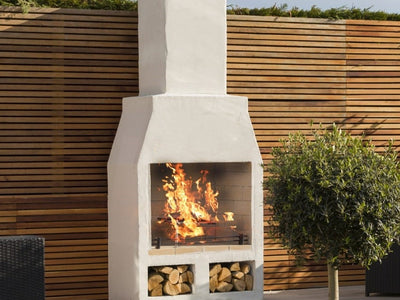
An enclosed wood-burning fireplace needs a chimney or flue. The flue draws smoke up and away from your seating and your neighbours. Without one, smoke pours straight out of the firebox opening.
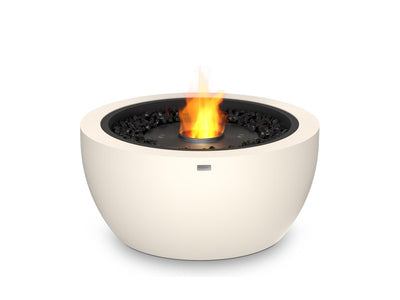
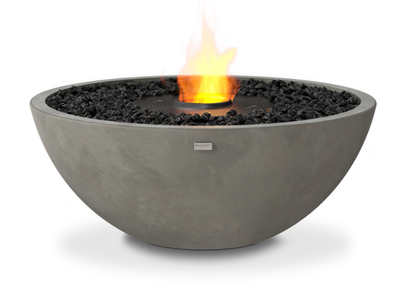
Open fire pits and fire bowls are the exception. They burn in the open air, so there's no chimney involved. Smoke drifts with the wind, so set them away from play areas and check the prevailing breeze.
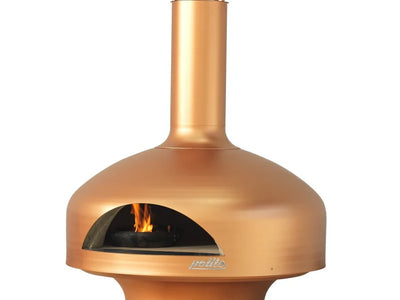
Whatever you burn it in, use dry seasoned wood only, never treated or painted timber. Keep in mind that no outdoor fire for warmth can be lit on a total fire ban day, whatever the fuel. The NSW RFS total fire ban rules stop any barbecue or pizza oven burning wood, charcoal or heat beads; for households, only an electric or gas barbecue used for cooking is exempt, under conditions.
Gas powered designs
Gas fireplaces burn clean. No smoke, no embers, and in most outdoor settings no chimney either. They still need open air around them to vent properly.
Any gas connection must be done by a licensed gasfitter; NSW requires a licence for gasfitting work regardless of what it costs. A fixed gas line also usually triggers council or building requirements, so factor that in early. Portable LPG models keep things simpler.
Bioethanol and electric alternatives
Bioethanol and electric fireplaces skip the chimney question entirely. Bioethanol burns without smoke, and electric units produce none at all. If you're curious about the fuel, our guide on how a bioethanol fireplace works covers it.
The trade-off is heat. Both options put out less warmth than a wood or gas fire, so they suit sheltered patios better than open lawns.

Structural implications of adding a flue
Adding a flue turns a simple fire feature into a small building project. It changes the weight, the height and the approvals you'll need, so it's worth understanding what's involved before you commit.
Mechanics of a safe and effective draught
A flue works on draught. Hot gases rise up the chimney and pull fresh air into the firebox behind them. When the firebox, throat and flue sizes are matched, the fire burns clean and steady. A flue that's too short or too narrow lets smoke spill back over your guests.
Smoke management in attached versus freestanding structures
A fireplace built against the house or under a roofline needs the most care. Smoke has to clear the structure without blowing back under the eaves or into open windows. These builds almost always call for professional design.
A freestanding fireplace in the open yard has an easier job. With clear air on all sides, the draught is steadier and stray smoke matters less.
Height clearances and local regulations
The binding height rule for a chimney or flue sits in the National Construction Code, not in a single outdoor-fireplace standard. NCC 2022 Part 12.4 requires a chimney or flue to terminate at least 300 mm above the highest part of the building within a horizontal distance of 3.6 metres. The same part sets the hearth of an open fireplace as stone, concrete, masonry or similar non-combustible material, running at least 300 mm past the front opening and 150 mm past each side.
The flue heights quoted around the web, 4.6 metres and the like, come from AS/NZS 2918, the installation standard for manufactured domestic solid fuel appliances. It is the right standard for a wood heater in a dwelling; it is not written for a masonry fireplace in the open yard. If your build carries a factory-made firebox, councils apply AS/NZS 2918 and require approval before installation. Ask which document your council is assessing against before you buy anything.
Councils add their own rules on smoke nuisance, setbacks from vegetation and permitted fuels, and they vary widely. Queensland is a plain example: the Queensland Fire Department keeps an open air fire under two metres in every direction without a permit, tells you to check local laws on whether the fire must sit in a brazier or fire pit, and rules out burning garden vegetation or rubbish. Check yours before you build and get the answer in writing.
Construction requirements and site complexity
A masonry chimney is proper construction work. It needs footings, blockwork, mortar and steel reinforcement; it has to stay sound through years of high heat.
Approvals follow the same pattern. A flue, chimney or fixed gas line usually triggers council or building requirements. Chimney-free portable units are the easier path: the NSW EPA states that residents do not need approval for a backyard fire pit or barbeque; other states take a similar line for a manufactured appliance you place rather than build. That is approval to own and position, not a free pass on use. Local laws, strata by-laws and fire restrictions still apply.
Professional builders versus DIY installation limits
A portable fire pit or bowl is a genuine DIY job: set it on a stable, non-combustible base and you're done. An enclosed wood burner with a flue is not. That's work for a licensed builder; gas work always needs a licensed gasfitter.
Not sure where your project sits? Our guide on whether you can install a fireplace yourself in Australia walks through it.

Choosing the ideal heating solution for your space
If you want crackle and serious heat, an enclosed wood burner with a proper flue is worth the build. If you'd rather skip approvals altogether, a chimney-free gas or bioethanol unit gets you a fire this weekend. Browse the My Acre range of outdoor fireplaces to find the right fit for your space.
You May Also Like:
About the author:
“I have a real passion for helping transform outdoor spaces so people can relax, connect and entertain with confidence and pride. With My Acre, I love guiding homeowners to create beautiful and functional outdoor living areas."