Lisa B
★★★★★
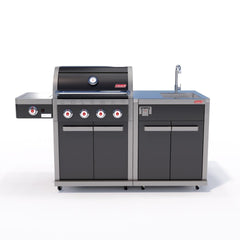
10 Nov 2026Great customer service - they rang me to tell me exactly when my bbq was coming, they also sent over the instructions and price honoured me. 10/10.
Price beat promise

Most chosen
Not sure which one?
Hayden, co-owner
Tell me about your space and I will point you to the right fire. I reply the same business day.
Call 03 7073 2116Drinks
Outdoor bar fridgesMost chosen
Not sure which one?
Hayden, co-owner
Tell me what you love to cook and I will point you to the right setup. I reply the same business day.
Call 03 7073 2116Pergolas
Louvre roof pergolasAccessories
Umbrella accessoriesMost chosen
Not sure which one?
Hayden, co-owner
Tell me the area you want to shade and I will point you to the right size. I reply the same business day.
Call 03 7073 2116Brands
AquascapeOaseOtterbineElevateBBA BiosolutionKellockPietro StonewareBiancoAtlas FiltriDAB PumpsWater MasterMost chosen
Not sure which one?
Hayden, co-owner
Tell me what you need the water to do and I will point you to the right pump, filter or water feature. I reply the same business day.
Call 03 7073 2116Most chosen
Not sure which one?
Hayden, co-owner
Tell me what you are planning and I will point you to the right fit. I reply the same business day.
Call 03 7073 2116Not sure which one?
Hayden, co-owner
Tell me what you are planning and I will point you to the maker that suits it. I reply the same business day.
Call 03 7073 2116Guides and resources
Talk to Hayden
Hayden and Tim, owners
Ring before you buy. I will tell you what suits your space and what to avoid, even when that means spending less.
Our storyCall 03 7073 2116
Fire
Most chosen
Water
Most chosen
Garden & Furniture
Most chosen
Brands
About
Who we are
Who is My Acre?Why My Acre?Meet Hayden and TimOur installersContact usWhat we promise
Price beat promiseShipping and deliveryWarranty and claimsReturns and exchangeGuides and resources
Customer resourcesCustomer reviewsBlogs
A bioethanol fire looks almost too simple, a real flame with no chimney, no gas line and no smoke, so it is fair to ask how it works. The short answer: a bioethanol fireplace burns denatured plant alcohol in a stainless-steel burner, producing heat, water vapour and carbon dioxide with no smoke, soot or ash. Because there is nothing to vent, it needs no flue. Here is what happens inside.

A bioethanol fire works by burning liquid bioethanol held in a stainless-steel burner. You pour e-NRG fuel into the burner, light it, and enjoy a real dancing flame; sliding the burner lid closed starves the flame of oxygen and puts it out. There are no logs, no gas line and no electricity involved, so the fire can sit anywhere the design allows, indoors or out.
In practice, the whole system comes down to a few parts:
A bioethanol fireplace needs no flue because clean combustion produces only heat, water vapour and carbon dioxide, with no smoke or soot to carry away. This is what makes it a ventless fire and why it can go in rooms a wood or gas fire never could. It does still use oxygen and release carbon dioxide, so an indoor room must meet a minimum size and stay ventilated, which we cover in are bioethanol fireplaces safe.
A bioethanol fireplace burns e-NRG bioethanol, a denatured ethanol formulated to burn cleanly, sold in bottles fitted with a flame arrester. It still goes into the burner through the jerry can or bottle adaptor supplied with the burner, never straight from the bottle. It is the only fuel EcoSmart tests and warrants its burners for; petrol, methylated spirits and unbranded alcohol must never be used. e-NRG costs about $6.28 to $6.92 a litre delivered, and how much a bioethanol fireplace costs to run sets out the numbers.

You light a bioethanol fire with the lighting rod and lighter supplied with the burner, never with the lighter on its own or with matches: wet the tip of the rod in the fuel, light the rod, then dip it back into the burner. The one firm rule is to never refuel a lit or warm burner: close it, let it cool for a full 60 minutes, then top it up, wiping any spill before relighting. Fill only to the marked level, never to the brim.
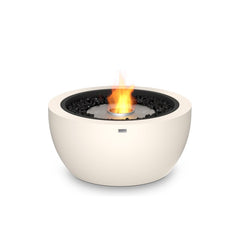
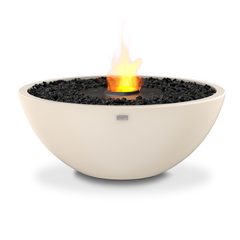
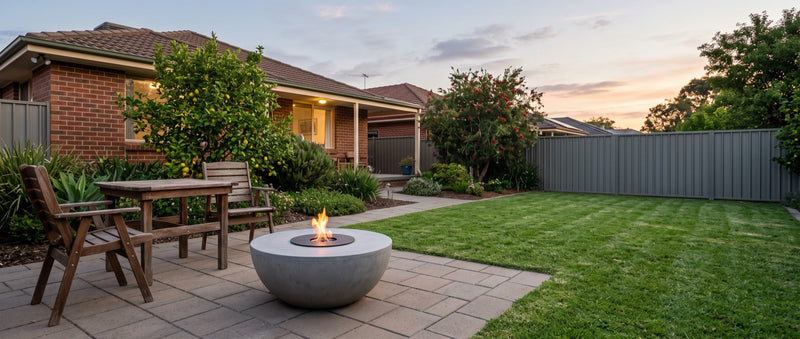
An EcoSmart bioethanol burner is made from Grade 304 stainless steel throughout, chosen for its resistance to heat and corrosion. The fire tables and pits pair that burner with concrete, steel or powder-coated surrounds, which is what turns a simple flame into a piece of furniture. You can see the range in fire tables and fire pits.

 Fire Pits and Fire Tables
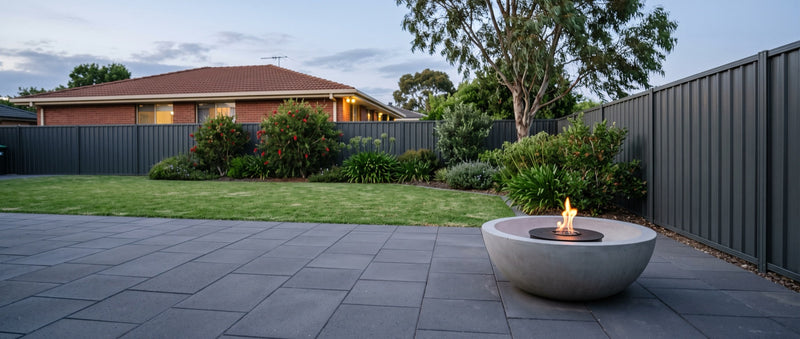 Fire Pits and Fire Tables
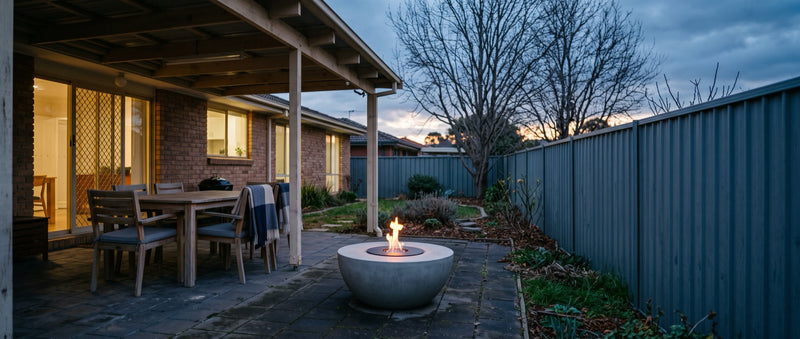 Fire Pits and Fire Tables

Want a written quote?
Tell me what you are after. I send it the same business day.
Great customer service - they rang me to tell me exactly when my bbq was coming, they also sent over the instructions and price honoured me. 10/10.
Great table delivered quickly! Very happy
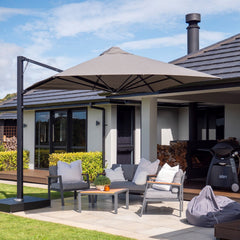
We recently had a Serenity Cantilever umbrella installed and the My Acre team were fabulous. From initially advising us what would suit our tricky terrace best, to keeping us informed on delivery and installation and ...
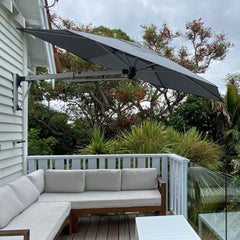
Really happy with my Shadowspec Retreat wall-mounted umbrella. Hayden at My Acre has been great — always quick to respond and very helpful. I recently needed to make a small warranty claim, and Hayden organised everyt...
Thanks to the My Acre team delighted with the end product of the Umbrella cantilever shade. In all respects Hayden was fantastic details, invoicing, adjusting delivery to suit us and supporting the installation with a...
Australian owned · every order personally followed up