
Lisa B
★★★★★
10 Nov 2026Great customer service - they rang me to tell me exactly when my bbq was coming, they also sent over the instructions and price honoured me. 10/10.
Price beat promise

Most chosen
Not sure which one?
Hayden, co-owner
Tell me about your space and I will point you to the right fire. I reply the same business day.
Call 03 7073 2116Drinks
Outdoor bar fridgesMost chosen
Not sure which one?
Hayden, co-owner
Tell me what you love to cook and I will point you to the right setup. I reply the same business day.
Call 03 7073 2116Pergolas
Louvre roof pergolasAccessories
Umbrella accessoriesMost chosen
Not sure which one?
Hayden, co-owner
Tell me the area you want to shade and I will point you to the right size. I reply the same business day.
Call 03 7073 2116Brands
AquascapeOaseOtterbineElevateBBA BiosolutionKellockPietro StonewareBiancoAtlas FiltriDAB PumpsWater MasterMost chosen
Not sure which one?
Hayden, co-owner
Tell me what you need the water to do and I will point you to the right pump, filter or water feature. I reply the same business day.
Call 03 7073 2116Most chosen
Not sure which one?
Hayden, co-owner
Tell me what you are planning and I will point you to the right fit. I reply the same business day.
Call 03 7073 2116Not sure which one?
Hayden, co-owner
Tell me what you are planning and I will point you to the maker that suits it. I reply the same business day.
Call 03 7073 2116Guides and resources
Talk to Hayden
Hayden and Tim, owners
Ring before you buy. I will tell you what suits your space and what to avoid, even when that means spending less.
Our storyCall 03 7073 2116
Fire
Most chosen
Water
Most chosen
Garden & Furniture
Most chosen
Brands
About
Who we are
Who is My Acre?Why My Acre?Meet Hayden and TimOur installersContact usWhat we promise
Price beat promiseShipping and deliveryWarranty and claimsReturns and exchangeGuides and resources
Customer resourcesCustomer reviewsBlogs

Thinking about a bioethanol fire and wondering what it will actually cost once the flames are dancing? The short answer: a bioethanol fireplace costs about $2 to $7.60 an hour to run in Australia, and fuel is the only cost. There is no gas connection, no flue servicing and no standing charge. Keep reading for the per-hour figures, how long a litre lasts, how to budget for a year, and whether it works out expensive next to gas.

An EcoSmart bioethanol fire costs about $2 to $7.60 an hour, worked out simply as the burner's fuel use multiplied by the fuel price. Because fuel is the only thing you pay for, that hourly figure is the whole running cost, with nothing metered in the background.
How much depends entirely on the burner inside your fire:
Every AB8 burner comes with an Efficiency Ring, and fitting it trims fuel use while stretching each fill by two to three hours. It is the simplest way to bring a large fire's running cost down without changing the flame you sit around.
One litre of e-NRG bioethanol lasts about one to two hours, depending on the burner and flame height. A full 8-litre AB8 tank burns 7 to 9 hours at full flame, and 9 to 11 hours with the Efficiency Ring; a 2.5-litre AB3 tank gives 8 to 11 hours because its flame is smaller. The tank burns continuously once lit, so a single fill is either one long evening or several shorter ones.

e-NRG bioethanol costs $275 for 40 litres delivered through My Acre, about $6.88 a litre, sold by the 20-litre carton with larger bundles for heavier users. It is the fuel EcoSmart tests and warrants its burners for, a denatured near-pure ethanol formulated to burn cleanly, with a flame arrester built into the bottle for safe pouring.
You will see cheaper denatured alcohol and generic bioethanol on servo and hardware shelves, including at Bunnings. For a fire you paid thousands for, it is a false economy: lower-purity fuels can burn shorter and smell, and using anything other than e-NRG voids the EcoSmart warranty and its safety compliance. Browse e-NRG fuel.
Across a year, how often you light the fire matters far more than the hourly rate. The honest way to plan is by how you actually use it. At full flame a large AB8 burner uses 1.1 litres an hour, about $7.60 an hour at $275 for 40 litres, so multiply that by the hours you expect for each pattern:
Most owners sit in the occasional-to-weekend range, which is why the running cost rarely bites the way the hourly figure suggests.
Per hour of flame, a bioethanol fire is a little dearer than mains gas, which is cheaper to burn once it is installed. Where bioethanol wins is total cost of ownership: no $2,000 to $7,500 installation, no gasfitter, no flue and no annual service, so you pay only for the evenings you use. Our bioethanol vs gas fireplace guide sets the two side by side with a calculator you can run on your own numbers.

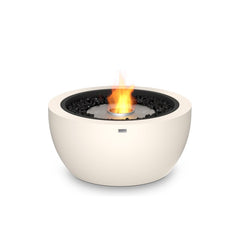
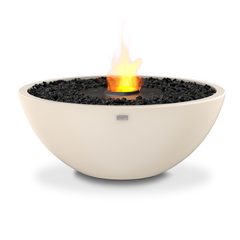
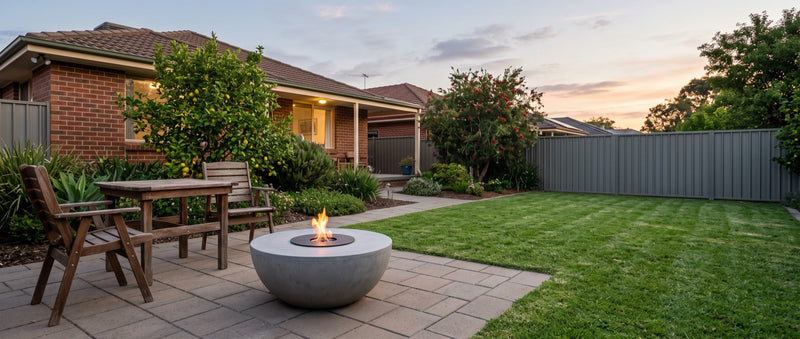 Fire Pits and Fire Tables
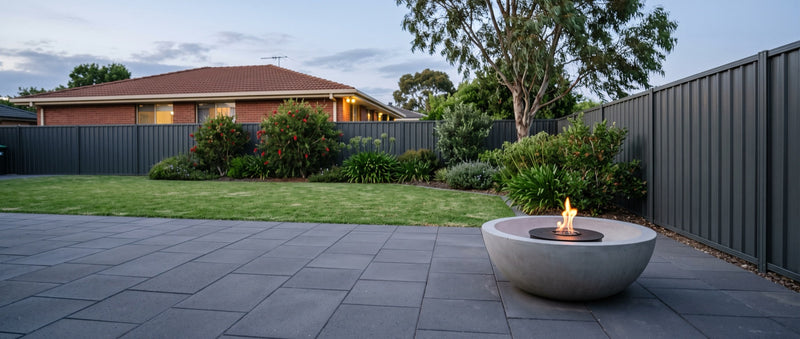 Fire Pits and Fire Tables
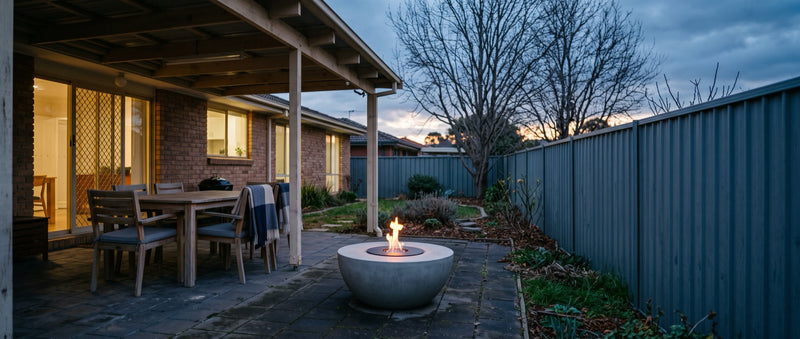 Fire Pits and Fire Tables

Want a written quote?
Tell me what you are after. I send it the same business day.
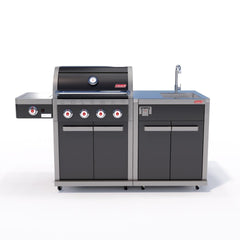
Great customer service - they rang me to tell me exactly when my bbq was coming, they also sent over the instructions and price honoured me. 10/10.
Great table delivered quickly! Very happy
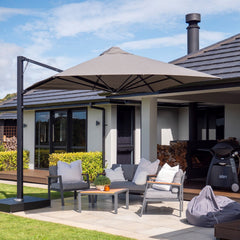
We recently had a Serenity Cantilever umbrella installed and the My Acre team were fabulous. From initially advising us what would suit our tricky terrace best, to keeping us informed on delivery and installation and ...
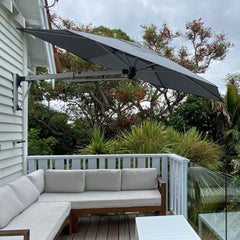
Really happy with my Shadowspec Retreat wall-mounted umbrella. Hayden at My Acre has been great — always quick to respond and very helpful. I recently needed to make a small warranty claim, and Hayden organised everyt...
Thanks to the My Acre team delighted with the end product of the Umbrella cantilever shade. In all respects Hayden was fantastic details, invoicing, adjusting delivery to suit us and supporting the installation with a...
Australian owned · every order personally followed up