Do outdoor fireplaces actually keep you warm? Yes, within a radius. Radiant heat from outdoor fireplaces warms people and surfaces directly; it is strongest within a metre or two of the flames. How you site and shelter yours matters more than raw output.

How radiant heat functions in an outdoor setting
An outdoor fireplace works differently from your heater inside. Indoors, walls and ceilings trap warm air and let it build up. Outside, there's nothing to hold that air, so it drifts away almost as fast as the fire makes it.
What you actually feel is radiant heat. Burning wood throws out radiant energy that travels in straight lines and warms whatever it hits, including people, seats and paving. That's why the person facing the flames feels toasty while someone off to the side feels much less.
The realistic warming radius around the hearth
No Australian standard sets a warming radius for an outdoor fireplace; output varies with the model, the fuel and the night. Treat the figures below as a seating guide, not a specification.
The strongest warmth sits within about a metre and a half of the fire. On a calm evening you'll still notice it out to roughly two and a half metres. Past that, the effect drops away sharply.
| Distance from fire |
Perceived warmth |
Notes |
| Up to 1.5 metres |
Strong |
The comfort zone, keep safe clearance from flames |
| 1.5 to 2 metres |
Moderate |
Comfortable for seated conversation |
| 2 to 2.5 metres |
Noticeable |
Pleasant on a still night |
| Beyond 2.5 metres |
Minimal |
Don't rely on it for warmth |
Guests seated directly in front of the opening get the most benefit. Anyone behind or well off-angle gets very little. Plan your seating around that comfort zone rather than expecting the fire to heat the whole patio.
Environmental variables that cause temperature loss
The same fireplace can feel generous one night and feeble the next. The difference usually comes down to the conditions around it; wind is the big one.
The impact of wind chill on exposed patios
Wind scatters radiant heat, cools your skin and unsettles the flames. The Bureau of Meteorology's thermal comfort guidance counts wind speed alongside air temperature and humidity in the apparent temperature a body actually feels, which is why the same fire reads generous one night and feeble the next. On an exposed patio, a stiff breeze can strip away most of the comfort a fire provides. Siting the fireplace near a wall, fence or partial enclosure cuts direct wind exposure while still allowing the ventilation a fire needs.
Retaining warmth with overhead structures
A pergola, gazebo or verandah roof slows the warm air escaping straight up and blocks wind at the same time. Paired with side shelter, it makes the seating zone noticeably more comfortable. Solid fuel fireplaces need generous clearance and airflow under any roof, so check your model's stated clearances before you commit to a covered spot.

Designing your space for maximum thermal output
Design decisions shape how much of the fire's heat actually reaches you. The fireplace itself, the fuel you burn and where you put it all play a part.
Do outdoor fireplaces give off a lot of heat?
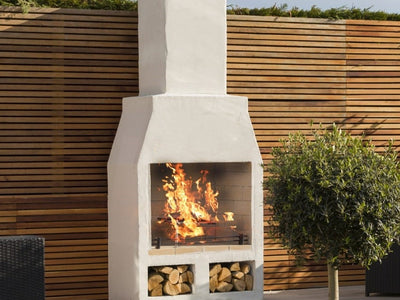
A proper wood fire throws serious radiant heat at whoever sits in front of it. An enclosed firebox helps by directing that energy forward instead of letting it spill in every direction. Materials matter too. Steel and stone soak up heat while the fire burns, then keep radiating it after the flames settle. A deeper firebox paired with a tall chimney pushes warmth forward to the seats while the smoke goes up.
That's why a masonry or steel fireplace tends to outperform an open bowl, where most of the heat rises straight up. Judge any model by how it performs in the main seating area, not by flame size.
Selecting high-output fuel sources
Dry, well-seasoned hardwood burns hotter and cleaner than damp or freshly cut wood. Never burn treated or painted timber. Gas gives you instant, adjustable flames with no ash to clean up, though any gas connection must be done by a licensed gasfitter, which NSW requires for gasfitting work of any value.
Remember that a total fire ban stops every outdoor fire for warmth, whatever the fuel. Under the NSW RFS total fire ban rules, a barbecue or pizza oven burning wood, charcoal or heat beads cannot be used outside; the exemption is an electric or gas barbecue used for cooking, under conditions that include a responsible adult present and no combustible material within two metres. Other states set their own conditions, so check with your own fire authority. If you're weighing up a third option, read our guide on whether bioethanol fireplaces give off heat.

Does a chimney reduce your heating efficiency?
Some heat does go up the flue, but a chimney earns its keep. It draws smoke up and away, which means you can sit close to the fire without copping it in the face. It also steadies the burn, so the fire holds consistent heat for longer.
For comfort in the seating zone, that trade is well worth it.
Strategic positioning for winter comfort
Placement makes the real difference. Site the fireplace out of the prevailing wind, on a paved area, with the opening facing your seating. Keep chairs within about two metres of the fire and maintain the clearances your model requires from structures and furnishings.
A wall or fence behind the seating helps hold the comfort zone together. For layout inspiration, see our outdoor fireplace ideas for Australian homes.
Heating differences between a fireplace and a fire pit
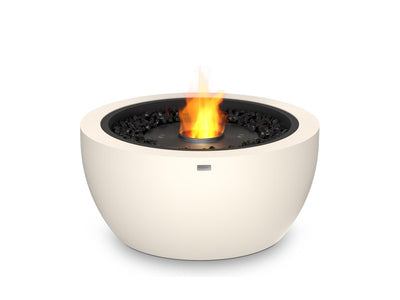
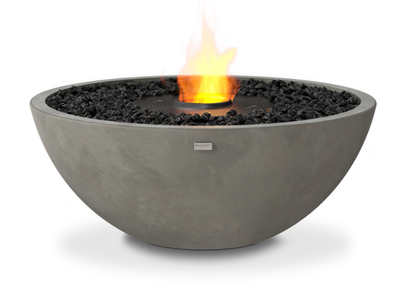
A fire pit sends much of its heat straight up and radiates evenly in a circle, which suits a communal ring of chairs. A fireplace directs heat forward through its opening, so it serves people seated in one direction far better. Pits are easier to move around, while a fireplace gives you more directed winter warmth.
Discover our premium outdoor heating collection
An outdoor fireplace won't heat your whole backyard, but sited well it keeps a seating area properly comfortable deep into winter. Browse the My Acre range of outdoor fireplaces to find a wood burning model that suits your space. Each listing includes the details you need on size, materials and clearances.
You May Also Like:
About the author:
“I have a real passion for helping transform outdoor spaces so people can relax, connect and entertain with confidence and pride. With My Acre, I love guiding homeowners to create beautiful and functional outdoor living areas."