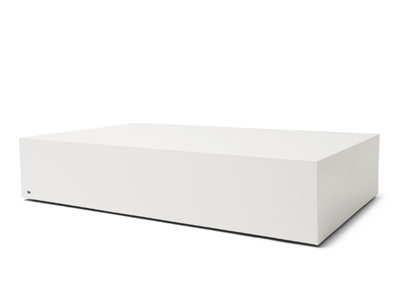
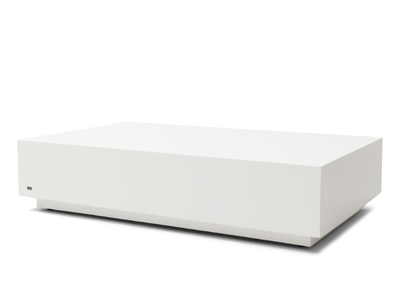
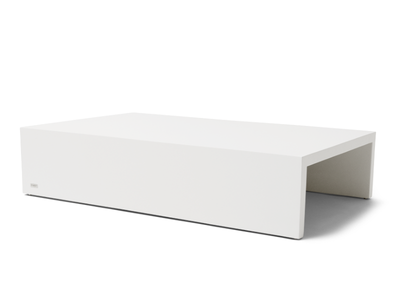
Wondering how big a gas bottle you'll need under your new fire table? None at all. EcoSmart fire tables run on e-NRG bioethanol, not propane, so there is no tank to size, no regulator to fit and no bottle to swap mid-evening. The burner holds 8 L of fuel and drinks it at roughly 1.1 L per hour on full flame, which is the only number you actually need to plan around. Here's how that translates into bottles, cartons and running cost.
Why There's No Tank to Size in the First Place
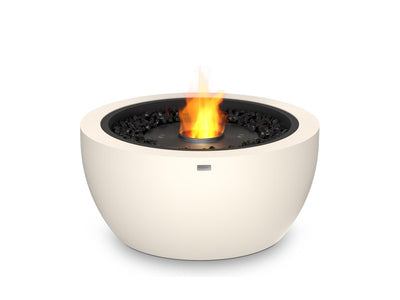
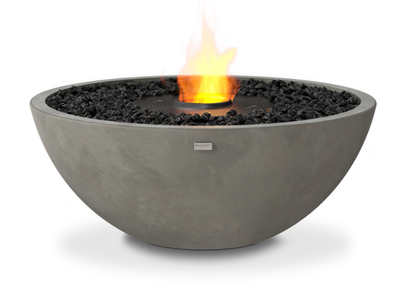
Gas fire tables need a cylinder sized to the burner: too small and it runs out mid-gathering, too large and it eats half the base just to store it. EcoSmart tables skip that decision entirely. The AB8 burner (Grade 304 stainless steel, 8 L capacity) sits in the tabletop and is filled directly from a bottle of e-NRG bioethanol. There's no gas line, no regulator, no hidden cylinder compartment and nothing for a licensed fitter to connect. The table is freestanding and self-contained, with articulating feet that level it on uneven paving, so the only "installation" is choosing where to put it.
How Much Fuel You Actually Get Through One Fill
At full flame, the AB8 burner uses about 1.1 L of e-NRG per hour, which gives you 7 to 9 hours from a single 8 L fill. The AB8 Efficiency Ring, which comes with the AB8 burner, stretches each fill further; EcoSmart quote a burn time of up to 11 hours for the AB8. The ring works by lowering the flame height and heat output, so expect a smaller flame in exchange for the longer burn. For most households that's an entire evening, sometimes two, before the burner needs topping up again.
How Much Fuel to Keep on Hand
e-NRG is sold in 5 L bottles, packed four to a 20 L carton, with orders typically running from 2 to 10 cartons at a time. As a rough guide, a household burning the fire table for three hours most weekends will get through a 5 L bottle roughly every fortnight, so a single 20 L carton comfortably covers a couple of months of regular weekend use. Buy more if you entertain often or run the table midweek; buy less if it's an occasional feature. Because fuel is dangerous goods, it ships separately from the fireplace itself, so it's worth ordering your first carton at the same time as the table so both arrive close together.
What It Actually Costs to Run
e-NRG is sold with shipping included and typically lands between $6.28 and $6.92 a litre delivered. At 1.1 L an hour on full flame, that's roughly $6.90 to $7.60 an hour to run. Fit the Efficiency Ring and that drops, since the ring is cutting how much fuel the burner draws, not just how it looks. Either way, there's no standing gas charge, no yearly service fee and no cylinder swap fee sitting on top, because there's no gas account to maintain.
Refuelling Safely
Never top up a burner that's alight or still warm. Let it cool for a full 60 minutes before adding more fuel, since residual heat can ignite vapour the moment it's poured. Use the safety nozzle or bottle adaptor rather than pouring straight from the bottle, both to control the flow and to keep fuel off the tabletop and surrounding media. Store spare bottles upright, out of direct sun and away from the burner itself, the same commonsense rules you'd apply to any liquid fuel kept around the house.
The short version: there's no tank size to get wrong, no gasfitter to book and no cylinder to lug to the servo. Buy a carton of e-NRG, keep an eye on how many bottles a typical weekend uses, and reorder before you run low.
You May Also Like:
About the author:
“I have a real passion for helping transform outdoor spaces so people can relax, connect and entertain with confidence and pride. With My Acre, I love guiding homeowners to create beautiful and functional outdoor living areas."