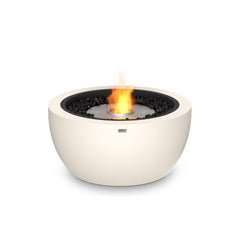
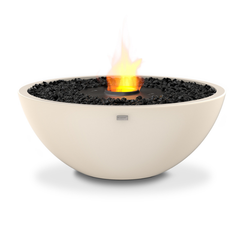
Can you cook on a fire table? Short answer: no. An EcoSmart bioethanol fire table is built for warmth and ambience, not food preparation, and the burner isn't designed to have anything rested, dropped or cooked over it. Here's why, and what a fire table is actually good for instead.
Why a Bioethanol Burner Isn't a Cooktop
A gas fire pit burns fuel through sealed jets, which is why some are built with grates and cooking accessories. An EcoSmart bioethanol fire table works differently. The AB8 burner is a Grade 304 stainless steel reservoir that holds up to 8 L of e-NRG bioethanol directly, and the flame sits above that liquid fuel rather than a network of gas ports. There's no grate built to catch drips, no adjustable burner controls designed for searing, and nothing engineered to have food placed on or near it.
Ignition is manual too, a lighting rod and fire lighter rather than a dial you'd use to manage cooking heat. Refuelling only happens once the unit has been off for at least 60 minutes and cooled down completely, using the safety nozzle and bottle adaptor. Every part of the design is built around keeping fuel contained and controlled, which is the opposite of what cooking over an open flame requires.
The Real Risk: Fuel and Food Don't Mix
Anything that drips, melts or falls toward the flame on a bioethanol fire table lands in or near a reservoir of liquid fuel, not a grate designed to handle food waste. Grease, marshmallow or melted chocolate finding its way into the burner can affect how cleanly it burns and complicates refuelling later. The tempered glass media around the burner (EcoSmart's Black Glass Charcoal, rated to withstand 700°C) is a decorative surround, not food-safe cookware, and it isn't designed to have pots, skewers or hot food resting on it.
None of this is how EcoSmart designs or supports these units being used. If you're after a live flame you can cook over, a fire table isn't the right appliance for the job.
What About Just Holding Something Above the Flame?
It's a fair question, and the honest answer is still no. There's no cooking grate, no heat-diffusing surface and no manufacturer guidance for holding food anywhere near the flame, so anything you improvise (a skewer, a stick, a wire rack balanced on the rim) is entirely your own risk, on an appliance that was never tested or built for it. The insert sits close to a reservoir of liquid fuel, and refuelling only happens once the unit has been off and cooling for at least 60 minutes, which should tell you how seriously EcoSmart treats keeping anything but fuel near that burner.
What a Fire Table Is Actually Built For
The AB8 burner puts out 6 kW (21.56 MJ/h), enough to comfortably warm a zone up to 60 m². That makes it supplemental, zone-style heating and a genuine focal point, not a whole-yard heater and not a cooking appliance. The flame itself burns cleanly, producing heat, steam and a little carbon dioxide with no smoke, soot or ash, which is part of why it works so well as the centrepiece of an outdoor room rather than something you'd want covered in grease and food scraps.
Rated for both indoor and outdoor use (with the right setup for each), it's designed to be the thing everyone gathers around, not the thing dinner gets cooked on.
Keep the Cooking and the Fire Separate
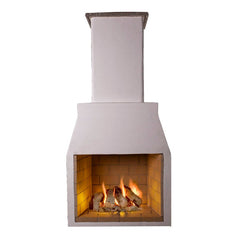
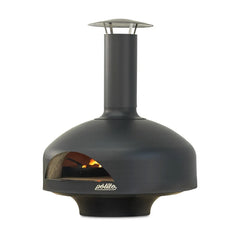
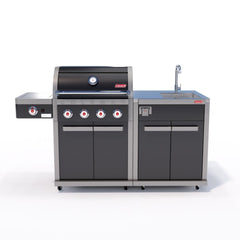
If marshmallows, skewers or a cast iron skillet are part of the plan, that's what a proper barbecue, pizza oven or purpose-built fire pit is for. Set the fire table up as the gathering point beside it: the warm centre everyone drifts toward once the food's been served, not the appliance doing the cooking.
A grazing board, a cheese platter or a round of drinks sitting on the tabletop surface itself, well away from the flame, is a different matter entirely and exactly what these tables are designed for. It's the difference between using the fire table as a serving surface for food that's already been prepared elsewhere, and using the flame itself as a heat source to prepare it.
Treat it as the centrepiece of a relaxed outdoor evening rather than a substitute for your barbecue, and it will do exactly the job it was designed for.
Frequently asked questions
Can you cook on a fire table?
No. An EcoSmart bioethanol fire table is built for warmth and ambience, not food. The AB8 burner holds liquid fuel with no cooking grate or heat controls, and nothing is designed to be rested or cooked over it.
Why can't you cook on a bioethanol fire table?
The flame sits above a Grade 304 stainless reservoir of liquid e-NRG fuel, not gas jets with a grate. Grease, marshmallow or drips falling into the burner affect how it burns and complicate refuelling, and the glass media is decorative, not cookware.
Can you hold food above a fire table flame?
No. There is no cooking grate, heat-diffusing surface or manufacturer guidance for it, so anything improvised is entirely at your own risk on an appliance never tested for cooking. The insert sits close to a reservoir of liquid fuel.
What is a fire table actually for?
Supplemental zone heating and ambience. The AB8 burner puts out 6 kW (21.56 MJ/h) to warm a zone up to 60 m², burning cleanly with no smoke or ash. Use a barbecue, pizza oven or purpose-built fire pit for cooking.
You May Also Like:
About the author:
“I have a real passion for helping transform outdoor spaces so people can relax, connect and entertain with confidence and pride. With My Acre, I love guiding homeowners to create beautiful and functional outdoor living areas."