Lisa B
★★★★★
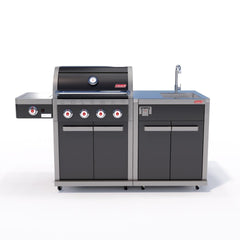
10 Nov 2026Great customer service - they rang me to tell me exactly when my bbq was coming, they also sent over the instructions and price honoured me. 10/10.
Price beat promise

Most chosen
Not sure which one?
Hayden, co-owner
Tell me about your space and I will point you to the right fire. I reply the same business day.
Call 03 7073 2116Most chosen
Not sure which one?
Hayden, co-owner
Tell me what you love to cook and I will point you to the right setup. I reply the same business day.
Call 03 7073 2116Most chosen
Not sure which one?
Hayden, co-owner
Tell me the area you want to shade and I will point you to the right size. I reply the same business day.
Call 03 7073 2116Ponds and fountains
FountainsPondless waterfallsPond kitsDam aerators and fountainsPond filters and equipmentPool care
Robotic pool cleanersBrands
AquascapeAtlas FiltriBBA BiosolutionBeatbotBiancoClayTechDAB PumpsElevateKellockOaseOtterbinePietro StonewareRobo-TekWater MasterNot sure which one?
Hayden, co-owner
Tell me what you need the water to do and I will point you to the right pump, filter or water feature. I reply the same business day.
Call 03 7073 2116Where to start
Not sure which one?
Hayden, co-owner
Tell me what you are planning and I will point you to the right fit. I reply the same business day.
Call 03 7073 2116Spas
Spas and hot tubsComingSwim spasComingNot sure which one?
Hayden, co-owner
Tell me how you want to relax and I will point you to the right spa or sauna. I reply the same business day.
Call 03 7073 2116Not sure which one?
Hayden, co-owner
Tell me what you are planning and I will point you to the maker that suits it. I reply the same business day.
Call 03 7073 2116
Fire
Most chosen
Outdoor Kitchens
Most chosen
Shade
Most chosen
Water
Ponds and fountains
FountainsPondless waterfallsPond kitsDam aerators and fountainsPond filters and equipmentPool care
Robotic pool cleanersGarden
Where to start
Spas & Saunas
Spas
Spas and hot tubsComingSwim spasComingBrands
About
Who we are
Who is My Acre?Why My Acre?Meet Hayden and TimOur installersContact usWhat we promise
Price beat promiseShipping and deliveryWarranty and claimsReturns and exchangeGuides and resources
Customer resourcesCustomer reviewsBlogs


Short answer: A goldfish or koi pond does best between approximately 18 and 24 °C in summer. The fish survive up to roughly 35 °C if the rise is gradual, but warm water holds less oxygen, so every degree above the optimum narrows the margin; shade, plant cover, depth and aeration keep a pond inside it.
If your pond is shaded through the afternoon and stays under 25 °C on a hot day, you can stop here. If it is shallow, sits in full sun or holds a crowd of fish, the rest of this guide explains how heat and oxygen interact and what to do first. It also points to the aerators and fountains we list.
The Southern Regional Aquaculture Center puts the optimum for koi and goldfish at about 65 to 75 °F (18 to 24 °C). Water outside that band may suppress the fishes' immune systems and reduce feeding and growth, according to its species profile, so water at 72 °F (22 °C) is comfortably inside the range rather than too cold for your fish. The profile covers goldfish and koi only; native fish, frogs and other pond residents have their own limits.
The table sets those temperatures beside the oxygen that fresh water can hold, taken from the U.S. Geological Survey's solubility table at sea-level pressure.
| Water temperature | Oxygen water can hold | What the fish experience |
|---|---|---|
| 20 °C | 9.09 mg/L | Inside the 18 to 24 °C optimum |
| 25 °C | 8.26 mg/L | Just above the optimum |
| 30 °C | 7.56 mg/L | Survivable; outside the optimum |
| 35 °C | 6.95 mg/L | The upper survival limit SRAC gives |
SRAC says koi and goldfish can survive as high as 95 °F (35 °C), especially when the temperature changes gradually with the seasons, so 35 °C is a limit to survive rather than a target. Pond owners disagree about where the danger begins. In one Garden Pond Forum thread an owner whose water reached the 90s °F (above 32 °C) saw no distress in goldfish, while in another a poster cited 80 °F (27 °C) as the most goldfish should face for long. Observe your fish as well as the thermometer, reading it at mid-depth and near the bottom, because owners in two threads point out that the temperature varies with depth.
Warm water holds less oxygen while raising the fish's demand for it. Bacteria decomposing debris consume oxygen too, as do plants overnight. New Mexico State University's extension guide W-104 says water at 52 °F (11 °C) holds 40 percent more oxygen than water at 80 °F (27 °C). It adds that bacteria consume oxygen as they decompose organic matter; it also says oxygen is typically lowest just before dawn, so early morning is when hot-weather trouble shows first. Oxygen depletion follows hot, cloudy, windless days; the guide calls a lack of dissolved oxygen the leading cause of fish kills. The guide is written for recreational fish ponds, but the physics is the same in a backyard pond.
Take a shallow pond in full sun that is still 30 °C at four on a summer afternoon. SRAC asks for at least 5 mg/L of oxygen; by our arithmetic from the USGS and SRAC figures, the headroom above that floor shrinks from 4.1 mg/L at 20 °C to 2.6 mg/L at 30 °C, which is 37 percent less margin for the same fish load. Heat also shifts ammonia towards its toxic form, because the same extension guide says that at any given pH more of the toxic form is present in warmer water.
Some of each, with shade through the hottest part of the day. Aquascape Australia lists depth, plant coverage, shade and circulation as the design factors for hot weather. It suggests a minimum depth of 60 cm so the bottom can stay cooler; it also recommends plants covering roughly a third to a half of the surface. Forum owners recommend the same measures: shade sails, shade cloth, floating plants and, in one thread, a tree that does the shading for free.
Pond volume matters as much as orientation. Aquascape notes that water in small containers goes through extreme temperature changes, which harms most fish. Owners in three threads say a small pond heats quickly, one with 300 gallons reading 88 °F (31 °C) on a 97 °F (36 °C) day. Our guide to how deep a pond should be for fish covers the depth side.
Work through this list in sequence, because the low-cost measures come first and no machine can fully correct a pond that is too shallow or too exposed.
Aeration adds oxygen, but neither Aquascape nor the extension guide claims it cools the water; NMSU calls it one tool among many, with nutrient load the critical issue. Owners also report floating frozen containers, running a stream on a timer or blowing a fan across the surface to speed evaporation; these are individual accounts, not tested measures.
Only when shade, plants and a waterfall are not enough, which for most backyard ponds they are. Aquascape Australia describes its ASA aeration systems, including the 1/4 hp dam aerator, as built for lakes, dams and large ponds, so the larger kit is probably more than your courtyard pond requires. The smaller Oase AquaOxy aerator is the closer fit to a garden pond, though this guide quotes no oxygen output for it because no Oase document was available. The wider pond equipment range covers pumps and filters.
Ring me on 03 7073 2116 with your pond's size, depth and what shades it. I will say which of these steps is worth paying for first. Find the same aerator for less elsewhere and we will beat it. Delivery is charged on Aquascape and Oase items and shows at checkout before payment.

 Water Features
 Water Features
 Water Features

Want a written quote?
Tell me what you are after. I send it the same business day.
Great customer service - they rang me to tell me exactly when my bbq was coming, they also sent over the instructions and price honoured me. 10/10.
Great table delivered quickly! Very happy
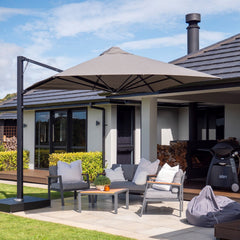
We recently had a Serenity Cantilever umbrella installed and the My Acre team were fabulous. From initially advising us what would suit our tricky terrace best, to keeping us informed on delivery and installation and ...
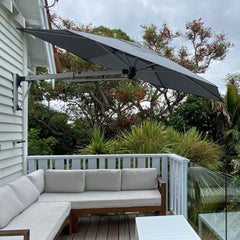
Really happy with my Shadowspec Retreat wall-mounted umbrella. Hayden at My Acre has been great — always quick to respond and very helpful. I recently needed to make a small warranty claim, and Hayden organised everyt...
Thanks to the My Acre team delighted with the end product of the Umbrella cantilever shade. In all respects Hayden was fantastic details, invoicing, adjusting delivery to suit us and supporting the installation with a...
Australian owned · every order personally followed up