Lisa B
★★★★★
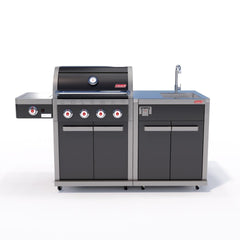
10 Nov 2026Great customer service - they rang me to tell me exactly when my bbq was coming, they also sent over the instructions and price honoured me. 10/10.
Price beat promise

Most chosen
Not sure which one?
Hayden, co-owner
Tell me about your space and I will point you to the right fire. I reply the same business day.
Call 03 7073 2116Most chosen
Not sure which one?
Hayden, co-owner
Tell me what you love to cook and I will point you to the right setup. I reply the same business day.
Call 03 7073 2116Most chosen
Not sure which one?
Hayden, co-owner
Tell me the area you want to shade and I will point you to the right size. I reply the same business day.
Call 03 7073 2116Ponds and fountains
FountainsPondless waterfallsPond kitsDam aerators and fountainsPond filters and equipmentPool care
Robotic pool cleanersBrands
AquascapeAtlas FiltriBBA BiosolutionBeatbotBiancoClayTechDAB PumpsElevateKellockOaseOtterbinePietro StonewareRobo-TekWater MasterNot sure which one?
Hayden, co-owner
Tell me what you need the water to do and I will point you to the right pump, filter or water feature. I reply the same business day.
Call 03 7073 2116Where to start
Not sure which one?
Hayden, co-owner
Tell me what you are planning and I will point you to the right fit. I reply the same business day.
Call 03 7073 2116Spas
Spas and hot tubsComingSwim spasComingNot sure which one?
Hayden, co-owner
Tell me how you want to relax and I will point you to the right spa or sauna. I reply the same business day.
Call 03 7073 2116Not sure which one?
Hayden, co-owner
Tell me what you are planning and I will point you to the maker that suits it. I reply the same business day.
Call 03 7073 2116
Fire
Most chosen
Outdoor Kitchens
Most chosen
Shade
Most chosen
Water
Ponds and fountains
FountainsPondless waterfallsPond kitsDam aerators and fountainsPond filters and equipmentPool care
Robotic pool cleanersGarden
Where to start
Spas & Saunas
Spas
Spas and hot tubsComingSwim spasComingBrands
About
Who we are
Who is My Acre?Why My Acre?Meet Hayden and TimOur installersContact usWhat we promise
Price beat promiseShipping and deliveryWarranty and claimsReturns and exchangeGuides and resources
Customer resourcesCustomer reviewsBlogs


Short answer: Wait at least 72 hours after filling, which is Aquascape's stated minimum, then add only a few fish at first. Aquascape's owner's manual recommends 4 to 6 weeks before adding fish, because the filter bacteria that process fish waste take weeks to establish. Treat the water first, since tap water can carry chlorine or chloramine.
If the water has been treated and a number is all you wanted, you can stop here: 72 hours is the floor and four to six weeks is the maker's recommendation. The sections below explain what each wait is for, how cool weather changes it and how to introduce the first fish, using the Aquascape Pond Detoxifier and Beneficial Bacteria we list. The ponds collection holds the kits, liners and treatments that go with a new pond.
Longer than that: at least 72 hours, according to Aquascape Australia's FAQ, which says to allow a minimum of that long for the water chemistry and temperature to stabilise. The same page says to add a double dose of Aquascape Pond Detoxifier when first filling the pond, to neutralise chlorine and chloramine, reduce fish stress and detoxify heavy metals.
Which disinfectant reaches the tap depends on the supplier. Sydney Water says it adds chlorine and ammonia, that leaving water in an open container for 48 hours dechlorinates it and that a conditioner removes chlorine and chloramine. SA Water, in a 2018 factsheet, says chloraminated tap water must be neutralised before it goes into fish tanks, aquariums and ponds, whereas Icon Water says it does not use chloramines in treatment or distribution. Ask the local water retailer which applies to your address.
Aquascape lists chloramine among the things its Pond Detoxifier handles; its table gives 378 litres per pump of the 473 ml bottle. By our arithmetic a double dose for a 7,000 litre pond is about 37 pumps; the 473 ml bottle is $43 at our prices on 10 October 2026. Kansas State University's guide MF2911 says a new pond should be treated for its entire volume.
Four to six weeks is the usual answer from makers and extension services, though the published figures run wider than that. The table sets the main ones side by side.
| Source | Wait before fish | What it refers to |
|---|---|---|
| Aquascape Australia FAQ | Minimum 72 hours | Water chemistry and temperature |
| Aquascape owner's manual | 4 to 6 weeks | A new ecosystem pond |
| University of Florida extension | 4 to 6 weeks | Light stocking, in an aquarium guide |
| RHS | Six weeks | For the filter bacteria to build up |
| Oklahoma State extension | At least four weeks | Nitrification, in an aquaponics sheet |
| Sydney Water fish fact sheet | A couple of weeks | A tank set up without fish |
Three AI assistants asked this question on 9 October 2026 gave answers ranging from a settling time of 24 to 48 hours to a wait of four to eight weeks, a spread of up to 56 times. The sourced answers cluster far more tightly; the reason lies in the chemistry. New Mexico State University's guide W-104 describes ammonia as the main waste excreted by fish, which bacteria convert to nitrite and then to nitrate. The RHS puts the build-up of those bacteria in a filter at six weeks. The Aquascape manual adds that an ecosystem pond can take up to 12 to 18 months to balance fully, so a clear pond at week six is a start rather than a finish.
Because the bacteria slow down in cool water: New Mexico State's guide says nitrification slows below 20 °C yet continues at 10 °C or less. It adds that ammonia tends to be higher in autumn and early spring before nitrification speeds up. Oase's BioPress manual says the full effect on bacteria is only reached from a water temperature of 10 °C, while Aquascape's guide lists its Beneficial Bacteria for water above 10 °C.
A pond filled in early spring should therefore expect the longer end of the range, but the sources do not say how much longer. Test the water instead of counting days.
Test it. The University of Florida's extension guide says to monitor ammonia, nitrite and pH closely until the biofilter is firmly established, which a drop in nitrite shows. It is written for aquariums and gives no pond threshold, so treat it as the method rather than a rule for a pond.
Owners agree on the tool: in a November 2014 thread a moderator tells a first-time builder to get a test kit and says liquid kits give the most accurate results, while in a 2024 thread a member says strips are less reliable. We do not sell test kits, so buy one from a pond or aquarium shop before the water goes in.
If you are not sure what the readings mean, ring me on 03 7073 2116 and read them out. I will tell you whether to wait another week.
The sources do not settle it, so owners split. No maker or extension document read for this guide recommends either method for a pond, although Aquascape and the University of Florida both say to start light, with a few fish.
Owners differ in practice: in an August 2014 thread one member said an uncycled pond's first fish would probably die, while the builder planned to add goldfish to help the cycle. A poster in a 2025 thread says that when their pond was built they added a few goldfish to get it cycling and waited until spring for koi. Under a YouTube video two commenters recommend fishless cycling with ammonium chloride. One says it takes about two weeks, which is a claim rather than a tested figure.
Slowly, a few at a time, once the water is treated and the filter is working. Kansas State says to add fish after plants so they have somewhere to hide. Aquascape's FAQ sets out the introduction; a moderator in the November 2014 thread above suggests starting with just two fish.
Stocking after that depends on pond size and depth; our guide to how deep a pond should be for fish gives the numbers. Check what your state allows before buying any species.
One concession: Aquascape's guide describes Beneficial Bacteria as weekly maintenance in water above 10 °C, not as a way to shorten the wait. The same guide says its Pond Starter Bacteria quickly establishes the biological ecosystem and suits new ponds. We do not list that product; the guide gives no figure for how much sooner fish can go in. Beneficial Bacteria costs $44 for 473 ml or $219 for 3.78 L; the Small Pond Kit is $4,228 at our prices on 10 October 2026.
Ring me on 03 7073 2116 with the size of your pond, its water source and the date you filled it. I will tell you what to treat and when to add the first fish. Find the same Aquascape product for less elsewhere and we will beat it. Delivery is charged on Aquascape items and shows at checkout before payment.

 Water Features
 Water Features
 Water Features

Want a written quote?
Tell me what you are after. I send it the same business day.
Great customer service - they rang me to tell me exactly when my bbq was coming, they also sent over the instructions and price honoured me. 10/10.
Great table delivered quickly! Very happy
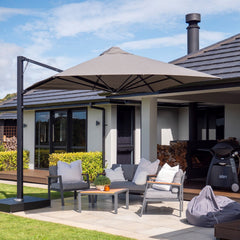
We recently had a Serenity Cantilever umbrella installed and the My Acre team were fabulous. From initially advising us what would suit our tricky terrace best, to keeping us informed on delivery and installation and ...
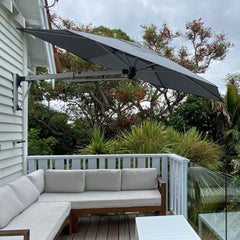
Really happy with my Shadowspec Retreat wall-mounted umbrella. Hayden at My Acre has been great — always quick to respond and very helpful. I recently needed to make a small warranty claim, and Hayden organised everyt...
Thanks to the My Acre team delighted with the end product of the Umbrella cantilever shade. In all respects Hayden was fantastic details, invoicing, adjusting delivery to suit us and supporting the installation with a...
Australian owned · every order personally followed up