Short answer: A wood fire pit delivers a genuine campfire, complete with crackle, drifting smoke and embers that need a clearance zone. A bioethanol fire pit lights in seconds and burns to water vapour, with no smoke or ash, for roughly $2.00 to $7.60 an hour in fuel. Neither is the wrong choice; they suit different evenings and different amounts of effort.
That difference in cost, mess and ceremony is worth understanding before you settle on a shape and a fuel for the same corner of the yard, whichever way you lean on our own EcoSmart Fire range.
What actually comes off the flame
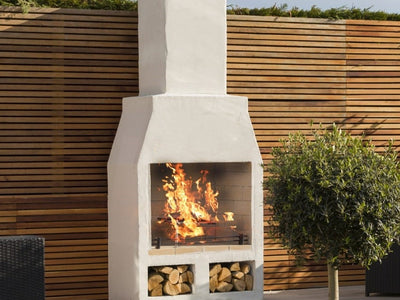
A wood fire pit burns through incomplete combustion, which is what produces the crackle, the smoke and the embers that travel on a gust. Most fire pit guides recommend clearing several metres of flammable material around an open wood fire for exactly this reason; ash needs shovelling out after every single burn.
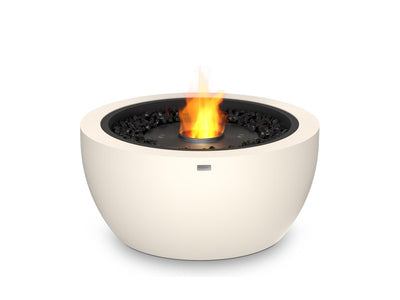
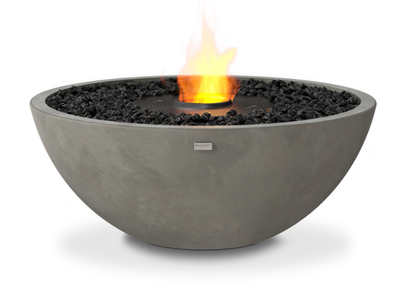
A bioethanol fire pit runs on a sealed stainless steel burner instead, built to keep the fuel contained rather than exposed to the air. Combustion produces water vapour and a trace amount of carbon dioxide. There is no soot, no lingering smoke, and nothing left in the bowl once the flame is extinguished.
Running cost, in real numbers
My Acre’s own published figures put a bioethanol fire pit at about $2.00 an hour on the compact AB3 burner; the larger AB8 burner runs to $7.60 an hour at full flame. That is litres of e-NRG fuel burned, multiplied by the price paid per litre, with no meter and no separate standing charge behind it.
Firewood has no equivalent consistent Australian figure for an open pit, though seasoned mixed hardwood delivered in Sydney runs roughly $190 to $280 a cubic metre. How many logs burn through in an evening depends on wind, wood density and how tightly the pit is stacked, so treat that as an estimate rather than a quoted number. Nobody publishes a reliable dollar-per-hour figure for an open wood fire the way EcoSmart does for its own burners.
|
Wood fire pit |
Bioethanol fire pit |
| Running cost |
No consistent published rate; roughly $190–$280/m³ hardwood |
$2.00 to $7.60 an hour (AB3 to AB8 burners) |
| Smoke & ash |
Smoke, embers, ash to shovel after each burn |
No smoke, no ash; water vapour only |
| Total Fire Ban days |
Banned outright in every state and territory |
Also banned: no state or territory exempts bioethanol |
| Heat output |
Considerably higher raw heat |
Lower raw heat; warms those seated nearby |
Total Fire Ban days
Victoria and South Australia both ban fires lit for warmth or comfort outdoors on Total Fire Ban days. Fire pits are named specifically; there is no exemption written in for fuel type. The Country Fire Authority’s rule is explicit: “All fires for warmth or personal comfort including fire pits, braziers and chimineas are banned during Total Fire Ban Days.” CFA Victoria’s own page lists no fuel-type carve-out for that ban. SA CFS runs the same rule: on a Total Fire Ban day it allows only a gas or electric barbecue or cooking appliance, used within 15 metres of a home or on a coastal foreshore. Every other state and territory bans fires for warmth outdoors on a ban day too (called a fire ban in Queensland and the NT).
A bioethanol fire pit produces none of the ember risk these bans exist to prevent, but no state or territory exempts it: a bioethanol flame lit outdoors for warmth is still a fire, so it stays off on a Total Fire Ban day. Check your state fire authority for the day's declaration.
Cleanup, once the fire is out
Wood asks for ash removal after every burn, plus somewhere dry to store the next load of logs. Bioethanol asks for a wipe of the stainless burner tray; there is no ash to shovel, because there was never any solid fuel to leave residue behind in the first place.
What owners actually say
One Australian owner’s account on the Bunnings Workshop forum put it plainly: a bioethanol fire “doesn’t produce extreme heat, but it does take the chill out of the room.” A later reply on the same thread doubted it would be enough for a properly cold Hobart winter, which is a fair read of the trade-off between ambience and raw warmth. A bioethanol fire pit warms the people close to it; a wood fire pit throws considerably more raw heat, at the expense of everything described above.
The honest verdict
If the evening calls for a considerable backyard fire that people gather around for hours, with room to store dry wood and the patience to tend it, a wood fire pit is still the better buy. If it calls for fire without the workload, no ash, no smoke chasing guests, and a running cost you can calculate to the cent, bioethanol wins on almost every practical measure except raw heat and the smell of woodsmoke.
Every EcoSmart fire pit and fire table ships with free delivery. If you find the same burner cheaper elsewhere, we will beat that price. Hayden checks the fit for your space before anything ships, then follows up within a week of delivery; any warranty claim afterwards is handled on your behalf, not passed back to the manufacturer. Browse the EcoSmart Fire range, including the Mix 850 Fire Pit, or get a quote and Hayden will match the shape and burner to your space. Ring 1300 515 620 if a real conversation is easier than a form.
You May Also Like:
About the author:
“I have a real passion for helping transform outdoor spaces so people can relax, connect and entertain with confidence and pride. With My Acre, I love guiding homeowners to create beautiful and functional outdoor living areas."