

Lisa B
★★★★★
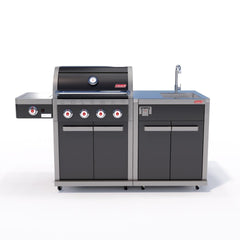
10 Nov 2026Great customer service - they rang me to tell me exactly when my bbq was coming, they also sent over the instructions and price honoured me. 10/10.
Price beat promise

Most chosen
Not sure which one?
Hayden, co-owner
Tell me about your space and I will point you to the right fire. I reply the same business day.
Call 03 7073 2116Most chosen
Not sure which one?
Hayden, co-owner
Tell me what you love to cook and I will point you to the right setup. I reply the same business day.
Call 03 7073 2116Most chosen
Not sure which one?
Hayden, co-owner
Tell me the area you want to shade and I will point you to the right size. I reply the same business day.
Call 03 7073 2116Ponds and fountains
FountainsPondless waterfallsPond kitsDam aerators and fountainsPond filters and equipmentPool care
Robotic pool cleanersBrands
AquascapeAtlas FiltriBBA BiosolutionBeatbotBiancoClayTechDAB PumpsElevateKellockOaseOtterbinePietro StonewareRobo-TekWater MasterNot sure which one?
Hayden, co-owner
Tell me what you need the water to do and I will point you to the right pump, filter or water feature. I reply the same business day.
Call 03 7073 2116Where to start
Not sure which one?
Hayden, co-owner
Tell me what you are planning and I will point you to the right fit. I reply the same business day.
Call 03 7073 2116Spas
Spas and hot tubsComingSwim spasComingNot sure which one?
Hayden, co-owner
Tell me how you want to relax and I will point you to the right spa or sauna. I reply the same business day.
Call 03 7073 2116Not sure which one?
Hayden, co-owner
Tell me what you are planning and I will point you to the maker that suits it. I reply the same business day.
Call 03 7073 2116
Fire
Most chosen
Outdoor Kitchens
Most chosen
Shade
Most chosen
Water
Ponds and fountains
FountainsPondless waterfallsPond kitsDam aerators and fountainsPond filters and equipmentPool care
Robotic pool cleanersGarden
Where to start
Spas & Saunas
Spas
Spas and hot tubsComingSwim spasComingBrands
About
Who we are
Who is My Acre?Why My Acre?Meet Hayden and TimOur installersContact usWhat we promise
Price beat promiseShipping and deliveryWarranty and claimsReturns and exchangeGuides and resources
Customer resourcesCustomer reviewsBlogs


Short answer: Yes. Australian fire services count a backyard swimming pool as a static water supply for bushfire fighting, but the pool's own filter pump will not do the job. Using pool water needs a petrol or diesel fire pump, a suction hose with a strainer and fire hose, all tested before the season. A pool full of water does not make staying safe.
If you only wanted to know whether pool water is permitted and useful, that is the answer. The rest covers why the filter pump fails, what two states require of a pump drawing from a pool and how long the water lasts, then points to the fire fighting pumps we stock.
Yes. The fire services actively encourage it. The NSW Rural Fire Service Static Water Supply program describes a backyard swimming pool as an ideal static water supply for small portable pumps and hose lines; it registers pools, tanks and dams holding more than 3,000 litres. Fire and Rescue NSW runs the same program in its areas. It explains that firefighters often have difficulty getting enough water during bushfires, when the mains may not carry enough.
Victoria's Country Fire Authority lists a swimming pool among the alternative water sources worth considering. South Australia goes further: its building standard for designated bushfire prone areas, Ministerial Building Standard MBS 008 (July 2020), defines a firefighting water supply as water held in a tank or a swimming pool. Rules for lighting fires on your own land are a separate matter, covered in our guide to whether backyard fires are legal in NSW.
Because a filter pump depends on mains electricity, which a bushfire is likely to cut. The CFA expects mains power to be lost during a bushfire and says an electric pump needs a generator capable of starting and running it. Its minimum equipment list for defending a property names a non-electrical firefighting pump protected from radiant heat.
Mains water offers no reliable backstop either. Barwon Water cannot guarantee pressure or an uninterrupted supply during a bushfire; it recommends a non-electrical pump while warning about the risks associated with flammable fuels.
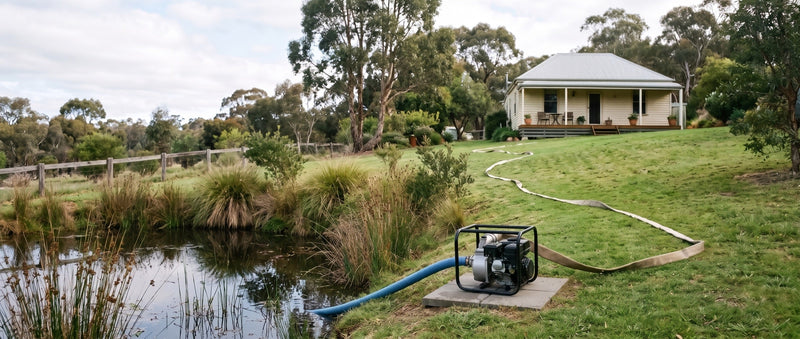
A filter pump also draws through the skimmer box. One poster writing as a firefighter on Whirlpool's forum says a pool yields only a couple of thousand litres before the level falls below the skimmer. After that, a filter pump left running burns out quickly; it is a single account, though it matches how a skimmer operates. A fire pump drops its own suction hose into the water instead, so it can draw from the deep end.
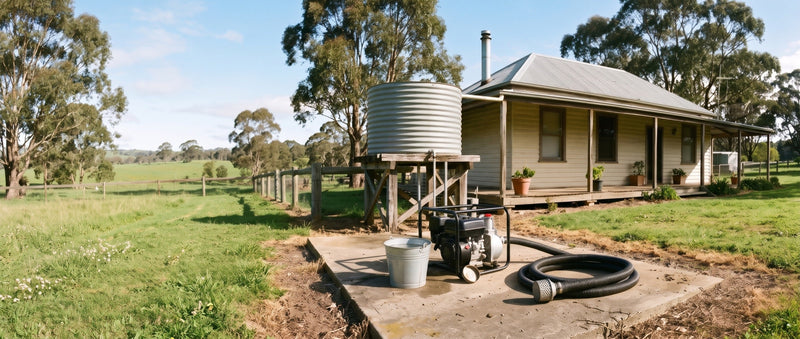
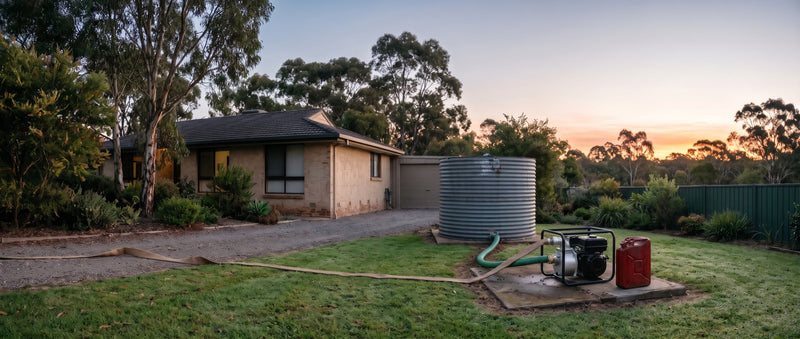
A fire pump with its own engine, a suction hose long enough to sit well below the surface and a fire hose long enough to reach around the house. South Australia writes the minimum into MBS 008: a pump with a 38 mm inlet and a power rating of at least 3.7 kW (5 hp), driven by petrol, diesel or another power source independent of mains electricity. The pump must sit on a hard surface under a ventilated, non-combustible cover; a pool supply also needs an additional hose suitable for drawing water from the pool.
New South Wales sets a comparable floor for new development. The RFS document Planning for Bush Fire Protection 2019 states that where pumps are provided, they should be at least a 5 hp or 3 kW petrol or diesel pump shielded against bush fire attack, with a 19 mm hose. Both documents govern building approvals rather than every existing home, so your council or state fire service is the authority on what applies to your block.
The maker's manual supplies the practical detail. Bianco's manual for its Vulcan fire pumps calls for a strainer on the end of the suction hose, at least 2 litres of water in the pump housing before starting and a suction inlet more than 150 mm below the water surface. A pool suits those conditions well.
Usually more than a tank holds, but it lasts less time than most owners expect. The CFA asks for at least 10,000 litres to defend a property and says you will likely need closer to 40,000 litres. As a signposted example, a pool measuring 8 m by 4 m with an average depth of 1.5 m holds 48,000 litres, which clears both figures.
Water Master rates its High Flow pump, sold here as the Water Master High Flow Fire Pump with Honda GX200, at a maximum of 570 litres a minute. At that rate 10,000 litres lasts about 17.5 minutes. The figure is measured at the pump, so delivery through hose and nozzle is lower and the running time longer. Water runs out at a rate you can plan for, which is why the CFA tells households to test equipment before the season and set it up the day before a high fire risk day.
Possibly. The makers are cautious. Bianco's manual specifies clear, fresh water with minimal solids or sediment for its fire pumps. Water Master's guide to choosing a water pump warns that salt water can damage certain pumps. Neither maker publishes a rule for chlorinated pool water, so raise a saltwater pool with us before the season.
After a fire, the pool itself needs attention. NSW Health explains that ash and debris can disturb the water's chemical balance; it recommends removing debris, testing chlorine and pH levels and covering the pool against mosquitoes until the water is restored.
Pool water cannot make staying to defend a safe decision. The CFA's equipment page states that its advice does not guarantee survival; the best chance is leaving the night before or early in the morning on Extreme or Catastrophic fire danger days. The firefighter on Whirlpool adds that brigades prefer a dedicated tank and take pool water only when no other source exists.
Picture a brick home on a sloping block, with a pool below the back deck and gums along the Colorbond fence. A hot north-westerly afternoon cuts the power, so the filter pump falls silent with the skimmer half dry. A household with a fire pump already beside the pool, fuelled and primed, has water on the gutters within minutes; a household without one has 48,000 litres it cannot move. The pump decides whether the pool is a water supply or simply a pool.
Register the pool, fit the pump and keep leaving early as the plan. Ring me on 03 7073 2116 and tell me how far the pool sits from the house and how high the roofline is; I will tell you which pump suits it, including when a smaller one will do. Every pump in our fire fighting pumps collection carries our price-beat promise. We handle warranty for you, while delivery is charged by state and shown at checkout.

 Water Pumps
 Water Pumps
 Water Pumps

Want a written quote?
Tell me what you are after. I send it the same business day.
Great customer service - they rang me to tell me exactly when my bbq was coming, they also sent over the instructions and price honoured me. 10/10.
Great table delivered quickly! Very happy
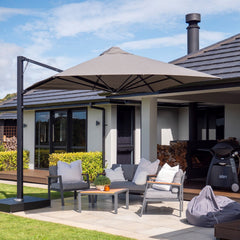
We recently had a Serenity Cantilever umbrella installed and the My Acre team were fabulous. From initially advising us what would suit our tricky terrace best, to keeping us informed on delivery and installation and ...
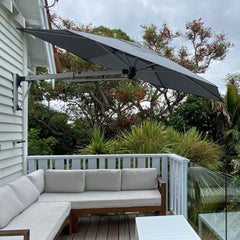
Really happy with my Shadowspec Retreat wall-mounted umbrella. Hayden at My Acre has been great — always quick to respond and very helpful. I recently needed to make a small warranty claim, and Hayden organised everyt...
Thanks to the My Acre team delighted with the end product of the Umbrella cantilever shade. In all respects Hayden was fantastic details, invoicing, adjusting delivery to suit us and supporting the installation with a...
Australian owned · every order personally followed up