

Lisa B
★★★★★
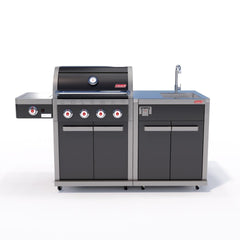
10 Nov 2026Great customer service - they rang me to tell me exactly when my bbq was coming, they also sent over the instructions and price honoured me. 10/10.
Price beat promise

Most chosen
Not sure which one?
Hayden, co-owner
Tell me about your space and I will point you to the right fire. I reply the same business day.
Call 03 7073 2116Most chosen
Not sure which one?
Hayden, co-owner
Tell me what you love to cook and I will point you to the right setup. I reply the same business day.
Call 03 7073 2116Most chosen
Not sure which one?
Hayden, co-owner
Tell me the area you want to shade and I will point you to the right size. I reply the same business day.
Call 03 7073 2116Ponds and fountains
FountainsPondless waterfallsPond kitsDam aerators and fountainsPond filters and equipmentPool care
Robotic pool cleanersBrands
AquascapeAtlas FiltriBBA BiosolutionBeatbotBiancoClayTechDAB PumpsElevateKellockOaseOtterbinePietro StonewareRobo-TekWater MasterNot sure which one?
Hayden, co-owner
Tell me what you need the water to do and I will point you to the right pump, filter or water feature. I reply the same business day.
Call 03 7073 2116Where to start
Not sure which one?
Hayden, co-owner
Tell me what you are planning and I will point you to the right fit. I reply the same business day.
Call 03 7073 2116Spas
Spas and hot tubsComingSwim spasComingNot sure which one?
Hayden, co-owner
Tell me how you want to relax and I will point you to the right spa or sauna. I reply the same business day.
Call 03 7073 2116Not sure which one?
Hayden, co-owner
Tell me what you are planning and I will point you to the maker that suits it. I reply the same business day.
Call 03 7073 2116
Fire
Most chosen
Outdoor Kitchens
Most chosen
Shade
Most chosen
Water
Ponds and fountains
FountainsPondless waterfallsPond kitsDam aerators and fountainsPond filters and equipmentPool care
Robotic pool cleanersGarden
Where to start
Spas & Saunas
Spas
Spas and hot tubsComingSwim spasComingBrands
About
Who we are
Who is My Acre?Why My Acre?Meet Hayden and TimOur installersContact usWhat we promise
Price beat promiseShipping and deliveryWarranty and claimsReturns and exchangeGuides and resources
Customer resourcesCustomer reviewsBlogs


Short answer: To use a wood fired pizza oven, cure it first with several days of small, gradually larger fires. For each cook, light kindling to one side of the floor, feed in dry hardwood with the door open and wait 30 to 120 minutes for a white dome and 350 to 400°C. Curing schedules differ by maker.
The steps below come from the manufacturers' handbooks and websites for the Valoriani and Polito ovens we range, checked against what owners report on specialist forums. The tools the steps call for, from peels to infrared thermometers, are in our pizza oven accessories range.
Cure a new oven with a series of small fires over several days, raising the temperature a step at a time, before cooking anything in it. A new refractory oven still contains residual moisture from manufacturing, storage or assembly. Valoriani's own questions page explains that rushing the initial firing can crack the refractory material, because steam trapped inside the structure creates thermal shock. The same page describes the process as roughly 72 hours, starting with a small blaze, which is why your pizza dough waits until the cure is done.
Yes. The differences are large enough that a schedule copied from another brand's guide can be wrong for your oven. These are the schedules each maker publishes:
| Oven | Curing period | How the heat climbs |
|---|---|---|
| Valoriani Baby F60 and F75 | 3 days | Day 1 held at 100 to 150°C; then up 50°C every 4 hours |
| Valoriani FVR and TOP kits | 5 days, after 5 to 7 days' rest | From about 100°C, up about 50°C a day |
| Polito ovens | 5 to 7 days | Small, cool fires that grow each day |
The Valoriani Baby figures come from the Baby handbook, which tells owners to light a small blaze in the centre of the oven and allows baking tests once the dome starts whitening. The kit schedule comes from Vesuvio, Valoriani's Australian importer, in its residential oven questions page, which also requires any rendered finish to be completely dry first. The principle behind every maker's schedule is the same: raise the heat gradually over several fires rather than all at once. If you are unsure which figure applies, ring Hayden on 03 7073 2116 and we will confirm it with the importer before you light up.
Polito's curing guide asks for 5 to 7 consecutive days of increasingly larger fires, with the initial firing between 93 and 260°C depending on the oven's ceramic. Polito also says plainly that the oven should not be used for cooking until curing is complete. A white patch on the dome, where soot has burned off, is Polito's sign that the cure is working.
The time commitment. On the Pizza Making Forum, a new owner facing eight days of eight-hour fires asked whether a heat plate or charcoal briquettes could do the job instead; an experienced builder replied that there is no easy way besides slow, steady drying fires. Another owner in the same thread held the low temperatures by shovelling embers in from a fire pit; that owner noticed the smell from the flue change from musty to clean as the cure finished, well before any dough went in.
Picture a kit oven finished on a Friday with a party already booked for Saturday. The temptation is one enormous blaze to compensate for lost time. On the UK Wood-Fired Oven Forum, owners of home-built ovens who fired too early or too hard describe steam pouring from the dome and cracks opening in the arch. Vesuvio's schedule, by contrast, asks for 5 to 7 days of rest and then five days of fires, so up to 12 days pass before the first pizza. That fortnight buys an oven that holds its heat for years. The honest advice: if a week of evening fires is not realistic for your household right now, wait before buying. An oven cured in a rush is the one most likely to crack.
Small hairline cracks are still normal. Valoriani says fine surface cracks are an expected characteristic of refractory material heated and cooled repeatedly, do not affect performance and are not a warranty fault; a crack that keeps widening, or pieces coming away, is the point to call.

Light the fire to one side of the cooking floor, not in the middle, so the flame rolls around the dome and heats the whole oven. That is Vesuvio's instruction in its guide to lighting the fire, which sets it about three quarters of the way back along one side. The central blaze in the Valoriani handbook applies to curing. Vesuvio's sequence runs as follows:
Vesuvio uses softwood such as pine for the kindling, cut 20 to 30 cm long and about 2 cm wide, then seasoned box or ironbark once the flame is established. Polito's cooking tips make the same point about pine as a main fuel: it creates excess smoke and burns out too quickly. The result is a flame that climbs steadily towards cooking temperature rather than one that flares dramatically and then collapses.
The oven is ready when the inside of the dome has turned white and the floor reads 350 to 400°C on an infrared thermometer, which is Vesuvio's guidance. The soot that blackens the dome early on burns off once the masonry is hot, so a white ceiling is a reliable visual check. Heating times vary by oven, as the makers' own figures show:
| Oven | Time to heat (maker) | Temperature |
|---|---|---|
| Polito Giotto | 30 to 45 minutes | 300 to 400°C |
| Valoriani FVR80 | 60 minutes | 300°C |
| Valoriani FVR100 | 90 minutes | 300°C |
| Valoriani FVR120 | 100 minutes | 300°C |
The Giotto figure is from Polito's Giotto information page; the Valoriani figures are from Vesuvio's product specifications, measured from a cold oven. Polito's general advice allows 30 to 60 minutes to reach 400 to 425°C and recommend checking the temperature of the cooking floor with a thermometer. A Polito infrared thermometer or Witt infrared temperature gun takes the guesswork out of that reading.

Pizzas cook best with the door open and a live flame burning to one side, turning the pizza with a peel so each edge faces the flame. Vesuvio recommends the door open for pizza and closed only for roasting or baking bread, because the fire needs oxygen. The Valoriani handbook is firmer: never close the mouth of the oven while there is flame inside it. According to Polito, a pizza takes about two minutes in the Giotto, which fits two large pizzas at once; Vesuvio quotes two to three minutes in its ovens.
Polito's advice adds three habits you can adopt from the start: place the pizza towards the centre, where the heat is most consistent; rotate it halfway through; and maintain the flame with smaller logs rather than one large one, since too much timber at once cools the oven. Polito's temperature guide for the Giotto gives 400°C for pizza and 300°C for pizza, focaccia or covered stews. At 200°C it suggests meat, fish, vegetables and bread, which is why the falling heat after the pizzas is so useful. Our guide to what else you can cook in a pizza oven works through that cooling curve.
Most early mistakes come from impatience with the flame rather than problems with the recipe, the toppings or the equipment. Each one below contradicts a maker's written instruction:
Cooking faults such as burnt bases, soggy dough and pizzas sticking to the peel are covered in our guide to common pizza oven problems. Between cooks, the upkeep is light. Polito says the Giotto's interior needs no cleaning products, only the ashes swept out once cool whenever they build up.
Every Valoriani and Polito oven from our wood fired pizza ovens range comes with our price-beat promise and owner's after-care: a fit check before anything ships, a shepherded delivery and a check-in within a week. We also handle the warranty for you. If the cure or the opening night of cooking does not go to plan, ring Hayden on 03 7073 2116 and we will work through it with you, with the maker's handbook open.

 Pizza Ovens
 Pizza Ovens
 Pizza Ovens

Want a written quote?
Tell me what you are after. I send it the same business day.
Great customer service - they rang me to tell me exactly when my bbq was coming, they also sent over the instructions and price honoured me. 10/10.
Great table delivered quickly! Very happy
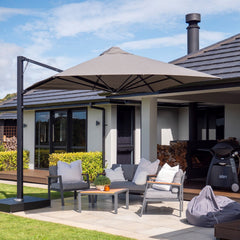
We recently had a Serenity Cantilever umbrella installed and the My Acre team were fabulous. From initially advising us what would suit our tricky terrace best, to keeping us informed on delivery and installation and ...
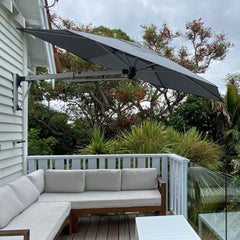
Really happy with my Shadowspec Retreat wall-mounted umbrella. Hayden at My Acre has been great — always quick to respond and very helpful. I recently needed to make a small warranty claim, and Hayden organised everyt...
Thanks to the My Acre team delighted with the end product of the Umbrella cantilever shade. In all respects Hayden was fantastic details, invoicing, adjusting delivery to suit us and supporting the installation with a...
Australian owned · every order personally followed up