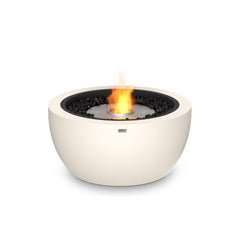
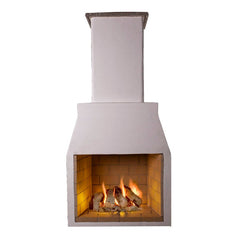
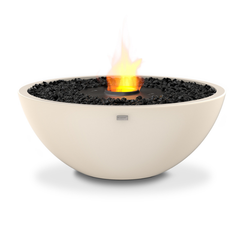
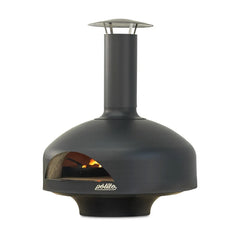
Ever looked at a Fire Table price tag and done a double take? The short answer: you're paying for grade 304 stainless steel construction, a precision-engineered burner, premium materials like GFRC concrete and tempered glass, and independent safety certification, not for gas installation, because there isn't any. Here's what actually drives the cost.
What's Actually Driving the Price
At a glance, a fire table looks simple: flames in the middle, table around the outside. In practice, it combines outdoor furniture, a heating appliance and weatherproof construction into one product, and that combination is what pushes the cost up. A premium fire table is built for outdoor use with materials chosen to cope with sun, rain and heat cycling. That level of durability does not come from cheap materials.
The Materials Themselves
Premium fire tables use GFRC (glass fibre reinforced concrete), powder-coated aluminium or steel, teak, and tempered glass, chosen because they hold up to Australian conditions far better than standard steel or low-grade metal. GFRC in particular is lighter, stronger and more crack-resistant than traditional concrete, but it costs more to manufacture properly. Tempered glass wind guards and UV-resistant finishes add further cost. None of it is obvious in a showroom; it becomes obvious five years in, when a cheap alternative has already rusted, faded or cracked.
The Burner Is Precision Engineering, Not a Decorative Shell
The AB8 burner is machined from grade 304 stainless steel and holds 8 L of fuel, delivering 6 kW (21.56 MJ/h) of output, enough to comfortably heat a zone up to around 60 m². The Efficiency Ring fitted alongside it is precise enough to cut fuel use by roughly a third, stretching a full fill from 7–9 hours of burn time to 9–11 hours. That's a manufactured heating appliance built to a tolerance, not a decorative bowl with a flame in it, and the engineering behind it is a real part of what you're paying for.
Certification Isn't Free Either
A bioethanol fire table sold in Australia has to meet UL 1370, EN 16647 and ACCC compliance requirements before it reaches a showroom. That testing costs money, and it's on top of whatever warranty backs the product; My Acre backs every EcoSmart unit with a 2-year warranty. Cheaper imported alternatives sometimes skip proper certification to hit a lower price point, which is exactly where the risk shows up later.
What You're Not Paying For, and Why That Matters
This is where a bioethanol fire table quietly saves money that a gas alternative doesn't. There's no gas line, no flue, no gasfitter, no compliance certificate and no annual service. For comparison, a gas fireplace installation typically runs $2,000–$7,500 (a built-in unit can run $3,500–$15,000 or more), with a gas line adding $500–$2,000, a licensed gasfitter another $800–$1,500, and ongoing servicing of $150–$300 a year after that. An EcoSmart fire table is freestanding and self-contained: no tradesperson, ever. That absent installation bill is a real part of the total cost of ownership, even though it never shows up on the fire table's own price tag.
Freight, Weight and Import Compliance
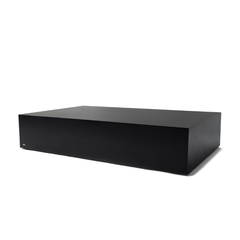
Weight adds cost too. A concrete-finish Base 40, for example, comes in at around 67.7 kg, and moving that safely across the country isn't cheap freight. Imported units also need to clear Australian testing and compliance before they can legally be sold here, which adds documentation and lead time on top of the manufacturing cost. All of it lands in the final retail price before a fire table ever reaches a backyard.
Is It Worth It
A premium fire table isn't the cheapest way to add outdoor heat. What you're actually paying for is durability built for Australian conditions, a heating appliance engineered to a real spec, independent safety certification, and a total cost of ownership that skips installation and servicing entirely. For anyone who genuinely uses their outdoor space through the cooler months, that combination tends to pay for itself over years, not over one summer.
Frequently asked questions
Why are fire tables so expensive?
You pay for grade 304 stainless construction, a precision-engineered burner, premium materials like GFRC concrete and tempered glass, and independent safety certification, not for gas installation, because there isn't any.
What makes a fire table cost more than a cheap fire pit?
Materials built for outdoor use (concrete composite, powder-coated metal, teak, tempered glass, UV-resistant finishes) and a burner machined to a real spec. Cheaper alternatives rust, fade or crack within a few years.
Does a fire table need certification, and does that add cost?
Yes. A bioethanol fire table sold here must meet UL 1370, EN 16647 and ACCC compliance before sale, and that testing costs money. My Acre also backs every EcoSmart unit with a 2-year warranty.
Is a fire table cheaper to own than a gas fire feature?
Often, over time. There is no gas line, flue, gasfitter, compliance certificate or annual service. A gas installation runs $2,000 to $7,500 or more plus $150 to $300 a year to service; a fire table skips all of it.
You May Also Like:
About the author:
“I have a real passion for helping transform outdoor spaces so people can relax, connect and entertain with confidence and pride. With My Acre, I love guiding homeowners to create beautiful and functional outdoor living areas."