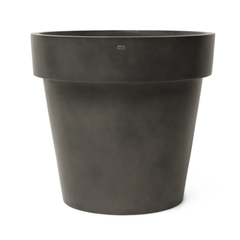
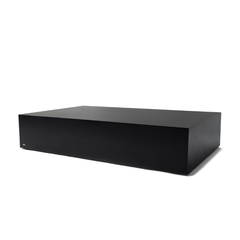
Choosing between a Fire Table and a fire bowl is a bit like picking between a coffee table and a sculpture. The short answer: a fire table sits at furniture height and doubles as usable surface space, while a fire bowl sits lower and is built purely as a flame feature. Both, in the EcoSmart range, run on the same clean-burning bioethanol with no gas line or tank involved either way.
What Actually Separates the Two
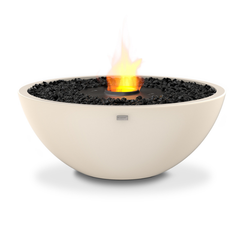
A fire table is built to function as furniture with a flame built in. The surface around the burner is genuinely usable: drinks, a grazing board, someone's phone, all end up resting there over the course of an evening. A fire bowl skips the tabletop entirely. It sits lower, often on its own stand or directly on the ground, and reads more like a sculptural centrepiece than a piece of furniture.
Neither is better outright. It comes down to how you actually use the space around it.
Why a Fire Table Doubles as Entertaining Furniture
The rim around a fire table earns its keep at any gathering. The EcoSmart Base 40, for example, has a 1,000 × 1,000 mm surround, which is genuinely enough table to rest plates and glasses on without anyone hovering awkwardly nearby. For smaller patios, a fire table can replace a coffee table outright rather than adding another piece of furniture to the mix.
Why a Fire Bowl Wins on Atmosphere
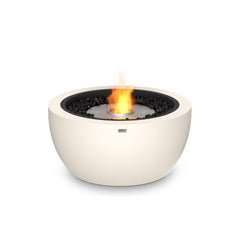
A fire bowl like the EcoSmart Pod 30 (762 × 762 mm, at 38 kg roughly half the weight of a concrete Base 40) is lower-profile and easier to reposition. It works well as a standalone feature in an open garden or courtyard, somewhere a large tabletop unit would feel too dominant. There's a simplicity to a fire bowl that some people prefer over a full table-and-flame combination.
Fuel, Footprint and Heat, Compared
Because both are EcoSmart bioethanol units, neither one involves a gas line, a hidden propane tank or a licensed installer. Both are freestanding, self-contained, and run on liquid e-NRG bioethanol held in a grade 304 stainless steel AB8 burner, holding 8 L and burning for roughly 7–9 hours at full flame (9–11 hours with the Efficiency Ring fitted). Both output 6 kW (21.56 MJ/h), enough to comfortably heat a zone up to around 60 m², and both need the same outdoor clearance: 2,000 mm above and 600 mm from anything fixed, on a level, non-combustible base.
Where they differ is how that heat feels. A fire table's higher burner position tends to spread warmth more evenly across nearby lounges and armchairs. A fire bowl sits closer to the ground and concentrates warmth tighter around whoever is gathered close in. Neither is more or less powerful; it's a difference in how the same output is distributed.
Accessories Work the Same Way Across Both
Neither format locks you out of the accessories that make outdoor bioethanol fires easier to live with. A glass wind guard or fire screen keeps the flame steady on breezy evenings, whether it's sitting on a fire table's rim or wrapped around a fire bowl, and a fitted cover protects either one from rain and dust between uses. The choice between table and bowl doesn't change how you look after the unit day to day.
Which One Actually Suits Your Space
If your outdoor area revolves around entertaining, shared meals and a functional seating zone, a fire table is the more practical pick. It combines warmth with usable surface space and keeps the layout simple. If you want a striking flame feature that doesn't need to double as furniture, a fire bowl delivers that atmosphere on its own, and its lower weight makes it easier to move or store away if you need the space back.
Both turn an ordinary patio into the spot people drift towards once the sun goes down. The right one just depends on whether you want a table that happens to have fire, or fire that happens to look like sculpture.
Frequently asked questions
What is the difference between a fire table and a fire bowl?
A fire table sits at furniture height and doubles as usable surface space; a fire bowl sits lower and is built purely as a flame feature. In the EcoSmart range both run on the same bioethanol with no gas line or tank.
Is a fire table or fire bowl better for entertaining?
A fire table, if you want usable surface. The EcoSmart Base 40 has a 1,000 x 1,000 mm surround for plates and glasses, and can replace a coffee table on smaller patios. A fire bowl is the better standalone atmosphere piece.
Do fire tables and fire bowls give off the same heat?
Yes. Both use the AB8 burner at 6 kW (21.56 MJ/h) for a zone up to 60 m². A fire table's higher burner spreads warmth across nearby seating; a fire bowl concentrates it tighter around those gathered close.
Is a fire bowl easier to move than a fire table?
Generally yes. The EcoSmart Pod 30 fire bowl is 762 x 762 mm at about 38 kg, roughly half the weight of a concrete Base 40, so it is easier to reposition or store away.
You May Also Like:
About the author:
“I have a real passion for helping transform outdoor spaces so people can relax, connect and entertain with confidence and pride. With My Acre, I love guiding homeowners to create beautiful and functional outdoor living areas."