
Lisa B
★★★★★
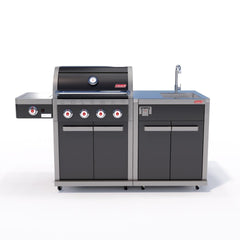
10 Nov 2026Great customer service - they rang me to tell me exactly when my bbq was coming, they also sent over the instructions and price honoured me. 10/10.
Price beat promise

Most chosen
Not sure which one?
Hayden, co-owner
Tell me about your space and I will point you to the right fire. I reply the same business day.
Call 03 7073 2116Most chosen
Not sure which one?
Hayden, co-owner
Tell me what you love to cook and I will point you to the right setup. I reply the same business day.
Call 03 7073 2116Most chosen
Not sure which one?
Hayden, co-owner
Tell me the area you want to shade and I will point you to the right size. I reply the same business day.
Call 03 7073 2116Ponds and fountains
FountainsPondless waterfallsPond kitsDam aerators and fountainsPond filters and equipmentPool care
Robotic pool cleanersBrands
AquascapeAtlas FiltriBBA BiosolutionBeatbotBiancoClayTechDAB PumpsElevateKellockOaseOtterbinePietro StonewareRobo-TekWater MasterNot sure which one?
Hayden, co-owner
Tell me what you need the water to do and I will point you to the right pump, filter or water feature. I reply the same business day.
Call 03 7073 2116Where to start
Not sure which one?
Hayden, co-owner
Tell me what you are planning and I will point you to the right fit. I reply the same business day.
Call 03 7073 2116Spas
Spas and hot tubsComingSwim spasComingNot sure which one?
Hayden, co-owner
Tell me how you want to relax and I will point you to the right spa or sauna. I reply the same business day.
Call 03 7073 2116Not sure which one?
Hayden, co-owner
Tell me what you are planning and I will point you to the maker that suits it. I reply the same business day.
Call 03 7073 2116
Fire
Most chosen
Outdoor Kitchens
Most chosen
Shade
Most chosen
Water
Ponds and fountains
FountainsPondless waterfallsPond kitsDam aerators and fountainsPond filters and equipmentPool care
Robotic pool cleanersGarden
Where to start
Spas & Saunas
Spas
Spas and hot tubsComingSwim spasComingBrands
About
Who we are
Who is My Acre?Why My Acre?Meet Hayden and TimOur installersContact usWhat we promise
Price beat promiseShipping and deliveryWarranty and claimsReturns and exchangeGuides and resources
Customer resourcesCustomer reviewsBlogs


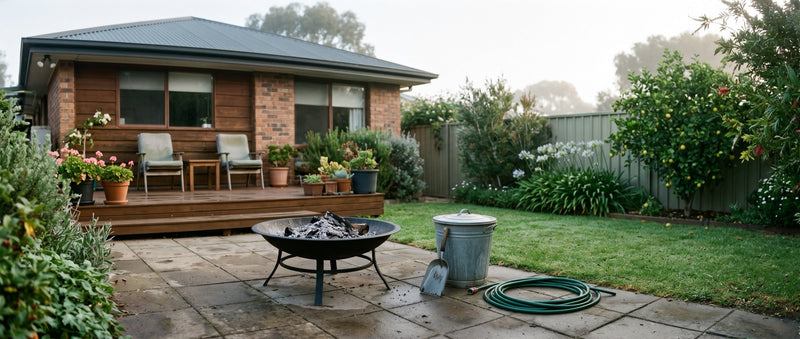
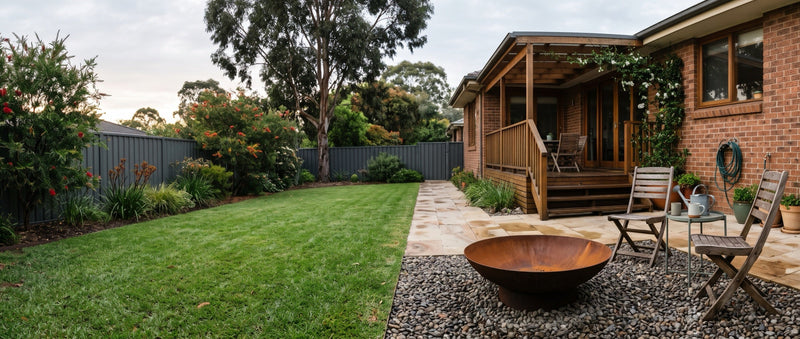
Short answer: Yes. Concrete, pavers and tiles are non-combustible, which makes them the appropriate surface for a fire pit; the risk is damage rather than ignition. Heat radiating down from a low wood fire can crack, discolour or spall the surface; moisture trapped inside concrete makes that damage more likely. A fire pit raised on legs or feet is the safer choice.
If your fire pit already stands on legs over a dry, sound slab, you can stop reading and light it. The rest of this guide is for the owner of a low steel bowl, a pale natural-stone courtyard or a tiled patio, where the surface underneath is usually worth more than the fire pit on top of it.
It can; water is usually the reason. A 2022 study in the journal Materials notes that concrete is prone to spalling, where the surface flakes or bursts away, at temperatures between 200 °C and 500 °C. In the same study, concrete samples dried before heating developed noticeably fewer cracks than samples heated with their moisture still inside them, consistent with trapped water converting to steam with nowhere to escape.
Homeowners describe the same behaviour from their own backyards. On a Hearth.com thread, posters warn that porous, water-logged stone near a fire can crack or burst. A commenter on a YouTube test of fire pit materials describes a porous concrete driveway bursting beneath a cooking fire. A Fine Homebuilding forum member watched the stone lining and flagstone caps of a new fire pit crack during a large fire. None of these is a laboratory result, but all three point in the same direction as the research: saturated masonry exposed to direct heat is the combination that fails.
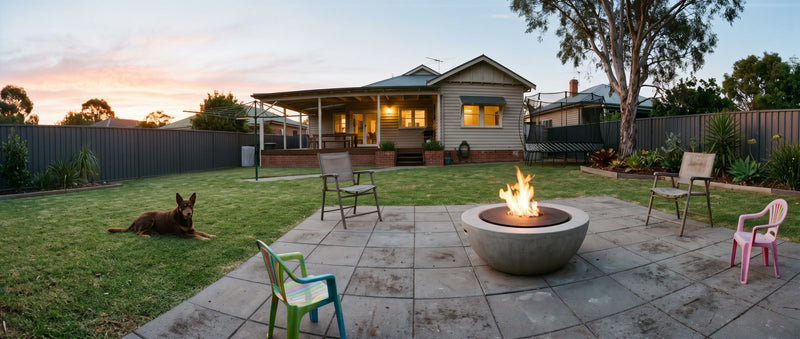
The practical interpretation is uncomplicated. A fire pit standing on concrete is fine; a fire built directly on concrete, or a bowl resting flat on a slab after a week of rain, is where the risk concentrates.
Usually, for a practical reason rather than a technical one: a cracked paver lifts out and a replacement goes in, while a cracked slab stays cracked. Pavers introduce their own complications, though. On Bunnings Workshop, an owner with a metal fire pit on short legs asked whether pavers would survive the heat. The reply warned of cracking from heat transfer and suggested a fire-resistant mat, which the owner noted had poor reviews.
Natural stone is the surface that deserves the most caution. A Whirlpool member asking about a fire bowl on limestone pavers was told limestone does not cope well with getting very hot. Other replies in that thread suggested lifting the bowl on small feet for airflow or setting a spare cement paver underneath as a sacrificial layer; one owner built a painted fibre cement tray to stop rusty water reaching travertine. That last point matters more than most guides acknowledge: on pale stone, rust runoff from a steel bowl is frequently a bigger problem than heat. Our guide to rusty fire pits covers why steel stains paving and how to stop it.
Yes, if the fire pit stands on feet and the tiles are designed for outdoor use. EcoSmart lists tile, stone, paving and concrete among the suitable surfaces for its freestanding bioethanol fire pits. For a wood-burning bowl resting directly on the tiles, we found no tile manufacturer's heat rating to quote, so treat direct contact as a risk to the tiles and the adhesive beneath them rather than assuming the glaze will tolerate it.
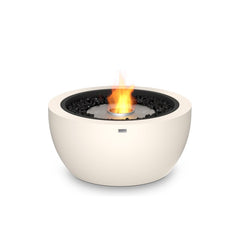
Separate the fire from the surface with an air gap. EcoSmart's installation guide says its freestanding fire pits sit on articulating feet that hold a 12.5 mm air gap below the base. That gap, EcoSmart says, is why the surface underneath your fire pit needs only to be stable, not non-combustible. The same guide lists the surfaces it does not accept: grass, artificial turf, carpet, loose rock and uneven paving where the feet cannot seat flat. It also gives 600 mm of clearance to the side from fixed structures and 2,000 mm overhead from anything moveable. The Pod 30 and Pod 40 are the models EcoSmart names as its most popular freestanding choices for exactly this reason.
A wood fire behaves differently: the coals sit in the bowl itself, so whatever lies directly underneath absorbs their heat. The Aluvy SAM brazier stands on cast aluminium feet and empties its ash into a stainless tray behind a magnetic hatch, according to Aluvy's technical sheet, so the coals stay in the tank and off the paving. For an older steel bowl on short legs, the forum remedies above still apply: raise it, position a spare paver or a purpose-made mat beneath it and keep the slab dry before lighting.
Consider a hypothetical courtyard in suburban Adelaide: a 20-year-old exposed-aggregate slab, a low steel fire bowl bought at a hardware store and a week of winter rain. The familiar outcome is a Saturday-night fire built straight into that bowl, a sharp crack from underneath at ten o'clock and a discoloured ring on the aggregate that never entirely scrubs out. The remedy costs very little: lift the bowl onto feet or a sacrificial paver, wait for a dry spell before the first fire and check the distance to the fence against our fence clearance guide. The slab stays whole; the courtyard keeps looking like the place you paid for.
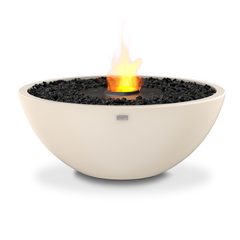
Not in the way a wood fire can, because the heat is contained in a stainless steel burner raised above the surface. An EcoSmart bioethanol fire pit burns from a self-contained burner and EcoSmart says it produces no exposed coals, sparks or embers, so nothing drops onto the paving. It also keeps the 12.5 mm air gap described above. Ethanol spills are a separate consideration: EcoSmart's guide says to wipe any spill immediately with a dry cloth and let the surface dry fully before lighting.
Here is the honest limit of that advice. Protecting a concrete or paved surface does not require an expensive fire pit. Legs, a spare paver and a dry slab do most of the work, whichever brand you own; if your current fire pit is structurally sound and stands on legs, keep using it.
The table pulls the guidance above together. It applies to a fire pit on an outdoor slab, paving or tiles; timber decks are a different question, covered in our guide to fire pits on decks.
| Fire pit type | Concrete or pavers | Tiles or natural stone |
|---|---|---|
| Bioethanol fire pit on feet | Suitable, per EcoSmart; keep the slab level so the feet seat flat | Suitable, per EcoSmart; wipe fuel spills at once |
| Wood brazier or fire pit on legs | Suitable; a spare paver or mat beneath adds a margin | Use a sacrificial paver or tray to catch heat and rust runoff |
| Low bowl or fire built on the ground | Risk of cracking or spalling, worst on a wet slab | Avoid on tiles or pale stone |
If you are weighing up a fire pit for your own courtyard, ring me on 03 7073 2116 or use the chat on this page. Tell me the surface and how far it sits from the fence; I will say what suits it. Delivery is free on EcoSmart fire pits. Find the same model for less elsewhere and we will beat the price.

 Backyard Fire Rules
 Backyard Fire Rules
 Backyard Fire Rules

Want a written quote?
Tell me what you are after. I send it the same business day.
Great customer service - they rang me to tell me exactly when my bbq was coming, they also sent over the instructions and price honoured me. 10/10.
Great table delivered quickly! Very happy
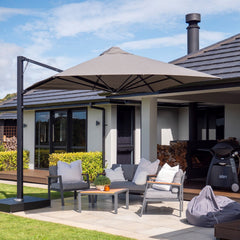
We recently had a Serenity Cantilever umbrella installed and the My Acre team were fabulous. From initially advising us what would suit our tricky terrace best, to keeping us informed on delivery and installation and ...
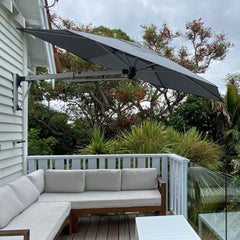
Really happy with my Shadowspec Retreat wall-mounted umbrella. Hayden at My Acre has been great — always quick to respond and very helpful. I recently needed to make a small warranty claim, and Hayden organised everyt...
Thanks to the My Acre team delighted with the end product of the Umbrella cantilever shade. In all respects Hayden was fantastic details, invoicing, adjusting delivery to suit us and supporting the installation with a...
Australian owned · every order personally followed up