Lisa B
★★★★★
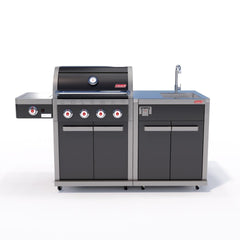
10 Nov 2026Great customer service - they rang me to tell me exactly when my bbq was coming, they also sent over the instructions and price honoured me. 10/10.
Price beat promise

Most chosen
Not sure which one?
Hayden, co-owner
Tell me about your space and I will point you to the right fire. I reply the same business day.
Call 03 7073 2116Most chosen
Not sure which one?
Hayden, co-owner
Tell me what you love to cook and I will point you to the right setup. I reply the same business day.
Call 03 7073 2116Most chosen
Not sure which one?
Hayden, co-owner
Tell me the area you want to shade and I will point you to the right size. I reply the same business day.
Call 03 7073 2116Ponds and fountains
FountainsPondless waterfallsPond kitsDam aerators and fountainsPond filters and equipmentPool care
Robotic pool cleanersBrands
AquascapeAtlas FiltriBBA BiosolutionBeatbotBiancoClayTechDAB PumpsElevateKellockOaseOtterbinePietro StonewareRobo-TekWater MasterNot sure which one?
Hayden, co-owner
Tell me what you need the water to do and I will point you to the right pump, filter or water feature. I reply the same business day.
Call 03 7073 2116Where to start
Not sure which one?
Hayden, co-owner
Tell me what you are planning and I will point you to the right fit. I reply the same business day.
Call 03 7073 2116Spas
Spas and hot tubsComingSwim spasComingNot sure which one?
Hayden, co-owner
Tell me how you want to relax and I will point you to the right spa or sauna. I reply the same business day.
Call 03 7073 2116Not sure which one?
Hayden, co-owner
Tell me what you are planning and I will point you to the maker that suits it. I reply the same business day.
Call 03 7073 2116
Fire
Most chosen
Outdoor Kitchens
Most chosen
Shade
Most chosen
Water
Ponds and fountains
FountainsPondless waterfallsPond kitsDam aerators and fountainsPond filters and equipmentPool care
Robotic pool cleanersGarden
Where to start
Spas & Saunas
Spas
Spas and hot tubsComingSwim spasComingBrands
About
Who we are
Who is My Acre?Why My Acre?Meet Hayden and TimOur installersContact usWhat we promise
Price beat promiseShipping and deliveryWarranty and claimsReturns and exchangeGuides and resources
Customer resourcesCustomer reviewsBlogs


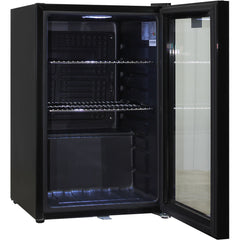
Short answer: By the makers' own figures, the Schmick and Rhino bar fridges we sell use 0.55 to 4.1 kWh a day; half of them use 1.37 to 2.65 kWh. At Victoria's 2026-27 default electricity rates of 25.96 to 31.98 cents per kWh, a typical model costs about $130 to $309 a year to run.
The cheapest to run costs about $52 annually and the dearest about $479, so the model and its energy consumption matter more than the category. Every fridge in our bar fridge range lists its maker's daily energy figure. This guide shows the arithmetic, explains why the figures vary and sets out what changes when a fridge lives outdoors.
A bar fridge's yearly running cost is its daily energy use multiplied by 365 and by your electricity rate. The table uses each maker's published daily figure, with any door heating switched off where fitted. The rates are the Victorian Default Offer flat usage charges the Essential Services Commission set for 1 July 2026 to 30 June 2027, from 25.96 cents per kWh in the CitiPower zone to 31.98 cents in AusNet Services.
| Fridge | kWh a day | Cost a year |
|---|---|---|
| Schmick 115L solid door | 0.55 | $52 to $64 |
| Schmick 69L glass door | 0.82 | $78 to $96 |
| Rhino GSP 129L | 1.03 | $98 to $120 |
| Schmick 121L solid door | 1.20 | $114 to $140 |
| Schmick 121L glass door | 1.40 | $133 to $163 |
| Rhino GSP 208L | 1.84 | $174 to $215 |
| Schmick 274L twin door | 2.29 | $217 to $267 |
| Rhino ENVY 388L | 3.23 | $306 to $377 |
| Schmick 440L upright | 3.27 | $310 to $382 |
Worked through for the Rhino GSP 129L: 1.03 kWh a day for 365 days is 376 kWh a year, which costs $98 at 25.96 cents and $120 at 31.98 cents. To calculate the figure for your own fridge, substitute the usage charge printed on your electricity bill. The makers' spec pages quote their own yearly cost at 25.64 cents per kWh, below every 2026-27 Victorian default rate, so today's cost is roughly 1 to 25% higher than the printed figure.
Not much per hour, although the total accumulates because a refrigerator operates continuously. The Rhino GSP 129L averages about 0.043 kWh an hour, which is 1.1 to 1.4 cents at the Victorian default rates, or $1.88 to $2.31 a week. By the month, the Schmick 69L costs about $6.47 to $7.97 and the Rhino GSP 208L about $14.52 to $17.89.
The figure that matters is energy over a whole day, not the wattage while the compressor is running. In a Whirlpool forum thread on bar fridge running costs, one owner measured a 90-litre bar fridge drawing 80 to 90 watts while running. Another pointed out that the total over 24 hours is what counts, because the compressor cycles on and off. Commenters under a power-measurement video make the same point with their own meters. A plug-in power meter measuring energy for a day or longer gives the most honest reading of a fridge already in use.
Capacity and size explain part of the variation, but door construction and heated panels explain considerably more of the energy difference. The maker's figures for otherwise identical Schmick bodies show the effect:

Yes. The same test room measured two Rhino models at 25°C and again at 40°C, simulating an Australian summer outdoors, with the results published on its energy consumption page. The Rhino GSP2H-SS rose from 1.27 to 1.41 kWh a day, an increase of 11%, while the Rhino SG2H-B rose from 1.68 to 2.28 kWh, 36% more, which at the Victorian default rates would lift its yearly cost from $159 to $196 at 25°C to $216 to $266 at 40°C. The same SG2H-B is listed at 2.01 kWh a day on its spec page, which sits between the two test results. A published figure reflects a single test condition, not a promise for a hot patio.
Owners describe the same pattern from their own experience. In the Whirlpool running-cost thread, one poster described a neighbour's old beer fridge that stood on a patio in direct Queensland sun from mid-morning to evening, with a power bill to match. One commenter under the power-measurement video names summer heat and a worn seal as the two things that push power usage up. Shade, the maker's ventilation gaps and a fridge set no colder than it needs to be keep summer running costs close to the published figure whatever the ambient temperature. The Australian Government's energy advice is to set a fridge between 3°C and 4°C.
Because many glass-door drinks fridges are classed as refrigerated cabinets rather than household fridges. Energy Rating states that it is not mandatory for refrigerated cabinets to display an Energy Rating Label. Its guidance on registration lists refrigerated drinks cabinets under that determination.
The practical consequence is that, for such a bar fridge, the maker's kWh-a-day figure may be the only comparison available, so ask for it before you buy, ideally measured at both 25°C and 40°C. On a CHOICE Community thread, a shopper who could not compare power figures between brands was pointed to the annual kWh figure as the fair basis for comparison. Some makers register these fridges anyway, as the label supplied with the Rhino GSP shows.

Usually, yes, provided the fridge is used only occasionally. The Australian Government's energy advice is to avoid turning on a second fridge unless it is needed. The catch is timing. In a Whirlpool thread on alfresco fridges, several owners warned that a fridge switched on 12 hours before a barbecue may not chill a full load of warm drinks in time. One also suggested leaving the door ajar while it is off to prevent mould. For a fridge used a few times a summer, an esky and a bag of ice costs nothing to run. We would rather say so than sell you a fridge you do not need.
For a fridge that runs all year, the best savings are chosen at purchase. Choose a solid door where you do not need to see the stock, heated glass only where humidity demands it and the smallest capacity that suits a typical evening. Our outdoor bar fridge buying guide covers the outdoor ratings that let a fridge cope with heat in the first place.
Every Schmick and Rhino fridge from My Acre comes with our price-beat promise and owner's after-care: a fit check before anything ships, a shepherded delivery and a check-in within a week. We also handle the warranty for you. Ring Hayden on 03 7073 2116 and we will compare the daily energy figures of every option that fits the space.

 Outdoor Fridges
 Outdoor Fridges
 Outdoor Fridges

Want a written quote?
Tell me what you are after. I send it the same business day.
Great customer service - they rang me to tell me exactly when my bbq was coming, they also sent over the instructions and price honoured me. 10/10.
Great table delivered quickly! Very happy
We recently had a Serenity Cantilever umbrella installed and the My Acre team were fabulous. From initially advising us what would suit our tricky terrace best, to keeping us informed on delivery and installation and ...
Really happy with my Shadowspec Retreat wall-mounted umbrella. Hayden at My Acre has been great — always quick to respond and very helpful. I recently needed to make a small warranty claim, and Hayden organised everyt...
Thanks to the My Acre team delighted with the end product of the Umbrella cantilever shade. In all respects Hayden was fantastic details, invoicing, adjusting delivery to suit us and supporting the installation with a...
Australian owned · every order personally followed up