
Lisa B
★★★★★
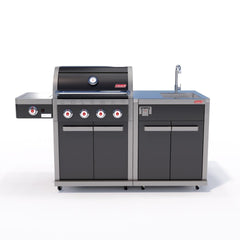
10 Nov 2026Great customer service - they rang me to tell me exactly when my bbq was coming, they also sent over the instructions and price honoured me. 10/10.
Price beat promise

Most chosen
Not sure which one?
Hayden, co-owner
Tell me about your space and I will point you to the right fire. I reply the same business day.
Call 03 7073 2116Drinks
Outdoor bar fridgesMost chosen
Not sure which one?
Hayden, co-owner
Tell me what you love to cook and I will point you to the right setup. I reply the same business day.
Call 03 7073 2116Pergolas
Louvre roof pergolasAccessories
Umbrella accessoriesMost chosen
Not sure which one?
Hayden, co-owner
Tell me the area you want to shade and I will point you to the right size. I reply the same business day.
Call 03 7073 2116Brands
AquascapeOaseOtterbineElevateBBA BiosolutionKellockPietro StonewareBiancoAtlas FiltriDAB PumpsWater MasterMost chosen
Not sure which one?
Hayden, co-owner
Tell me what you need the water to do and I will point you to the right pump, filter or water feature. I reply the same business day.
Call 03 7073 2116Most chosen
Not sure which one?
Hayden, co-owner
Tell me what you are planning and I will point you to the right fit. I reply the same business day.
Call 03 7073 2116Not sure which one?
Hayden, co-owner
Tell me what you are planning and I will point you to the maker that suits it. I reply the same business day.
Call 03 7073 2116Guides and resources
Talk to Hayden
Hayden and Tim, owners
Ring before you buy. I will tell you what suits your space and what to avoid, even when that means spending less.
Our storyCall 03 7073 2116
Fire
Most chosen
Water
Most chosen
Garden & Furniture
Most chosen
Brands
About
Who we are
Who is My Acre?Why My Acre?Meet Hayden and TimOur installersContact usWhat we promise
Price beat promiseShipping and deliveryWarranty and claimsReturns and exchangeGuides and resources
Customer resourcesCustomer reviewsBlogs


Short answer: Outdoors, a bioethanol flame beats an electric one on the thing that actually matters in the cold. Radiant heat reaches a person directly and keeps working in a breeze. An electric heater warms the air around it instead, and loses effectiveness the moment wind moves that air away. Every fireplace comparison ranking for this term treats it as an indoor design decision; none address a patio, a courtyard or an alfresco table, exactly where the difference is largest.
Electric still wins on two real points: nothing to store, and no cost while it sits switched off. Our EcoSmart Fire range covers the bioethanol side of that trade-off.
Six competitor guides checked for this article compare bioethanol and electric on real flame versus simulated, running cost and installation. Every one of them is framed around a living room. None mention a patio, deck or courtyard. That gap matters, because the physics changes outdoors. An electric heater's ambient warmth has nowhere to accumulate once there is airflow. A real flame's radiant heat travels in a straight line to whoever is sitting near it, wind or not.
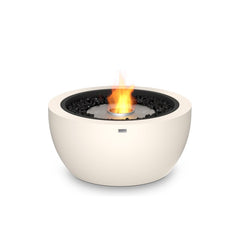
Real owner accounts are consistent on this point. Electric "flame effect" reads as fake up close or from an angle: the mirrored reflection, a repeating LED loop, an audible fan motor. A live flame has none of that to give away. The EcoSmart Pod 30 burns real e-NRG bioethanol through a sealed AB8 burner, putting out 6 kW and warming roughly 60 m². That output is fixed. It does not depend on the appliance tricking anyone.

Two things, honestly. An electric heater costs nothing while it is switched off, and needs no fuel bought or stored between uses. It also works under strata or apartment rules that ban an open flame outright, where a bioethanol unit needs approval first. Ring Hayden on 03 7073 2116 if strata approval is the deciding factor for your space. He will tell you plainly whether a flueless bioethanol unit clears your building's rules before you commit to one.
The Pod 30 runs at roughly $7 to $7.60 an hour on full flame, less on a lower setting, burning about 1.1 litres of e-NRG per hour from an 8 litre tank. That fuel cost is real and ongoing every time the flame is lit. Electric running cost gets described in most comparison guides as trivially cheap. Real owners push back on that claim more than any other in this comparison: actual resistive-heating bills run meaningfully higher than the headline figures suggest, especially once a unit is left on for a full evening outdoors rather than a quick top-up of warmth.

Bioethanol wins where the flame itself and the heat that still reaches someone in a breeze matter more than the running cost. Electric wins wherever strata rules block an open flame, or the unit is likely to run for hours with nobody actually watching it. Neither is the wrong answer once the actual constraint is named. Browse EcoSmart Fire for the flueless bioethanol range. Every EcoSmart fire pit and fire table ships free, is covered by our price-beat promise and comes with My Acre’s own after-care: a fit check, a shepherded delivery, a check-in within a week, and we handle warranty for you. Get a quote and Hayden will weigh the two against your actual space and your building's rules.

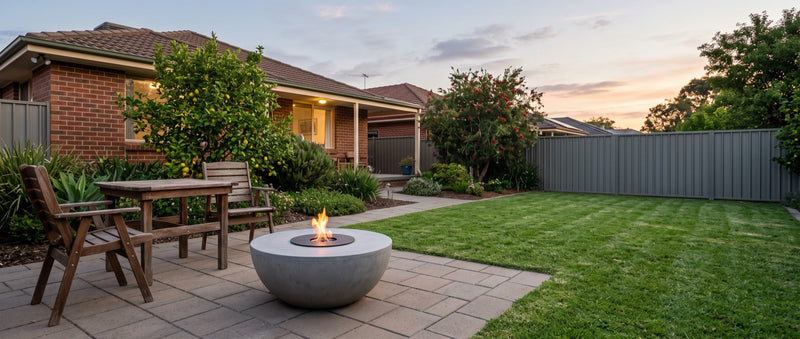 Fire Pits and Fire Tables
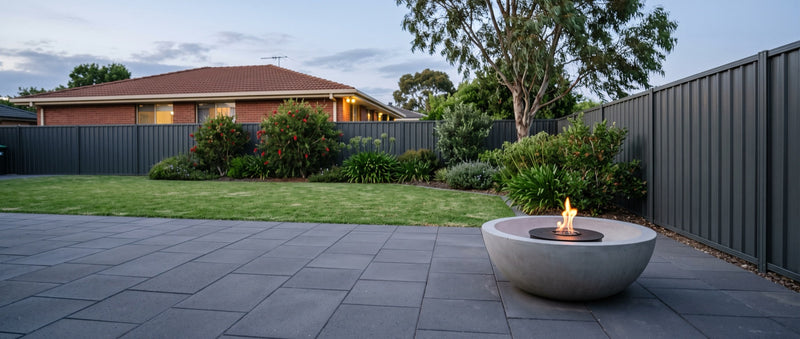 Fire Pits and Fire Tables
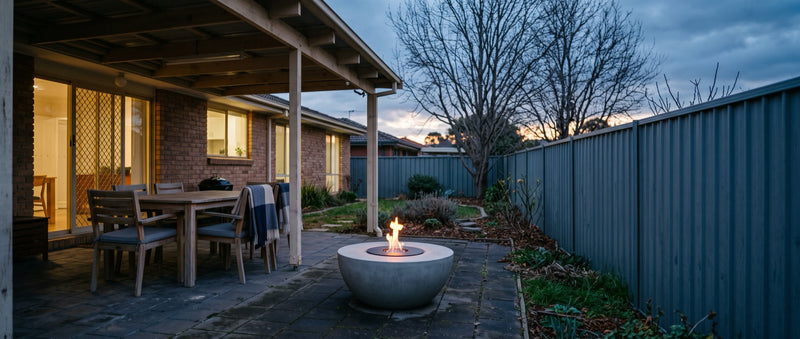 Fire Pits and Fire Tables

Want a written quote?
Tell me what you are after. I send it the same business day.
Great customer service - they rang me to tell me exactly when my bbq was coming, they also sent over the instructions and price honoured me. 10/10.
Great table delivered quickly! Very happy
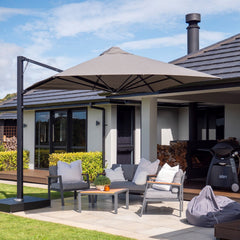
We recently had a Serenity Cantilever umbrella installed and the My Acre team were fabulous. From initially advising us what would suit our tricky terrace best, to keeping us informed on delivery and installation and ...
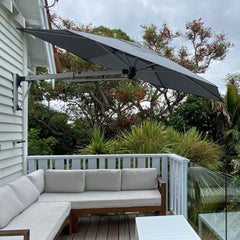
Really happy with my Shadowspec Retreat wall-mounted umbrella. Hayden at My Acre has been great — always quick to respond and very helpful. I recently needed to make a small warranty claim, and Hayden organised everyt...
Thanks to the My Acre team delighted with the end product of the Umbrella cantilever shade. In all respects Hayden was fantastic details, invoicing, adjusting delivery to suit us and supporting the installation with a...
Australian owned · every order personally followed up