Short answer: yes, a bioethanol fire pit is safe to use indoors when it is an indoor-rated model, fitted with its indoor safety tray, run in a room that meets the minimum size, ventilated, and burning the correct fuel. Bioethanol burns cleanly to heat, water vapour and carbon dioxide, with no smoke, soot or ash and no flue required. Because it does use oxygen and release carbon dioxide, room size and ventilation are the rules that matter.
Can you use a bioethanol fire indoors?
Yes, on a model that EcoSmart lists for indoor use. Not every bioethanol fire is, the maker rates each one. Across the EcoSmart Fire range we stock, the indoor-rated pieces are certified to European standard EN 16647 and comply with the Australian ACCC mandatory safety standard for decorative alcohol-fuelled devices. Indoor use also requires the model's Indoor Safety Tray to be fitted first. An outdoor-only model should stay outdoors.
Do you need ventilation for a bioethanol fire?
Yes. A bioethanol flame consumes oxygen and releases carbon dioxide and water vapour, so the room has to be large enough for normal air change to keep both well within safe levels. EcoSmart sets a minimum room volume by burner: 40 m³ for the smaller AB3 burner and 116 m³ for the larger AB8. As a rough guide, 40 m³ is about a 4 by 4 m room at a 2.5 m ceiling, and 116 m³ about 7 by 7 m. Most living rooms clear it easily; most bedrooms do not. Do not install one in a bathroom, and never in a room without a working smoke alarm.
Does a bioethanol fire give off fumes?
A clean-burning bioethanol fire on the correct fuel produces heat, water vapour and carbon dioxide, with no smoke, soot or ash. You may notice a faint scent as it lights and as it is put out, which clears quickly. Two things change this: fuel quality and burner design. Independent research has found that poor fuel or a poorly designed burner can raise indoor emissions, which is exactly why a certified appliance and a tested fuel matter. Use only e-NRG bioethanol, the fuel EcoSmart tests and specifies, and never petrol, methylated spirits or unbranded alcohol.
Do you need a carbon monoxide detector with a bioethanol fire?
Complete combustion of bioethanol produces carbon dioxide, not carbon monoxide, so a correctly running certified fire in a ventilated room produces very little CO. The maker's firm requirement is a working smoke alarm in the room. A carbon monoxide alarm is a sensible extra layer, particularly in a smaller or well-sealed space, and it costs little. Keep the room ventilated, keep within the room-size rule, and keep an extinguisher nearby.
Which EcoSmart models can be used indoors?
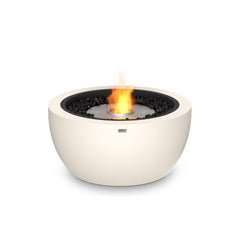
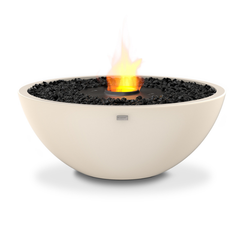
Among the fire pits, the indoor-rated models are the Pod 30 and Pod 40; the Stix, Stix 8, Mix and Nova pieces are outdoor only. Several EcoSmart fire tables also carry an indoor-or-outdoor rating with the Indoor Safety Tray fitted. If indoor use is your plan, check the individual product's rating before you buy, or ask us and we will confirm it for your room. Browse the range in Fire Features.
Frequently asked questions
Can you use a bioethanol fire indoors?
Yes, on an indoor-rated model fitted with its Indoor Safety Tray, in a room that meets the minimum size, with ventilation and the correct fuel. Outdoor-only models should stay outdoors.
Do you need ventilation for a bioethanol fire?
Yes. It uses oxygen and releases carbon dioxide, so EcoSmart sets a minimum room volume of 40 m³ for the AB3 burner and 116 m³ for the AB8, requires a working smoke alarm, and does not allow use in bathrooms.
Does a bioethanol fire give off fumes?
On the correct fuel it produces heat, water vapour and carbon dioxide, with no smoke, soot or ash, and only a faint scent at lighting and extinguishing. Poor fuel or a poorly designed burner can raise emissions, so use a certified fire and tested e-NRG fuel.
Do you need a carbon monoxide detector with a bioethanol fire?
Complete bioethanol combustion makes carbon dioxide, not carbon monoxide, so a certified fire in a ventilated room produces very little. A working smoke alarm is required by the maker; a carbon monoxide alarm is a sensible extra layer.
You May Also Like:
About the author:
“I have a real passion for helping transform outdoor spaces so people can relax, connect and entertain with confidence and pride. With My Acre, I love guiding homeowners to create beautiful and functional outdoor living areas."