
Lisa B
★★★★★
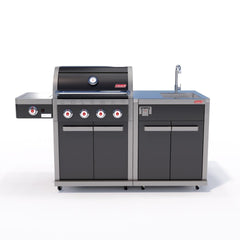
10 Nov 2026Great customer service - they rang me to tell me exactly when my bbq was coming, they also sent over the instructions and price honoured me. 10/10.
Price beat promise

Most chosen
Not sure which one?
Hayden, co-owner
Tell me about your space and I will point you to the right fire. I reply the same business day.
Call 03 7073 2116Most chosen
Not sure which one?
Hayden, co-owner
Tell me what you love to cook and I will point you to the right setup. I reply the same business day.
Call 03 7073 2116Most chosen
Not sure which one?
Hayden, co-owner
Tell me the area you want to shade and I will point you to the right size. I reply the same business day.
Call 03 7073 2116Ponds and fountains
FountainsPondless waterfallsPond kitsDam aerators and fountainsPond filters and equipmentPool care
Robotic pool cleanersBrands
AquascapeAtlas FiltriBBA BiosolutionBeatbotBiancoClayTechDAB PumpsElevateKellockOaseOtterbinePietro StonewareRobo-TekWater MasterNot sure which one?
Hayden, co-owner
Tell me what you need the water to do and I will point you to the right pump, filter or water feature. I reply the same business day.
Call 03 7073 2116Where to start
Not sure which one?
Hayden, co-owner
Tell me what you are planning and I will point you to the right fit. I reply the same business day.
Call 03 7073 2116Spas
Spas and hot tubsComingSwim spasComingNot sure which one?
Hayden, co-owner
Tell me how you want to relax and I will point you to the right spa or sauna. I reply the same business day.
Call 03 7073 2116Not sure which one?
Hayden, co-owner
Tell me what you are planning and I will point you to the maker that suits it. I reply the same business day.
Call 03 7073 2116
Fire
Most chosen
Outdoor Kitchens
Most chosen
Shade
Most chosen
Water
Ponds and fountains
FountainsPondless waterfallsPond kitsDam aerators and fountainsPond filters and equipmentPool care
Robotic pool cleanersGarden
Where to start
Spas & Saunas
Spas
Spas and hot tubsComingSwim spasComingBrands
About
Who we are
Who is My Acre?Why My Acre?Meet Hayden and TimOur installersContact usWhat we promise
Price beat promiseShipping and deliveryWarranty and claimsReturns and exchangeGuides and resources
Customer resourcesCustomer reviewsBlogs


Short answer: No fire pit, brazier, chiminea or fire table may be lit for warmth on a total fire ban day, whatever fuel it burns. Wood, charcoal and heat-bead barbecues are banned in every state and territory except the Northern Territory. A gas or electric barbecue is usually allowed, under conditions that range from 1 metre of cleared space in Tasmania to 5 metres in Western Australia.
If the rule itself is all you needed, the answer ends there; the sections below set out each state's barbecue conditions, the charcoal-kettle argument that keeps resurfacing on community forums and the difference between a declared ban day and the fire danger season, which is where most of the confusion starts.
A total fire ban prohibits fire in the open air for the whole of the declared day. The NSW Rural Fire Service puts it plainly: during a ban you cannot light, maintain or use a fire in the open, or do anything in the open that is likely to cause one. Outdoor hot work, including welding and grinding, is prohibited as well.
A declared ban also overrides whatever was permitted the day before. Victoria's CFA says every Fire Danger Period permit is suspended for the duration of a ban. Any fire already burning under a permit or exemption must be completely out before the ban begins. A fire pit lit the night before therefore has to be fully out before the ban starts.
No. The CFA states that all fires for warmth or personal comfort, including fire pits, braziers and chimineas, are banned on total fire ban days. Western Australia's DFES answers its own question about a backyard fire pit or 44-gallon drum with a single word: no. The Queensland Fire Department says open flame fire pits, braziers and similar devices are not permitted during a fire ban.
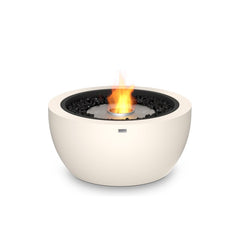
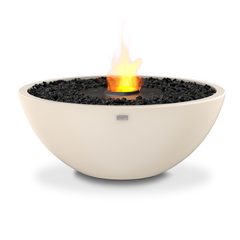
That prohibition includes a bioethanol fire pit. None of the eight state and territory authority pages read for this guide exempts a fire pit because of its fuel. A bioethanol burner is still an open flame lit for warmth. We sell EcoSmart bioethanol fire pits, so this is the answer that costs us something: on a ban day, the fire pit stays covered.
New South Wales adds a second regulatory layer outside declared ban days. The RFS says a fire permit is needed to light a fire in the open during the Bush Fire Danger Period, which runs from 1 October to 31 March in Rural Fire Districts, though local dates can vary. Our guide to backyard fires in NSW explains how that permit rule treats portable and bioethanol fire pits.
Usually, if it runs on gas or electricity. Solid fuel is the dividing line almost everywhere, while the conditions attached to a gas barbecue change at every state border. The table below summarises each fire authority's own published guidance as it read on 9 November 2026.
| State or territory | Gas or electric barbecue | Wood, charcoal or heat beads |
|---|---|---|
| NSW (RFS) | Gas allowed with 2 m clear of combustibles, a continuous water supply and within 20 m of a home or in an approved picnic area; electric with an adult present and 2 m clear | Banned, including wood-fired pizza ovens |
| VIC (CFA) | Allowed if commercially made for cooking, with 3 m clear, 10 litres of water or a connected hose and an adult present | Banned; liquid fuels such as methylated spirits are banned too |
| QLD (QFD) | Allowed, including gas and spirit stoves, if attended, contained and unable to make embers | Banned |
| WA (DFES) | Gas only with an enclosed flame, at home or in an authorised area, with 5 m cleared | Banned anywhere not fully enclosed, including kettle barbecues, pellet smokers and liquid fuels |
| SA (CFS) | Allowed within 15 m of a home or on a coastal foreshore, with 4 m clear of vegetation | Banned without a council Schedule 10 permit |
| TAS (TFS) | Gas or electric stoves and barbecues allowed with 1 m cleared | Banned, along with liquid-fuel stoves |
| ACT (ESA) | Allowed under constant adult supervision, clear of anything that could burn; public gas barbecues are switched off | Not exempt; only gas or electric cooking is |
| NT (NT Government) | Allowed | A coal barbecue is allowed, as is a small cooking fire with 4 m cleared |
The Northern Territory is the notable exception: its rules permit a coal barbecue and a small cooking fire, provided someone stays with it and it is extinguished as soon as the cooking is finished, although a fire for warmth is still prohibited there.
If your block backs onto bush and you would like a second opinion on what your local rules allow before summer, ring me on 03 7073 2116. I will point you to the authority responsible for your area rather than guess at the answer.
No. This is where forum advice most often goes wrong. Owners on Whirlpool's barbecue boards argue, across several separate threads, that a lidded kettle, a contained pizza oven or a bed of smouldering coals is safe enough to use. None of the authority pages makes an exception for a lid or an enclosed firebox. DFES names the kettle barbecue by type. South Australia's CFS answers its own kettle question with a flat no unless council issues a Schedule 10 permit, which it says is generally only for emergencies.
Take a hypothetical January Saturday in an outer Melbourne suburb: eight people are due at six, the brisket has been brining since Thursday and the charcoal kettle is the plan, until the morning brings a total fire ban for the district. The familiar outcome is a quiet argument about whether a lidded kettle counts, followed by lighting it regardless. The rule is unambiguous: solid fuel is out, while a gas barbecue on a stable base with 3 metres cleared and 10 litres of water beside it is in. The brisket goes on the gas hood at low heat, the fire pit stays under its cover and nobody spends the evening watching the fence line.
Some grey areas do exist. One NSW owner asked whether a smoker box of wood chips inside a gas barbecue counts as solid fuel; nobody in the thread could point to a rule either way. When the answer is not published on the authority's page, telephone the authority before the day rather than relying on a forum thread.
Both can apply, but they are separate regimes. The NT Government says it in five words: fire bans and fire danger periods are different. A fire danger period, or fire danger season, operates for months at a time and governs permits, burning off and everyday restrictions. A total fire ban is declared for a district on a particular day, when the CFA says fires are likely to spread rapidly and be hard to control.
Confusing the two is the most common error in the forum threads read for this guide. One Hobart owner, reading the Tasmania Fire Service's ban-day list during a permit period, asked whether a new charcoal kettle was off limits until the period ended. A poster in a different thread assumed gas is simply "exempted" during fire season, with no conditions attached. Our state guides set out both regimes for Victoria, Queensland, South Australia and the ACT.
A fine at the least. In New South Wales, the RFS lists an on-the-spot fine of $2,200 for lighting a fire on a ban day, up to $5,500, 12 months in gaol or both if the matter goes to court. Where an escaped fire damages life, property or the environment, the maximums rise to $132,000, 14 years in gaol or both. Other states and territories set their own penalties, so check the relevant authority's page rather than assuming the NSW figures apply.
The honest summary for a fire pit owner is short: on a declared ban day, cook on gas or electric within your state's conditions, leave the fire pit cold and check the declaration again before lighting anything the following evening.
On the evenings no ban is declared, an EcoSmart bioethanol fire pit gives you flame without a woodpile; EcoSmart says its burners produce no sparks or embers. It is still a fire in the eyes of the law, which is why it sits out ban days with everything else. Delivery is free on EcoSmart. Find the same model for less elsewhere and we will beat it. Ring me on 03 7073 2116, use the chat on this page or send the contact form if you want to talk through what suits your block.

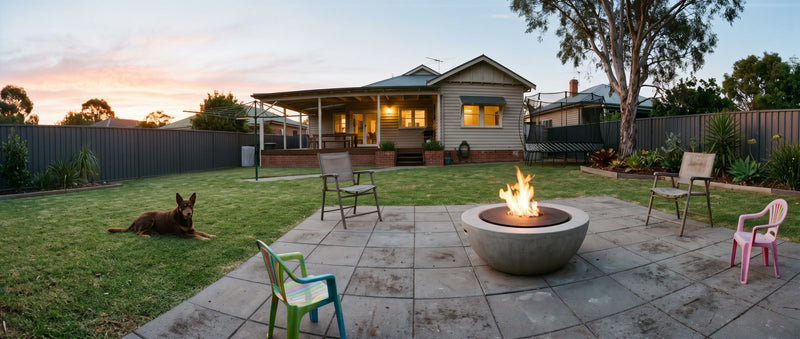 Backyard Fire Rules
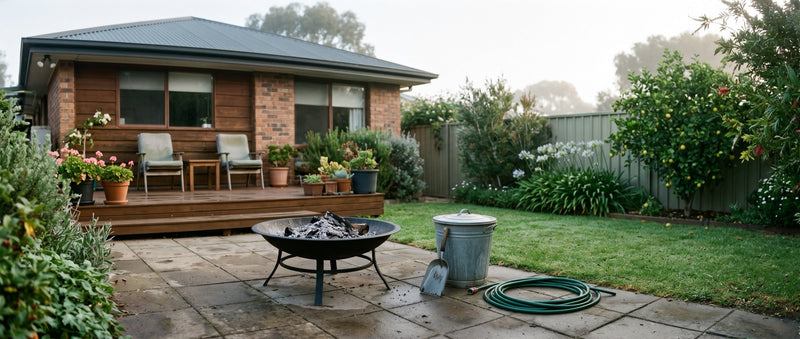 Backyard Fire Rules
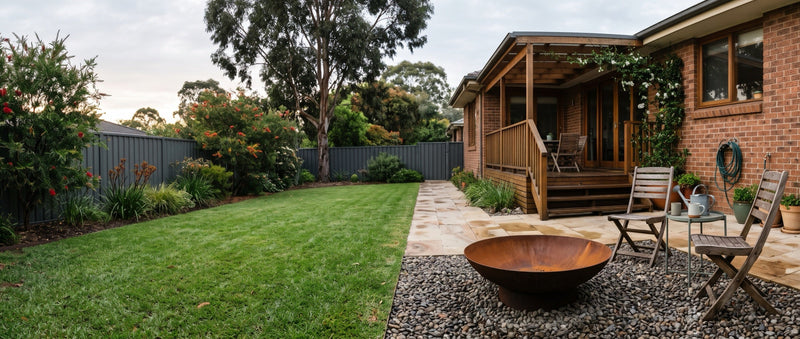 Backyard Fire Rules

Want a written quote?
Tell me what you are after. I send it the same business day.
Great customer service - they rang me to tell me exactly when my bbq was coming, they also sent over the instructions and price honoured me. 10/10.
Great table delivered quickly! Very happy
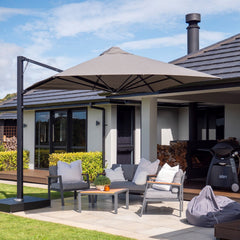
We recently had a Serenity Cantilever umbrella installed and the My Acre team were fabulous. From initially advising us what would suit our tricky terrace best, to keeping us informed on delivery and installation and ...
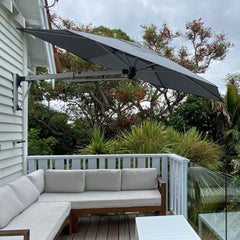
Really happy with my Shadowspec Retreat wall-mounted umbrella. Hayden at My Acre has been great — always quick to respond and very helpful. I recently needed to make a small warranty claim, and Hayden organised everyt...
Thanks to the My Acre team delighted with the end product of the Umbrella cantilever shade. In all respects Hayden was fantastic details, invoicing, adjusting delivery to suit us and supporting the installation with a...
Australian owned · every order personally followed up